Rooks County Kansas Antique Machinery Threshing Bee Festival
Most festivals in this series arrive with organisers, programmes, posters and years of accumulated coverage behind them. This one arrives with a single line of print. A state travel-and-tourism calendar once carried a short entry for an antique machinery threshing bee and craft show at the fairgrounds in Stockton, Kansas, and that brief entry is the entire documentary foundation on which this article stands. Rather than dress the event up with detail nobody recorded, the pages below set out exactly what that lone entry supports, sketch the harvest tradition behind the event, and mark every gap plainly as a gap.
What the entry does establish is real, if narrow. It gives a published name, a host town, a venue, a pair of dates and a billing. It names no organiser, quotes no price and describes no programme beyond the two elements carried in the event’s own name. What follows is an honest account of a small county-seat event that a state calendar thought worth listing in the autumn of nineteen eighty-nine.
About
The published name, as the state tourism calendar layer prints it, is Antique Machinery Threshing Bee & Craft Show. That wording matters, because no source read for this article prints the county-first title under which the series files the piece. The word Festival at the end of the heading above is a filing label added by this series; the event itself was published with a craft show, not a festival, as the second half of its name. Keeping that distinction visible is the first duty of an honest write-up.
The host town is Stockton, and a reference layer confirms it as the county seat of Rooks County, the place where the courthouse stands and county business is done. The venue named in the calendar entry is the Rooks County Fairgrounds in Stockton, a setting that suits the event’s subject: grounds built for agricultural gatherings, hosting machinery whose whole purpose was the grain harvest.
No organiser is named in the layer read. The entry does print telephone contact numbers for the event, and this article notes their existence without reproducing them. Everything else about the people behind the day — who gathered the machines, who ran the craft tables, who opened the gates — went unrecorded in the material examined.
For a useful comparison, see the Riley County Kansas Fall Festival for another county festival.
Quick Facts
| Detail | Record |
| Published name | Antique Machinery Threshing Bee & Craft Show |
| Host town | Stockton, Kansas |
| County seat status | Stockton is the seat of Rooks County |
| Venue | Rooks County Fairgrounds |
| Documented edition | Thirtieth of September to the first of October, nineteen eighty-nine |
| Billing as printed | Twelfth annual |
| Documented programme | Antique machinery threshing demonstrations and a craft show |
| Organiser | None named in the layer read |
| Admission | No charge stated and no free-entry claim made |
| Evidence base | A single state travel-and-tourism calendar layer |
History
The history section of this article is necessarily short, because the historical record itself is short. The calendar entry bills the nineteen eighty-nine gathering as the twelfth annual running of the event. That billing is reproduced here exactly as printed, and it is treated as a billing and nothing more. This series never converts an ordinal on a poster or a calendar line into a founding year, and it will not start here.
The numbering does carry one modest implication, and it is fair to state it carefully. A twelfth annual billing tells readers the Stockton bee was no experiment in nineteen eighty-nine. Earlier runnings must have stood behind that number for the count to exist at all. Yet not one of those earlier editions is described in anything read: no dates, no venues, no names, no surviving programme. They are implied by arithmetic on a calendar line and documented by nothing.
No later edition is described, no cancellation is announced, no continuation is confirmed, and no present-day status is established. Whether the bee carried on into the following decade, folded quietly, or still gathers in some form is a question the available material simply leaves open. The threshing bee itself, as a form, belongs to an older harvest world: neighbours once pooled labour and machinery to thresh grain, and later gatherings kept the machines, the skills and the sociability alive as demonstration rather than necessity. The Stockton event plainly drew on that tradition — its very name announces antique machinery — but the layers read offer no local founding story to attach to it.
What to Expect
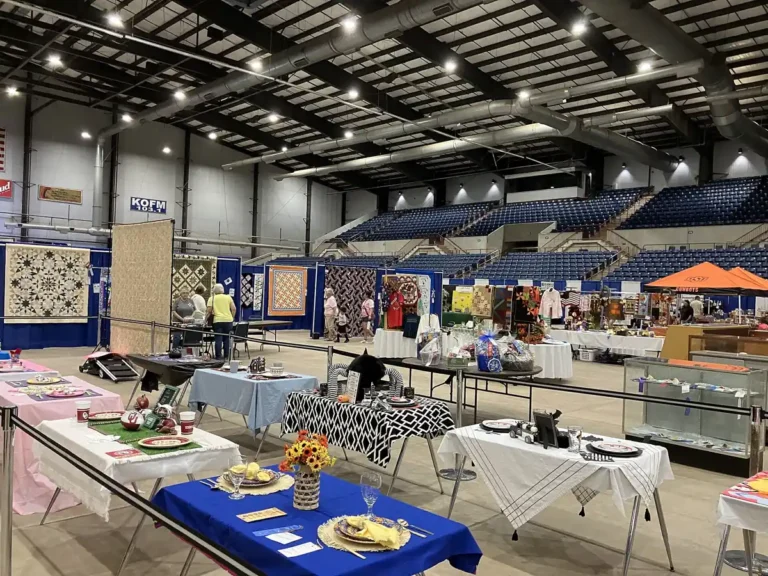
Candour has to govern this section, so it begins with the limits. Two programme elements, and only two, are documented for the Stockton event: antique machinery threshing demonstrations, which the calendar entry gives as the event’s stated subject, and a craft show, which forms part of the published name. Nothing fuller is printed anywhere in the material examined — no schedule of hours, no list of exhibitors, no named demonstrators, no contests, no food arrangements, no entertainment.
A threshing demonstration, in the general character of such gatherings, centres on historic machines at work: engines driving threshing equipment, grain fed through machinery that once moved from farm to farm, and older methods shown to visitors who may never have seen a harvest handled that way. That is the kind of activity the event’s name promises — not a recovered programme for the Stockton weekend, and it is not presented as one. The craft show half of the billing points to handmade goods displayed or sold alongside the machinery, again as a general reading of the name rather than a documented exhibitor list.
Anyone picturing the documented edition should therefore picture it modestly and accurately: a county fairgrounds in early autumn, old threshing machinery demonstrated, craft tables somewhere in the picture, and everything beyond that unknown. Filling the unknown with plausible colour would make for a livelier read and a dishonest article.
Planning Your Visit
Practical advice for this event has to start from an uncomfortable fact: the only documented edition took place across the thirtieth of September and the first of October in nineteen eighty-nine. No layer read confirms that the event survives, and none announces a current date. A traveller who set out for Stockton on this article’s strength alone would be travelling on evidence more than three decades old.
With that said, sensible steps exist for anyone curious. Enquiries belong at the local level in Stockton itself — the county seat is a small town, and a fairgrounds event of this kind, if it runs in any form today, would be known to local sources long before it reached any state listing. The Rooks County Fairgrounds is the venue the calendar names, so any local checking should start from the grounds and the community around them. The documented timing, the turn of September into October, matches the post-harvest season when threshing demonstrations traditionally make sense — a clue for enquiry, never a promise of a future date.
Admission planning is equally bare. The calendar layer states no charge and makes no free-entry claim, so this article takes no position in either direction, for the documented edition or any other. Costs, hours and arrangements for the nineteen eighty-nine weekend are simply absent from the record, and absent they remain here.
A Sample Itinerary
An itinerary for an event documented once, long ago, can only be written in a conditional voice, and this one is. It sketches how the two documented days at the fairgrounds might reasonably have been approached by a visitor, using only the two programme elements the record supports.
Had a visitor arrived in Stockton on the Saturday, the thirtieth of September, the natural first call would have been the fairgrounds themselves, where the threshing demonstrations formed the heart of the occasion. Time among the machines — watching the equipment work, following the grain through the process, talking with whoever tended the engines — was the substance the event’s name offered. The craft show named in the billing would have filled the day’s quieter stretches with handmade work to browse between demonstrations.
The Sunday, the first of October, would have repeated the pattern at a gentler pitch: a second look at the machinery for anything missed, a slower pass through the craft tables, and a midday departure through a county seat town in early autumn. Nothing further can honestly be added. No parade, concert or contest rounds the sketch out, because none is documented, and an itinerary padded with invention would betray the record this article exists to report.
How It Compares
Kansas has known several threshing gatherings, and the research for this article fenced each of them away from the Stockton event. The Jewell County Threshing Bee at Mankato, the McLouth Threshing Bee and Fall Festival in Jefferson County, the Albany Threshing Bee in Nemaha County, the Bird City thresher show in Cheyenne County and the Coal Springs Threshing Bee in South Dakota are each separate events. None of their dates, programmes or histories belongs to Stockton, and none has been borrowed to thicken this account.
Within that company, the Stockton event is distinguished by two things. Its published name is the most explicit about subject matter, pairing antique machinery with a craft show rather than resting on the bee alone. And its surviving record is the frailest of the group: a single calendar line where others left richer traces. Comparison, honestly drawn, is mostly a lesson in how unevenly small events are documented.
A Researcher’s Checklist
- Begin from the published name, Antique Machinery Threshing Bee & Craft Show, rather than the series title.
- Keep the documented dates fixed: the thirtieth of September to the first of October, nineteen eighty-nine.
- Treat the twelfth annual billing as a billing only, never as a founding date.
- Direct any question about a present-day running to local sources in Stockton.
- Leave the threshing bees of Jewell, Jefferson, Nemaha and Cheyenne counties, and the South Dakota event, out of this event’s story.
- Assume nothing about admission, hours or organisers, because the record states none of them.
Beyond the Fairgrounds
The fairgrounds sit within a working county seat, and the documented weekend’s setting deserves a plain word. Stockton serves Rooks County as its seat, so the fairgrounds gathering took place in the county’s administrative centre as well as one of its farming communities. A visitor drawn by the threshing machinery would have found a small plains town around the event: courthouse business through the week, agricultural trade through the year, and the fairgrounds as the community’s natural stage for a machinery occasion.
Nothing in the layers read ties the bee to wider attractions or companion events across the town. Its wider setting, honestly drawn, is simply Stockton itself and the farming country the machines once served.
Why a Single Line Still Matters
It might be asked why an event with one documented weekend earns an article at all. The answer is that the calendar entry is evidence of something real: on a specific autumn weekend in nineteen eighty-nine, people in Rooks County organised the twelfth running of a gathering devoted to antique threshing machinery and handmade craft. That happened. The machines were gathered, the demonstrations were billed, the public was invited. A thin record is still a record, and writing it up honestly — with the silences audible — preserves more truth than either inflating it or discarding it.
Threshing bees hold a particular place in plains memory, marking the moment when harvest labour turned from shared necessity into shared heritage. The Stockton bee, whatever its later fate, formed part of that turn. Documenting it in its actual proportions honours the people who ran it better than invention would.
Frequently Asked Questions
Under what name was the Stockton event actually published?
The state tourism calendar layer prints it as Antique Machinery Threshing Bee & Craft Show. The title at the head of this article, ending in the word Festival, is the filing form used by this series, and no source read prints that exact wording for the event itself.
Which editions of the bee can genuinely be documented?
One. The layers read document the edition held from the thirtieth of September to the first of October, nineteen eighty-nine, billed as the twelfth annual, at the Rooks County Fairgrounds. Earlier runnings are implied by that billing but described nowhere, and no later edition appears in the material examined.
Does the surviving entry name the people who organised it?
It does not. No organiser appears in the layer read, so this article invents none. The entry does carry telephone contact numbers for the event, and those are noted here by their existence only, without reproduction.
Is the Stockton bee connected to the threshing events in nearby counties?
No connection is documented, and the events are treated as entirely separate. The bees at Mankato in Jewell County, at McLouth in Jefferson County and at Albany in Nemaha County, the Bird City show in Cheyenne County and the Coal Springs event in South Dakota each belong to their own places, and none of their details has been merged into this account.
What to Expect From the Next Rooks County Kansas Antique Machinery Threshing Bee Festival
How often is Rooks County Kansas Antique Machinery Threshing Bee Festival held?
The single documented edition was billed as the twelfth annual running, which shows the event presented itself as a yearly occasion in nineteen eighty-nine. Whether it continued on that cycle afterwards is not documented anywhere in the layers read, so no current frequency can honestly be given.
When is the next Rooks County Kansas Antique Machinery Threshing Bee Festival?
No next date can be offered. A later running is not announced anywhere in the material examined, and the question of whether the event continues at all stands unanswered in the record. Anyone hoping for a future edition would need to pursue the question through local sources in Stockton, where an answer, if one exists, would be found.
Will the dates change?
There are no current dates standing in the record that could be described as changing. The only dates documented are the thirtieth of September and the first of October in nineteen eighty-nine, fixed by a calendar entry of their time. Any future running, should one ever be organised and announced, would set its own dates at that point.
Closing Thoughts
The Stockton threshing bee survives as a paragraph’s worth of evidence and a weekend’s worth of certainty. This article has kept it at exactly that size: a named event, a county-seat town, a fairgrounds, two autumn days in nineteen eighty-nine, a twelfth annual billing, demonstrations of antique machinery and a craft show. Around those fixed points stretches everything the record withholds — the organisers, the crowds, the later years, the present day. Leaving that space empty, rather than furnishing it with guesses, is the most respectful treatment a thin record can be given, and it is the treatment this event has received.