Riley County Kansas Flint Hills Festival
For one Saturday each spring, the plaza in front of Manhattan’s Flint Hills Discovery Center fills with food trucks, craft stalls and families, while the doors of the centre itself stand open without charge. The Flint Hills Festival is the Discovery Center’s own annual celebration, staged on Blue Earth Plaza in the Riley County seat, and the layers documenting it agree with unusual neatness. A volunteer-centre layer counts more than nine thousand visitors at the two thousand twenty-five edition, and the centre’s board minutes repeat the figure. Local news fixes the two thousand twenty-six edition to Saturday the second of May, running from ten in the morning until five in the afternoon, and confirms that admission to both the festival and the centre cost nothing that year. Everything in this article stays fenced to those layers.
About the Festival
The Flint Hills Festival belongs to a single institution rather than to a fair board or a carnival company. Its organiser is the Flint Hills Discovery Center, a City of Manhattan facility standing on Blue Earth Plaza, and the festival functions as that centre’s annual open celebration of the tallgrass prairie region it interprets. Every layer consulted prints the name the same way, as Flint Hills Festival, so the name on this page matches the centre’s own usage exactly.
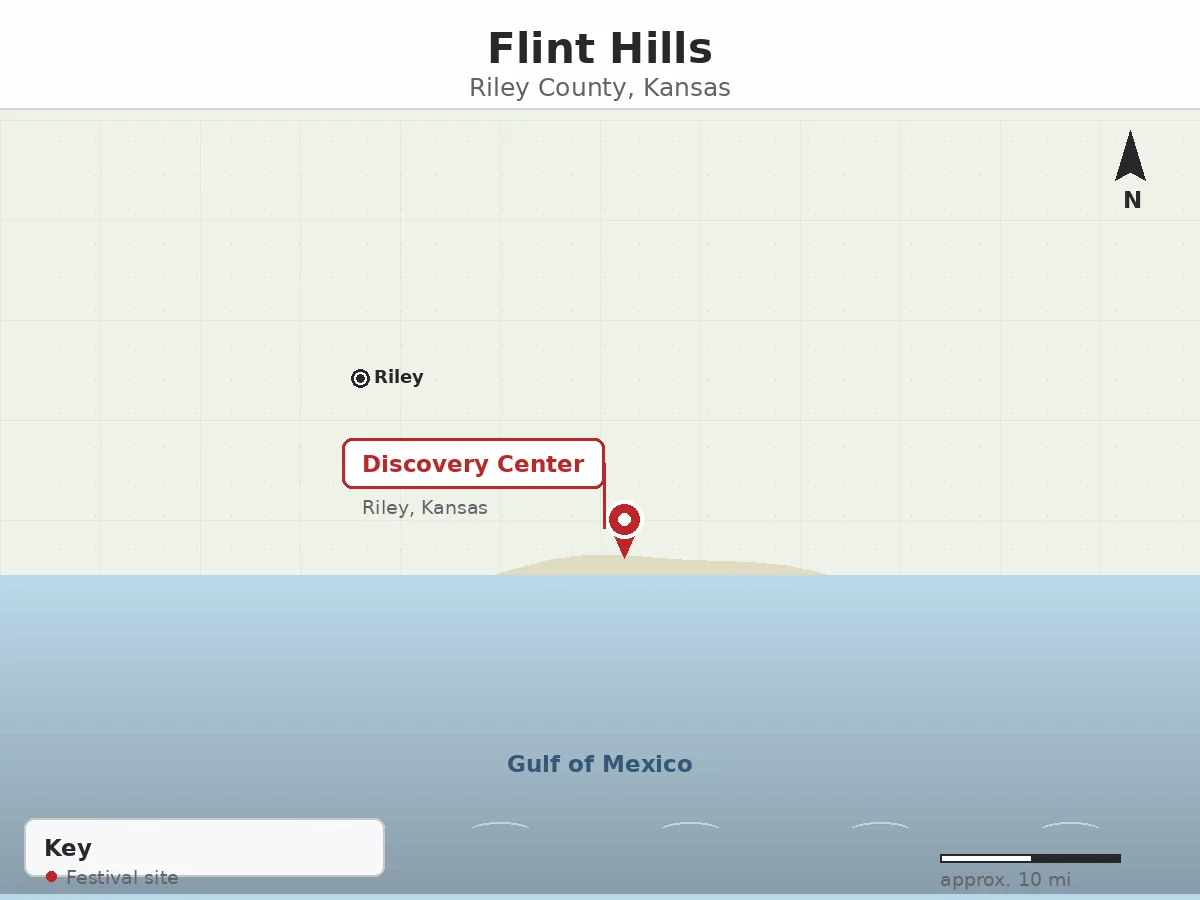
Manhattan hosts the day and is also the seat of Riley County, placing the festival in the county’s governmental and commercial centre rather than in a smaller town. Blue Earth Plaza gives the programme a hard-surfaced civic stage directly outside the centre’s doors, so the outdoor stalls and the indoor galleries operate as one site, and the free-admission arrangement described below only makes sense because the two halves are joined in that way.
A podcast layer supplies the festival’s most quotable billing: it calls the event the one day each year when the Discovery Center is free to the public. Read alongside the board minutes, which describe free sponsored admission, that billing captures the festival’s purpose. The centre ordinarily charges for entry; on festival day, sponsors underwrite the gate so the whole building becomes part of a free community occasion.
Quick Facts
| Item | Detail |
| Published name | Flint Hills Festival |
| Host town | Manhattan, Kansas |
| County seat | Manhattan is the Riley County seat |
| Venue | Blue Earth Plaza at the Flint Hills Discovery Center |
| Organiser | Flint Hills Discovery Center, a City of Manhattan facility |
| Documented editions | Two thousand twenty-five and two thousand twenty-six |
| Two thousand twenty-six date | Saturday the second of May, ten in the morning to five in the afternoon |
| Two thousand twenty-five attendance | More than nine thousand visitors |
| Admission, two thousand twenty-six | Free to the festival and the centre, sponsor supported |
History
The honest opening point about this festival’s past is a gap: none of the layers read states a founding year, and this article derives none. Where many Kansas celebrations carry numbered billings that invite arithmetic, the Flint Hills Festival record offers no such figure. The centre’s own materials present the event simply as its annual festival, a standing fixture rather than a numbered anniversary occasion.
For a useful comparison, see the Rice County Kansas UFO Festival for another county festival.
What the record does establish is momentum across two consecutive documented years. In two thousand twenty-five the festival drew more than nine thousand visitors, a figure strong enough to be entered in the centre’s board minutes as well as reported by a volunteer-centre layer. A crowd of that size marks the day as one of the centre’s principal public undertakings, and it set the benchmark against which the following year was organised.
The two thousand twenty-six edition then added the element that now defines the festival’s reputation. Local news reported that admission to the Discovery Center and to the festival was free for that edition, made possible by support from Visit Manhattan and the Flint Hills Discovery Center Foundation. The board minutes describe the same arrangement as free sponsored admission, corroborating the news account from inside the institution. Sponsorship is not decoration on this event; it is the mechanism that turns a ticketed centre into an open one for a day.
Beyond those points, the layers leave the festival’s earlier life undocumented, and this article does not fill the silence with guesses about first editions or founders. The documented story begins with a nine-thousand-visitor year and a free-admission year, told by the centre’s minutes, the volunteer centre and local news between them.
What to Expect
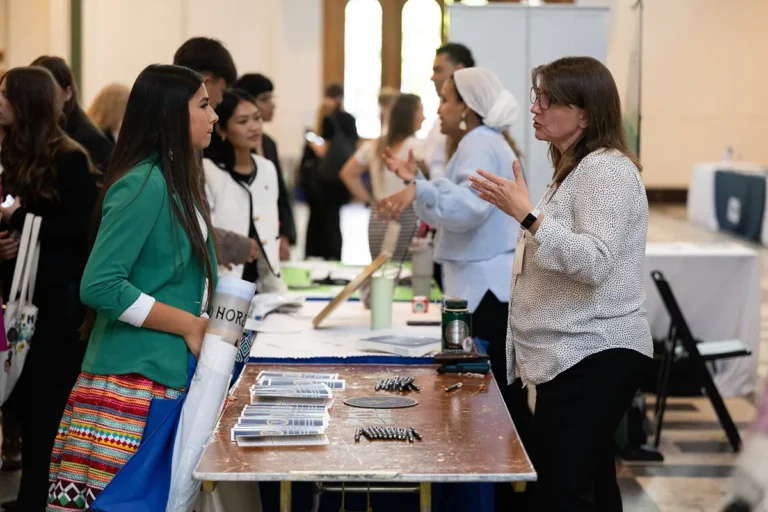
Blue Earth Plaza carries the festival’s public face. Event-listing and vendor layers describe live entertainment on the plaza, food trucks serving the crowd, children’s activities, community groups presenting their work, and vendors offering crafts alongside wine and beer tastings. The mix reads like a cross-section of Manhattan itself: makers selling handmade goods, civic organisations recruiting and explaining, families moving between the stage and the food lines.
The indoor half of the day is the Discovery Center’s own galleries, folded into the festival through the admission arrangement. In two thousand twenty-six a visitor could walk from a craft stall on the plaza straight into the centre without paying at either threshold, because sponsors had covered the gate. That joining of an outdoor street-fair programme with a full indoor attraction separates this festival from a conventional park celebration, and it helps explain the size of the free day’s crowds.
Scale is the other reasonable expectation. An event that welcomed more than nine thousand visitors in two thousand twenty-five is not a quiet neighbourhood gathering, and the volunteer-centre newsletter’s shift times underline the operation behind it: set-up began at eight in the morning, two hours before opening, and tear-down ran until quarter to six in the evening, after the five o’clock close. Visitors arriving at ten step into a festival already hours in the building, and the plaza stays staffed until the last stalls come down.
Children’s activities occupy a named place in the programme rather than an improvised corner, and community groups hold stalls alongside commercial vendors, so the day serves residents curious about local organisations as much as shoppers. Wine and beer tastings, offered by vendors, mark the programme’s adult edge. Nothing in the layers promises headline concerts, parades or fireworks, so none should be planned for.
Planning Your Visit
The firmest anchor for planning is the documented shape of the two thousand twenty-six edition: a single Saturday, the second of May, with public hours from ten in the morning until five in the afternoon at Blue Earth Plaza. A university calendar layer agrees with local news on that date, which gives the day two independent confirmations. Future editions are the centre’s to announce, so anyone travelling from outside Riley County should confirm the current year’s date against the centre’s own publicity before setting out, since the layers read here close with the two thousand twenty-six edition.

Admission planning is simple for the documented year and open for the others. Local news states plainly that entry to the festival and the Discovery Center was free in two thousand twenty-six thanks to Visit Manhattan and the Flint Hills Discovery Center Foundation, and the board minutes call it free sponsored admission. No layer extends that promise further, so visitors in later years should check whether the sponsorship has been renewed rather than assuming the gate stays covered.
A volunteer layer prints a city staff email address for the event, noted here by existence only, as this series never reproduces contact details. Volunteering is plainly part of the festival’s machinery, given that a volunteer-centre newsletter published set-up and tear-down shifts, so residents who prefer working the day to wandering it have a documented route in. Arriving near the opening spreads a visit across the full programme, while the final hour offers a last pass at the stalls before teardown begins.
A Sample Festival Day
An unhurried visit might begin shortly after ten, when the food trucks and craft stalls are fully set and the live entertainment is under way. The first hour suits browsing: walking the vendor rows, noting which community groups are presenting, and letting children test the activities laid out for them before the midday crowd thickens.
Late morning divides naturally between the plaza and the building: step inside the Discovery Center while admission stands free on the documented pattern, take the galleries at a relaxed pace, then return outside for lunch from the trucks. The vendor tastings fold into the early afternoon, when every stall is staffed and the entertainment continues.
The closing stretch, from mid-afternoon until the five o’clock end, rewards a second circuit of the plaza: purchases reconsidered, conversations with community groups finished, and one last look at the children’s activities. Leaving as the programme closes also means watching the festival’s hidden shift begin, as volunteers start the tear-down the newsletter timetabled through quarter to six.
How the Festival Compares
Kansas is rich in Flint Hills branding, and three near names deserve separating. The Flint Hills Rodeo is held in Strong City, in a different county, and centres on rodeo competition rather than a discovery centre’s open day. The Symphony in the Flint Hills was a distinct orchestral event held out on the prairie, and it has ended; it shares only a landscape and two words of its name with the Manhattan festival.
Closer to home, a listing for a Frog Wizard Festival in Manhattan falls on the same day in the layers read. It is a separate event, not a stage or subtitle within the Flint Hills Festival, and the two should not be merged when planning a day in the city. The Flint Hills Festival’s identity stays narrow and clear: one centre, one plaza, one spring Saturday, organised by the Discovery Center itself and documented through the centre’s minutes, the volunteer centre and local news.
A Visitor’s Checklist
- Confirm the current year’s date against the Discovery Center’s own publicity before travelling.
- Plan around the documented hours, ten in the morning until five in the afternoon.
- Check whether free sponsored admission applies to the edition you attend.
- Arrive near opening to see the plaza fully set and staffed.
- Leave time for both the outdoor stalls and the centre’s indoor galleries.
- Give children a dedicated pass through the children’s activities.
- Adults may sample the wine and beer tastings offered by vendors.
- Build lunch around the food trucks on the plaza.
Beyond the Festival Grounds
Manhattan gives the festival a ready-made wider day. The host town is the Riley County seat, a university city whose downtown and campus districts sit within the same Flint Hills landscape the Discovery Center interprets, so a festival trip pairs naturally with time spent elsewhere in the city. The tallgrass prairie surrounding Manhattan is the region the centre exists to explain, and seeing the town on festival day shows the place at its most animated.
For residents of Riley County’s smaller communities, the festival also works as a yearly point of contact with the county seat’s civic institutions, since community groups hold stalls on the plaza precisely so that the county meets itself in one place.
Why the Festival Matters
The festival’s significance sits in its financing as much as in its programme. A city-owned discovery centre that ordinarily charges admission chose, backed by its foundation and the local visitor bureau, to open everything for a day, and the arrangement was recorded in the centre’s own board minutes as free sponsored admission. It converts the festival from entertainment into a statement about who the centre is for.
The attendance figure gives the statement weight. More than nine thousand visitors in two thousand twenty-five is the volunteer centre’s count, repeated by the board, and it shows the open day answering a real appetite. For Manhattan and Riley County, the Flint Hills Festival has become the Discovery Center’s principal handshake with the public: annual, sponsor-backed, and measured by the institution itself.
Frequently Asked Questions
Is the Flint Hills Festival connected to the Flint Hills Rodeo or the old prairie symphony?
No. The Flint Hills Rodeo takes place in Strong City and is a rodeo event, while the Symphony in the Flint Hills was a separate orchestral occasion that has ended. The Manhattan festival is organised by the Flint Hills Discovery Center and happens on Blue Earth Plaza, and it shares nothing with either event beyond the regional name.
Did visitors pay to enter the Discovery Center during the two thousand twenty-six festival?
They did not. Local news reported that admission to the centre and the festival was free for the two thousand twenty-six edition, supported by Visit Manhattan and the Flint Hills Discovery Center Foundation, and the centre’s board minutes describe the same arrangement as free sponsored admission. The layers do not state terms for any other year.
What fills Blue Earth Plaza while the festival is running?
Event-listing and vendor layers describe live entertainment, food trucks, children’s activities, community group stalls, and vendors offering crafts together with wine and beer tastings. The programme mixes commercial stalls with civic organisations, so the plaza works as market, stage and meeting place at once.
How large did the crowd grow at the two thousand twenty-five edition?
A volunteer-centre layer reports that the two thousand twenty-five festival welcomed more than nine thousand visitors, and the Discovery Center’s board minutes repeat the figure in their own summary of the event.
What to Expect From the Next Riley County Kansas Flint Hills Festival
How often is Riley County Kansas Flint Hills Festival held?
The layers bill the event as the Discovery Center’s annual festival, and the documented editions fall in two consecutive years, two thousand twenty-five and two thousand twenty-six. Its rhythm is yearly, with each edition staged as a single day on Blue Earth Plaza.
When is the next Riley County Kansas Flint Hills Festival?
The record read for this article closes with the edition of Saturday the second of May, two thousand twenty-six, and none of the layers prints a date for a following year. The centre announces its own calendar, so the next date will come from the Discovery Center’s publicity rather than from anything the sources gathered here can promise.
Will the dates change?
Only one fully dated edition appears in the layers: the second of May, two thousand twenty-six, a Saturday in early May with hours from ten in the morning until five in the afternoon. With a single fixed point, no pattern can be proven, and the centre remains free to place future editions where its calendar requires, so checking the announced date each year is the sound approach.
Closing Thoughts
The Flint Hills Festival asks little of its visitors: a spring Saturday on Blue Earth Plaza, a city centre opened free under sponsorship, and a crowd counted in the thousands by the institution’s own minutes. For Riley County, it is the Discovery Center’s open door.