Linn County Kansas General Pleasanton Days Festival
Early October in Pleasanton brings a parade down Main Street, an afternoon that drifts across Dunlap Park, and a weekend that travels under a name needing one moment of explanation. Local news and an events-listing layer both print the celebration as General Pleasonton Days, honouring a Civil War general whose surname carries one letter more than the town’s own name. The festival celebrates the town’s Civil War past, fills the park with show cars, games and food trucks, and finishes its documented programme with an apple pie eating contest.
About
Every layer read for this article spells the event’s name the same way: General Pleasonton Days. Local news uses that form, an events-listing layer uses it as well, and one local-news headline shortens the name to the singular General Pleasonton Day. No layer prints the form General Pleasanton Days, and the mismatch is structural rather than accidental. The town is Pleasanton, written without the extra letter, while the man it honours is General Alfred Pleasonton, written with it, and the festival takes its spelling from its namesake rather than from the road signs.
Pleasanton is the largest city in Linn County, although the county seat sits elsewhere, at Mound City. The celebration belongs to Pleasanton’s own ground: the parade runs along Main Street, and the afternoon programme gathers at Dunlap Park. A group called Celebrate Pleasanton, described in local news as a newly formed nonprofit organisation, delivers the current edition. Within that same local-news coverage, a veteran parade organiser is at work recruiting entries for the parade. Older layers print no organiser name at all, so the organisational picture belongs to the recent record alone.
That naming question runs through everything written about the event. Because the sheet form of the name differs from every published form, readers searching for the festival under the town’s spelling may miss coverage filed under the general’s. This article therefore uses the published spelling throughout its account and keeps the sheet form only in its title, so the record stays traceable to the sources that created it.
Quick Facts
| Item | Detail |
| Published name | General Pleasonton Days |
| Host town | Pleasanton, Linn County, Kansas |
| County seat | Mound City; Pleasanton is the county’s largest city |
| Venues | Main Street and Dunlap Park, Pleasanton |
| Timing | First weekend in October |
| Organiser | Celebrate Pleasanton |
| Fullest documented edition | Parade on Saturday the third of October, two thousand twenty-six |
| Parade honours | Pleasanton High School Marching Band first, Jayhawk-Linn Marching Band second |
| Admission | The layers read print no admission price |
History
The festival exists to celebrate the Civil War history of Pleasanton, and its centre of gravity is the memory of one officer. Alfred Pleasonton commanded Union forces at the Battle of Mine Creek in eighteen sixty-four, and the town itself carries his name, which makes him Pleasanton’s namesake as well as the celebration’s honouree. A festival named for the general, held in the town named for that same general, binds the community’s identity to a single autumn battle fought inside its own county.
For a useful comparison, see the Lincoln County Kansas Post Rock Festival for another county festival.
The paper trail is thinner than the sentiment behind it. An events-listing layer places the gathering on the first weekend in October as a standing pattern, and the town’s reference entry cites a newspaper report of an edition held on the sixth and seventh of October in two thousand seven. Local news then documents a far later edition in rich detail, the one whose parade stepped off on Saturday the third of October, two thousand twenty-six. Between those two points the layers read offer no continuous run of editions, and none of them attaches a founding year to the event.
The two thousand seven citation also arrives secondhand, quoted through the town’s reference entry rather than preserved as a full report of its own, and it carries dates without much programme detail. It is enough to show the festival already existed in that year, on the same opening October weekend the listing layer still publishes, and not enough to establish how large the gathering was or who stood behind it.
The listing layer that fixes the October timing also wraps the festival in confident language, billing it as Linn County’s biggest parade and as the county’s favourite community event, voted so two years running. Those claims are printed here as the listing’s own billings, not as measured findings. The harder record supports something narrower and still impressive: a parade strong enough to draw fifty entries in two thousand twenty-six, with marching-band honours contested between two local schools.
What to Expect
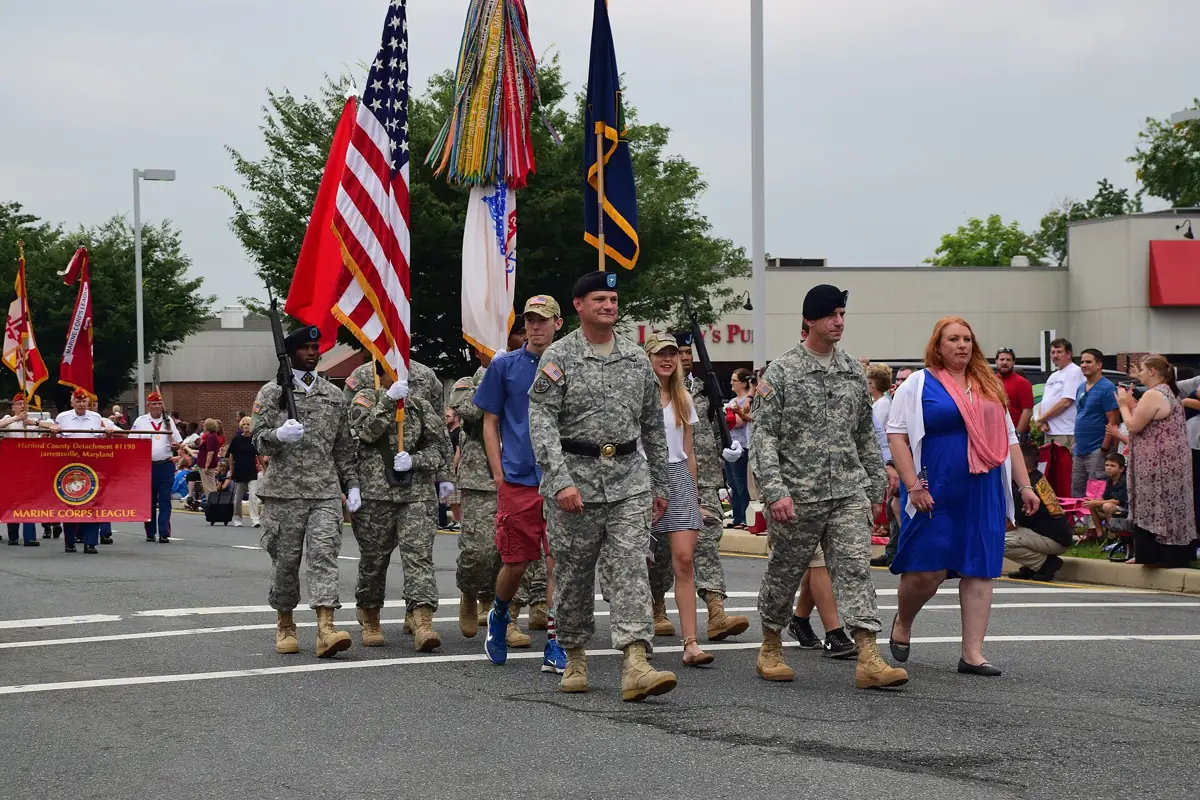
Fifty entries made up the parade at the fullest documented edition, and local news reported in advance that organisers were billing it as one of the best the town had seen in years. The marching competition inside the parade produced a hometown result: top band honours went to the Pleasanton High School Marching Band, with the Jayhawk-Linn Marching Band placed second. Spectators along Main Street therefore get both a civic procession and a small rivalry between school bands settled in public.
Once the parade clears, the celebration relocates to Dunlap Park for the afternoon. The listing layer names the car show there as Cookee’s Drive-In Car Show, and local news fills in the rest of the park programme: vendors, informational kiosks, food trucks and games for children. The listing adds giant inflatables and games for adults alongside the children’s programme. A cornhole contest gives the afternoon a competitive thread, live country music plays in the park, with a singer named in the local-news layer among the performers, and the day closes with an apple pie eating contest.
The informational kiosks deserve a word of their own, because they mark the park afternoon as more than entertainment. Alongside the food trucks and the games, the kiosks give local organisations a place to put their work in front of the whole town at once, which suits a weekend devoted to communal self-presentation. The cornhole contest and the pie contest bookend that purpose neatly: one is a lawn game any visitor can enter, the other a spectacle any visitor can watch, and both give the crowd reason to stay in the park until the programme ends.
The two documented editions frame what a visitor can reasonably anticipate. The two thousand seven edition ran across the sixth and seventh of October, which supports reading the festival as a weekend occasion rather than a single morning. The two thousand twenty-six reporting, by contrast, concentrates on the Saturday parade and the park afternoon that follows it, so the safest expectation is a parade-led day with the park programme as its second act.
Planning Your Visit
The listing layer’s first-weekend-in-October placement gives the trip its anchor, and the documented shape of the day suggests arriving in time for the parade rather than after it. Main Street carries the morning, Dunlap Park carries the afternoon, and a visitor who starts with the procession can simply follow the crowd’s drift toward the park when the bands finish. Because the two venues sit within the same small town, the move between them is part of the event rather than a separate journey.
No layer read states an admission price for the festival, so the day’s spending runs through the food trucks, the vendors and whatever the informational kiosks offer rather than through a gate. Carrying cash or a card for those purchases is the practical preparation. Kansas Octobers can swing between warm afternoons and cool evenings, so a layer for after the music ends is worth bringing, along with seating for the parade route if a folding chair travels well.
Anyone timing a visit around the parade should know that band honours and entry counts come from the two thousand twenty-six reporting, and participation in any given year will vary. Checking the local news and the listing layer as the first weekend approaches is the way to confirm the current year’s arrangements, since the record read for this article includes no organiser announcement for editions beyond two thousand twenty-six.
A Sample Day at the Festival
Begin along Main Street before the parade steps off, close enough to hear the bands warm up and to watch fifty or so entries assemble. Stay through the full procession so the marching-band contest plays out in front of you, since the honours between the Pleasanton and Jayhawk-Linn bands are part of the morning’s story. As the last entries pass, drift toward Dunlap Park with the rest of the crowd.
The middle of the day belongs to the park: a slow circuit of Cookee’s Drive-In Car Show, a pass along the vendor and informational kiosks, and lunch from the food trucks. The afternoon then loosens into games, the cornhole contest and the giant inflatables for younger visitors, with country music running underneath. Staying to the end earns the closing spectacle, the apple pie eating contest, which the documented programme sets as the finale.
How It Compares With Its Same-Weekend Neighbour
The first weekend in October is shared ground. A separate celebration, the Pioneer Harvest Fiesta, takes place in nearby Fort Scott on the same weekend, and it surfaces in the same local newspaper coverage that documents Pleasanton’s festival. The two events are neighbours in the calendar and on the map, but they are distinct gatherings in different towns, with different names, different programmes and different purposes, and nothing about one should be read into the other.
The difference in purpose is the clearest dividing line. Pleasanton’s weekend is commemorative at its core, built around a general, a battle and a town that bears his name, whereas a harvest fiesta belongs to the agricultural calendar. Even the Pleasanton programme’s lighter elements, the car show and the pie contest, sit downstream of a parade that opens a history lesson. A visitor choosing between the two is really choosing between a heritage celebration and a harvest fair that happen to share a weekend.
What to Bring
- A folding chair or blanket for watching the parade along Main Street
- Money for the food trucks and park vendors
- A warm layer for an October evening in Kansas
- Comfortable shoes for the walk between Main Street and Dunlap Park
- An appetite, should you fancy entering the apple pie eating contest
Beyond Main Street and Dunlap Park
The history the festival celebrates does not end at the park fence. The Battle of Mine Creek, where the town’s namesake commanded Union forces in eighteen sixty-four, was fought in Linn County itself, so the ground under the celebration is part of the story the weekend tells. A visitor who arrives curious about the general can spend the rest of the trip tracing how deeply his name runs through the town, from its very title onward.
The county around Pleasanton offers its own quieter diversions, and Mound City, the seat, anchors the county’s civic life a short distance away. Pleasanton’s festival weekend can therefore serve as the centrepiece of a wider Linn County visit, with the parade and park programme filling one day and the county’s small towns and Civil War associations filling the remainder.
Why the Festival Matters to Pleasanton
Pleasanton is the county’s largest city without being its seat, and the festival gives that standing a public shape. For one October weekend the county’s attention runs along Pleasanton’s Main Street rather than toward the courthouse town, and the celebration’s billing as the county’s biggest parade, however unofficial, captures the pride involved. The event converts the town’s unusual naming inheritance into an annual asset: a spelling puzzle that turns out to be a history lesson, retold each year with bands and pie. Its honours list stays local as well, contested between Pleasanton’s own high school marching band and the Jayhawk-Linn band drawn from elsewhere in the county.
There is a civic function in the programme’s details as well. School bands compete for honours in front of their own neighbours, a newly formed local group takes responsibility for delivery, and a veteran of parade organisation recruits the entries. The festival is how Pleasanton introduces itself, to visitors and to itself, as the town that carries a general’s name and knows why.
Frequently Asked Questions
Why is the festival spelled Pleasonton when the town is Pleasanton?
The town was named for General Alfred Pleasonton, and the festival follows the general’s spelling rather than the town’s shortened form. Local news and the events-listing layer both print General Pleasonton Days, and no source read prints the name with the town’s spelling.
Who organises General Pleasonton Days?
Local news credits a group called Celebrate Pleasanton, described there as a newly formed nonprofit organisation, with delivering the current edition. The same coverage mentions a veteran parade organiser recruiting parade entries, while older layers name no organiser at all.
What happens in Dunlap Park after the parade?
The park hosts the afternoon programme: Cookee’s Drive-In Car Show, vendors, informational kiosks, food trucks, games for adults and children, giant inflatables, a cornhole contest and live country music. The documented day closes with an apple pie eating contest.
Is this the same event as the Pioneer Harvest Fiesta?
No. The Pioneer Harvest Fiesta is a separate celebration held in nearby Fort Scott on the same weekend. It has its own town, name and programme, and none of its details belong to the Pleasanton festival’s record.
What to Expect From the Next Linn County Kansas General Pleasanton Days Festival
How often is Linn County Kansas General Pleasanton Days Festival held?
An events-listing layer presents the festival as an annual fixture placed on the first weekend in October, and the documented editions support that placement: the two thousand seven gathering fell on the sixth and seventh of October, and the fullest recent report describes the two thousand twenty-six parade. The rhythm the record shows is one edition each autumn, anchored to that opening October weekend.
When is the next Linn County Kansas General Pleasanton Days Festival?
Following the placement the listing layer publishes, the next edition would be expected on the first weekend of October in the coming year, with the parade on the Saturday of that weekend. No organiser announcement for a future edition appears in the layers read, so the expectation rests on the festival’s established pattern rather than on a confirmed date.
Will the dates change?
The two documented editions, nineteen years apart, both sit on the first weekend in October, which suggests the weekend anchor is stable even though the exact calendar days shift from year to year. A move away from that opening weekend would break with everything the published record shows.
Closing Thoughts
General Pleasonton Days is a small festival with an unusually literate puzzle at its centre: a town that dropped a letter from its general’s name, and a celebration that kept it. Around that puzzle Pleasanton builds a parade, a park afternoon and a pie contest, and the record, handled carefully, lets each of those pieces stand exactly as documented.