Kingman County Kansas All-American Family Fest Festival
Kingman gives its Fourth of July to Riverside Park, and the published record knows the occasion by a shorter name than the one at the head of this page. Local news and a festival-guide layer both print it as the All-American Family Fest, with no town or county prefix attached and no extra generic word trailing behind. The fuller title used here is a framing device for this article series; the event itself has never needed it in print, because within Kingman the day apparently explains itself.
What survives in the layers read for this article is a modest, uneven file. One edition is described with real particulars, in a local news account of how the area marked Independence Day in two thousand twenty-three. One older schedule card, published through the chamber, lays out a complete day’s programme and carries wording from the pandemic period. After those two documents, the trail thins to a single guide listing whose own publisher marks the date as unconfirmed, and nothing read here documents an edition from two thousand twenty-four through two thousand twenty-six with any detail at all.
About the Festival
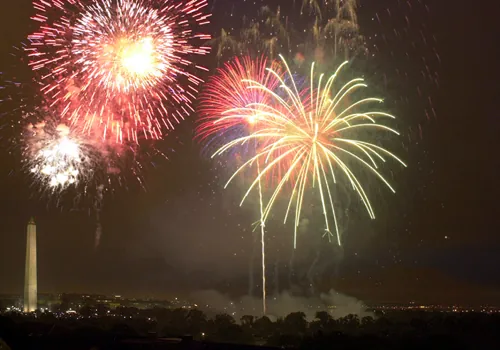
The fest belongs to Kingman, a town whose standing in the county is a matter of record rather than pride: a Kansas history reference layer confirms that Kingman is the county seat of Kingman County. Its ground is Riverside Park, where local news places the two thousand twenty-three edition from morning through to the fireworks that closed the night.
Anyone looking for the name of an organiser will not find one in this record. The news account names no single producing body; instead it points readers toward the Kingman Chamber of Commerce’s site, where the full list of the day’s events was posted. The chamber-published schedule card fills in the picture from another angle, crediting individual elements of the programme to individual sponsors and hosts. The Kingman Historical Society stands behind one element on that card, and the fire department stands behind another. The day, as documented, is a patchwork of hosted pieces rather than one organisation’s production, and this article keeps that arrangement exactly as the layers present it, unmerged and unembellished.
Quick Facts
| Item | Detail |
| Published name | All-American Family Fest |
| Host town | Kingman, the Kingman County seat |
| Venue | Riverside Park, Kingman |
| Anchor date | The Fourth of July |
| Edition described with particulars | Tuesday the fourth of July, two thousand twenty-three |
| Morning start | Nine o’clock, per the local news account |
| Evening finale | Fireworks at quarter to ten |
| Organising credit | No single organiser named in the record |
| Admission | No entry charge stated in any layer read |
History
For an event tied to the nation’s birthday, the fest keeps a remarkably quiet past. No layer read for this article states a founding year, prints a history of the celebration, or claims any anniversary for the fest itself. The two thousand twenty-three news account treats the day as an established fixture of the town’s calendar without pausing to explain how it began, and the chamber card is concerned entirely with what happens hour by hour, not with how the tradition started.
For a useful comparison, see the Kingman County Kansas Cessna Fest Festival for another county festival.
The one number that looks like an anniversary belongs to somebody else. On the chamber’s schedule card, the softball tournament woven into the day’s programme is billed as the tenth Annual Slam Fest tournament. That billing is the tournament’s own, recorded here exactly as printed, and it would be a fabrication to stretch it into an age for the fest as a whole. A ball tournament can reach its tenth running inside a younger festival, or an older one; the card does not say, and neither does anything else in the record.
The card does carry one reliable clue about its own age. Its wording includes social-distancing notes, the kind of instruction organisers printed during the pandemic period, which dates the document rather than the event. So the honest chronology is short: a full programme survives from a pandemic-era summer, a described edition follows in two thousand twenty-three, and the later years are represented only by a guide entry that declines to confirm its own date.
What to Expect
The documented shape of the day is long, loose and weighted toward families. In two thousand twenty-three the events in Riverside Park began at nine in the morning, and the night ended with a fireworks display at quarter to ten. Between those bookends, the chamber card supplies the fullest inventory of what the fest contains, and a visitor piecing together the likely texture of the day has to read the two documents together, knowing they come from different years.
From the card: a family parade; a cornhole tournament for anyone minded to compete; a family scavenger hunt that sends parties ranging across the grounds; free swimming during the day; a pooch party in the park, which makes this one of the few celebrations in the record that plans a place for dogs; and the Slam Fest softball tournament running alongside everything else. None of those elements is given a clock time in the layers read, apart from the morning start and the fireworks, so the day reads as a drift between activities rather than a timetable.
Two cautions belong with that inventory. The card predates the described edition by some years, and elements can change hands or drop away between summers. And the swimming, though free on the card, is one element of the programme; it says nothing about the cost of anything else, a point the planning section takes up directly.
Planning Your Visit
The honest starting point for planning is how little current paperwork this event generates. The most recent trace in the layers read is a festival-guide listing that places the fest on the third of July and marks that date with an asterisk, the guide’s own device for signalling a date it has not confirmed. A listing of that kind is a lead, not a promise, and it would be wrong to build travel around it without checking closer to the day.
The record itself suggests where that checking should happen. When the two thousand twenty-three edition came around, the local news account directed readers to the Kingman Chamber of Commerce’s site for the complete list of events, which makes the chamber the natural first port of call for anyone wanting the current year’s card. The chamber card and the news account both print contact names and details for individual elements of the programme; those details exist in the sources, though they are not reproduced here, and they underline how the day is run element by element rather than from one office.
Money needs a plain word. No layer read states a gate charge for this fest, in either direction. The free swimming on the older chamber card was a single hosted element, never a statement about entry to the grounds, and no visitor should arrive assuming the whole day costs nothing on the strength of it. What the record supports is simpler: a public park, a holiday crowd, a programme of hosted pieces, and a fireworks finish at quarter to ten on the one night the sources describe in full.
A Sample Day at the Festival
Arrive at Riverside Park for nine in the morning, when the two thousand twenty-three edition opened its day, and let the family parade set the tone before the competitions find their rhythm. Late morning suits the scavenger hunt, with the cornhole tournament running for those who would rather compete than wander. Around midday, the card’s free swimming offers the obvious escape from the July heat, and the pooch party gives the family’s dog its own hour of the holiday rather than a day left at home. The softball tournament fills the afternoon for spectators who want a seat and a scoreline. As the light goes, gather with the rest of the park and stay put: on the documented night, fireworks closed the celebration at quarter to ten, and nobody with sense leaves before them.
How This Festival Compares
The news account that preserves the two thousand twenty-three edition was a roundup, and its other entries put the fest in useful company. Sterling, Hutchinson, McPherson and North Newton each marked the same holiday with celebrations of their own in that account; those are other towns’ events, fenced off from this one, but the roundup’s structure shows Kingman’s entry standing as one town’s answer among several along the same summer corridor, distinguished by its park setting and its patchwork of hosts.
A different confusion needs fencing off by name. Saint Albans, Vermont has an event called Kingman Fest, and it shares nothing with this celebration beyond a word; it is unrelated, and none of its details belong in this record. Within Kansas, the fest’s closest contrast is the single-organiser festival model, where one body publishes one schedule under one name. Kingman’s day runs the other way: a chamber posting the list, a historical society and a fire department carrying individual elements, and a guide left to guess at the date afterwards.
A Visitor’s Checklist
- Confirm the current year’s date through the chamber before travelling, since the only later listing is unconfirmed
- Treat the third of July guide entry as a lead to check, not a fixed appointment
- Plan around a nine in the morning start, following the pattern of the described edition
- Bring swimwear if the programme keeps its free swimming element
- Pack for a dog if the pooch party returns to the card
- Enter the scavenger hunt early so clues can be worked through the day
- Keep the evening clear through quarter to ten for the fireworks
- Carry some cash, because no source states what the day costs
- Ask element hosts about their own pieces, since no single organiser publishes the whole
- Recheck the chamber’s event list in the final week before the holiday
Beyond the Festival Grounds
Kingman’s role as county seat gives the holiday a civic weight that the record hints at without spelling out. When the historical society takes charge of one element and the fire department takes another, the celebration doubles as a roll call of the town’s own institutions, each turning out in public on the one day the whole community is already watching. The chamber’s site, holding the full event list, acts as the town’s noticeboard for the occasion.
The regional roundup in the news account widens that picture. Town after town in the same coverage marked the Fourth with its own gathering, and Kingman’s fest is best understood as the local verse of a widely sung song rather than a bid for outside attention. The record contains no appeal to distant visitors at all; everything in it faces inward, toward the park and the people who use it.
Why the Festival Matters
A celebration assembled from hosted elements tells a truer story about a small county seat than a polished production would. The parade, the pool, the dogs, the ball games and the fireworks each belong to somebody in town, and the fest matters because it gathers those somebodies into one park on one day. Its documentation may be thin, but the two surviving documents agree on the essential point: this is a community entertaining itself, with its own societies, its own department and its own chamber doing the work in plain sight.
Frequently Asked Questions
Why does the name in print stop at All-American Family Fest?
Because that is as far as the sources take it. Local news and the festival-guide layer both print the name without any town or county prefix, and neither adds a further generic word. The longer title above this article is a device of the series, not a form the event has used.
Who actually runs the day in Kingman?
No layer read names a single organiser. The news account sends readers to the Kingman Chamber of Commerce’s site for the full list of events, and the chamber’s schedule card credits individual elements to individual sponsors and hosts, the Kingman Historical Society and the fire department among them. The day is run in pieces, and the record keeps those pieces separate.
Does any source promise that entry costs nothing?
None does. No gate charge is stated in any layer read, in either direction. The free swimming printed on the chamber card was one hosted element of the programme, and turning it into a claim about free entry would go beyond anything the sources say.
What should a reader make of the asterisk beside the third of July listing?
The asterisk is the festival guide’s own mark for a date it has not confirmed. The listing shows the fest still being carried in the guide’s pages, but it offers no programme and no particulars, and nothing read here documents an edition from two thousand twenty-four onward in any detail.
What to Expect From the Next Kingman County Kansas All-American Family Fest Festival
How often is Kingman County Kansas All-American Family Fest Festival held?
The documented editions gather around a single point in the year: the Fourth of July. The described edition fell on the holiday itself in two thousand twenty-three, the chamber card is a Fourth of July card, and the later guide listing sits in the same early-July window, one day ahead of the holiday and unconfirmed. Nothing in the record describes gatherings at any other season.
When is the next Kingman County Kansas All-American Family Fest Festival?
No source read for this article confirms a next date. The only forward trace is the festival guide’s early-July listing, asterisked as unconfirmed, and the chamber’s channels are where a full list appeared the last time the local press covered the day. A reader who wants certainty will have to ask in Kingman rather than trust the listing.
Will the dates change?
The anchor has been the holiday itself rather than a fixed weekend formula, and the one listing that strays from the fourth, placing the fest on the third, is the same listing its publisher flags as unconfirmed. Whether that signals a genuine shift to the day before, or simply an unverified guess, no layer read here settles.
Closing
The All-American Family Fest survives in print the way it appears to run in life: locally, lightly, and without much paperwork. One described day in Riverside Park, one full card from a harder summer, and one doubtful listing are enough to show a county seat spending its national holiday on its own people, its own hosts and its own fireworks. Readers who go should go as the record suggests the town itself goes, checking the chamber’s list, arriving in the morning, and staying until quarter to ten.