Sioux County Iowa Tulip Festival
For three days each May, the seat of Sioux County turns its downtown into a Dutch street scene in full bloom. Orange City hosts the celebration published on the organiser’s own site and by the state tourism layer as the Orange City Tulip Festival, and in a shorter form simply as the Tulip Festival. Both printed forms name the same event and are kept side by side here rather than merged. The weekend brings a street festival that opens at one in the afternoon, a parade that marches twice a day, dancers in Dutch dress, a show of traditional costume, and the music of a Dutch street organ built in nineteen oh nine. The organiser bills the twenty twenty-six edition as the eighty-fifth annual, always places the festival on the third weekend in May, and has published future dates running through two thousand twenty-nine. Beneath that tidy surface sits one untidy fact: the layers that document this festival disagree about the year it began, and this article presents both candidate years openly instead of picking a winner.
About the Festival
The event is run by the festival’s own organisation, which publishes the dates and the programme on its own site, and a city newsletter layer names a Friends of the Festival Foundation as a support body standing behind it. The setting is downtown Orange City together with the town’s festival grounds, and the published programme reaches the Dutch American Heritage Museum and the flower show site as well. Orange City is the seat of Sioux County, a point a reference layer’s county seat listing confirms, so the festival occupies the county’s civic centre as well as its cultural one. The organiser’s own site gives the timing rule plainly: the festival is always the third weekend in May. For twenty twenty-six, billed as the eighty-fifth annual, the organiser prints May fourteenth to sixteenth, while the state tourism layer prints May thirteenth to sixteenth, including a Wednesday opening for locals; both spans stand as printed.
Quick Facts
| Item | Detail |
| Published names | Orange City Tulip Festival, and in shorter form Tulip Festival, as printed by the organiser’s own site and the state tourism layer |
| Host town | Orange City, the seat of Sioux County |
| Setting | Downtown Orange City and its festival grounds, including the Dutch American Heritage Museum and the flower show site |
| Organiser | The festival’s own organisation, which publishes dates and programme on its own site, with a Friends of the Festival Foundation named as a support body in a city newsletter layer |
| Timing rule | Always the third weekend in May, per the organiser’s own site |
| Twenty twenty-six edition | Billed as the eighty-fifth annual; the organiser prints May fourteenth to sixteenth, while the state tourism layer prints May thirteenth to sixteenth with a Wednesday opening for locals; both spans stand as printed |
| Signature elements | The Straatfeest, the twice-daily Volksparade, the Dutch Dozen, a nineteen oh nine Dutch street organ, a carnival midway and nightly musical theatre |
| Tulips | Roughly fifty thousand bulbs imported from Holland are planted each year, per the organiser’s own FAQ layer |
| First year | Nineteen thirty-six per the organiser’s history page and the state tourism layer; nineteen thirty-three per a festival-guide layer and reference layers; neither year is adopted here |
| Admission | No charge is mentioned in any layer read |
History
The honest history of this festival begins with a disagreement. The organiser’s own history page states that the celebration began in nineteen thirty-six, and the state tourism layer agrees. A festival-guide layer and reference layers tell it differently: on their account, the first tulip festival was held in nineteen thirty-three, three years earlier. Both versions circulate in layers that document the event in detail, and neither carries the kind of proof that would let a careful writer discard the other. This article therefore adopts neither year. The founding is presented as the record presents it, which is to say disputed between nineteen thirty-three and nineteen thirty-six.
The eighty-fifth annual billing attached to the twenty twenty-six edition does not settle the argument, and it is recorded here strictly as a billing. Festival numbering is the organiser’s own bookkeeping, and counting backwards from it would manufacture a founding year out of arithmetic rather than evidence, adding a third answer to a question that already has two. The billing is useful for what it genuinely shows, a celebration with a long run of editions behind it, and it is left at that.
What the layers do agree on is the festival’s place in its town. Orange City is the seat of Sioux County, and the celebration fills its downtown and festival grounds each May. The support structure is visible in print as well: a city newsletter layer names the Friends of the Festival Foundation as a support body standing behind the celebration. The planting itself is part of the tradition the organiser describes, since its own FAQ layer states that roughly fifty thousand tulip bulbs imported from Holland are planted each year. That figure is recorded as the organiser’s claim, in the organiser’s own terms. No layer read reports that the festival has ended or paused, and the organiser has published future dates through two thousand twenty-nine, so the documented story is one of continuity, whichever of the two founding years a reader prefers.
For a useful comparison, see the Scott County Iowa Tug Fest Festival for another county festival.
What to Expect
The twenty twenty-six programme, as the organiser and state layers lay it out, is built around the street. The Straatfeest begins at one in the afternoon, bringing Dutch dancing and the Mode Show, the presentation of traditional Dutch costume, into the heart of downtown. Twice each day the Volksparade marches, at about a quarter past two and again at six in the evening, giving visitors two chances to see it and giving the day a rhythm of afternoon and evening peaks. The Dutch Dozen appears among the named programme elements, and a Dutch street organ dating to nineteen oh nine supplies music with a pedigree far older than the festival itself. Beyond the street programme, the same layers list a carnival midway, nightly musical theatre, the Dutch American Heritage Museum, and a flower show, so the weekend spreads from open-air spectacle to indoor exhibition. Underpinning all of it is the planting the organiser’s FAQ layer describes, roughly fifty thousand tulip bulbs imported from Holland and planted each year, a claim recorded here as the organiser states it. Every element here comes from the organiser and state layers for twenty twenty-six.
Planning Your Visit
The anchor for any plan is the organiser’s own timing rule: the festival is always the third weekend in May. For twenty twenty-six, visitors will find two printed spans rather than one. The organiser’s site gives May fourteenth to sixteenth, while the state tourism layer gives May thirteenth to sixteenth, its extra day being a Wednesday opening for locals. Both spans are printed here as their layers print them, and a visitor reading either source should know the other exists. The setting is downtown Orange City and its festival grounds, taking in the Dutch American Heritage Museum and the flower show site. None of the layers read attaches a charge to admission, so no price on entry appears in the checkable record. Looking further ahead, the organiser’s own site publishes future dates through two thousand twenty-nine under the same rule, so the shape of a future trip is easy to sketch years out.
A Sample Day at the Festival
A visitor following the twenty twenty-six programme as the layers print it might begin at the flower show, where the tulips can be seen up close, and continue to the Dutch American Heritage Museum before the street programme gathers pace. At one in the afternoon the Straatfeest takes over downtown, with Dutch dancing and the Mode Show presenting traditional costume. The first Volksparade follows at about a quarter past two, and the hours after it leave room for the carnival midway, the Dutch Dozen, and the sound of the nineteen oh nine street organ drifting across the grounds. At six in the evening the Volksparade marches again, a second performance that lets the day be paced gently rather than rushed. The evening closes with the nightly musical theatre the organiser and state layers describe. Each piece comes from the documented twenty twenty-six programme; the order is a visitor’s convenience, not a published schedule.
How It Compares
Iowa holds more than one Dutch tulip celebration, and the layers are careful to keep them apart. The Tulip Time festival at Pella, in Marion County, is a separate tulip festival with its own town, its own organisation and its own record. It is not this event, and nothing from its programme or history belongs in an account of Orange City’s weekend. The Orange City festival stands on its own documented ground: a third weekend in May, a twice-daily parade, a street organ from nineteen oh nine, and a founding year its own sources state two different ways.
A Visitor’s Checklist
- Check which printed span you are following, since the organiser gives May fourteenth to sixteenth for twenty twenty-six and the state tourism layer gives May thirteenth to sixteenth with a Wednesday opening for locals.
- Keep the third weekend in May as your anchor if you are planning for a future year, since the organiser states that the festival always falls then.
- Aim to be downtown by one in the afternoon for the Straatfeest and its Dutch dancing and Mode Show.
- Pick one Volksparade, at about a quarter past two or at six in the evening, and give the other hours to the museum and flower show.
- Leave an evening free for the nightly musical theatre.
- Remember that the record states no admission charge, and check the organiser’s own site before travelling, since it publishes the dates and programme.
Beyond the Festival Grounds
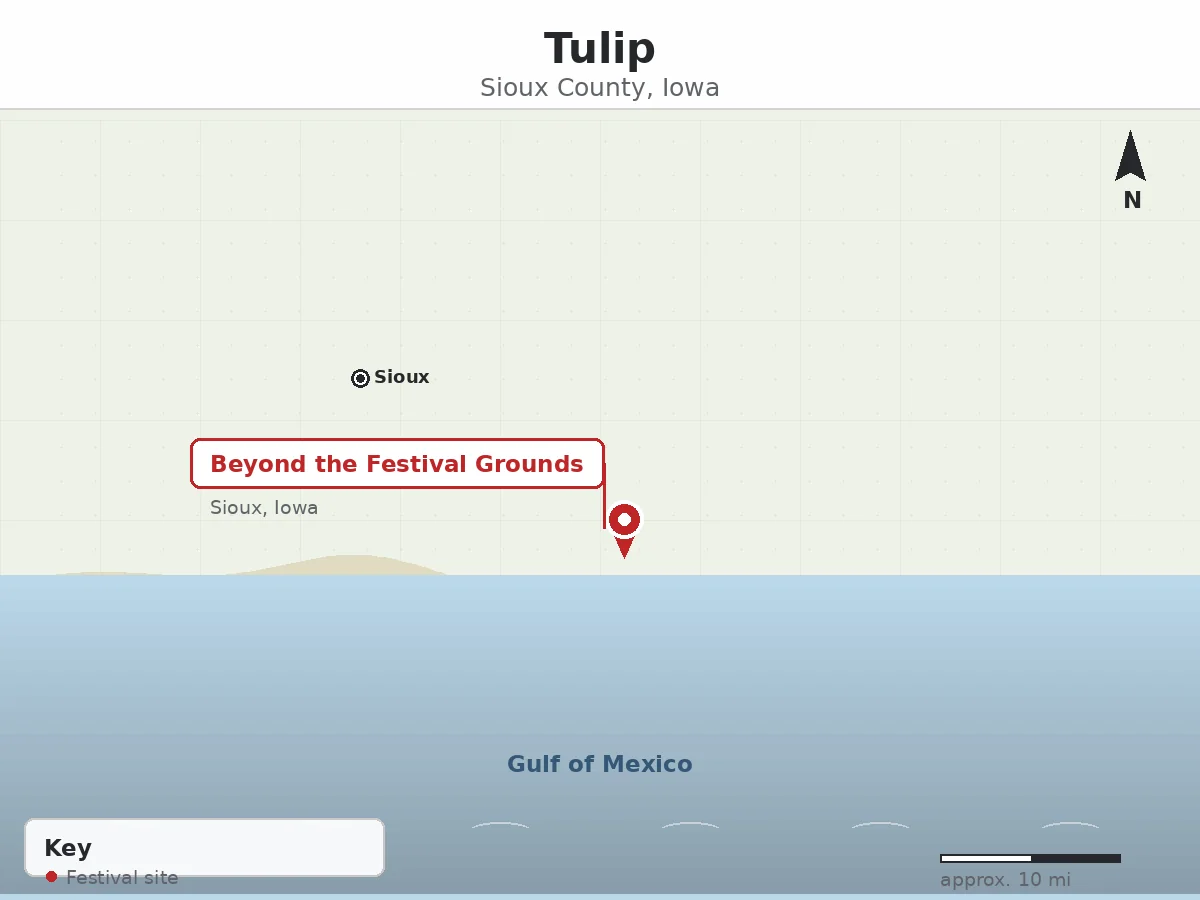
The facts this article rests on reach only a little way past the festival itself, and this section stays inside them. The Dutch American Heritage Museum stands within the festival’s own grounds and programme, a permanent home for the heritage the weekend celebrates on the street. The flower show site likewise belongs to the festival’s documented geography. Orange City itself is the seat of Sioux County, which gives a festival trip a civic centre as well as a cultural one. Anything further afield lies outside the layers read for this article and is left to other sources.
Why It Matters
A celebration that returns to the same weekend every year becomes part of how a town keeps time, and the documented record here shows exactly that kind of fixture. The organiser’s third weekend rule, its published dates running through two thousand twenty-nine, and the eighty-fifth annual billing for twenty twenty-six all describe an institution woven into Orange City’s calendar rather than an occasional event. The fifty thousand bulbs the organiser’s FAQ layer says are planted each year speak to the labour that fixture demands. Even the disagreement over nineteen thirty-three and nineteen thirty-six carries a kind of significance: the festival is old enough for its beginnings to be remembered two ways, and honest writing holds both at once rather than flattening them into one tidy date.
Frequently Asked Questions
In which year did the Orange City celebration actually begin?
In print, the question carries two answers, and neither is endorsed here. The organiser’s own history page and the state tourism layer state that the celebration began in nineteen thirty-six. A festival-guide layer and reference layers state that the first tulip festival was held in nineteen thirty-three. The eighty-fifth annual billing for twenty twenty-six is the organiser’s bookkeeping and does not prove either year.
Why do the twenty twenty-six dates differ between sources?
Because the two layers print different spans. The organiser’s own site gives May fourteenth to sixteenth, two thousand twenty-six, while the state tourism layer gives May thirteenth to sixteenth and says its span includes a Wednesday opening for locals. Both spans are recorded as printed, and the difference is a matter of what each layer counts as the festival’s opening.
What are the Straatfeest and the Volksparade?
On the organiser and state layers for twenty twenty-six, the Straatfeest is the street festival that begins at one in the afternoon, featuring Dutch dancing and the Mode Show of traditional costume. The Volksparade is the parade that marches twice daily, at about a quarter past two and again at six in the evening.
How many tulip bulbs are planted for the festival?
The organiser’s own FAQ layer states that roughly fifty thousand tulip bulbs imported from Holland are planted each year. That figure is recorded here as the organiser’s claim, in the organiser’s own terms, rather than as an independently counted total.
What to Expect From the Next Sioux County Iowa Tulip Festival
How often is Sioux County Iowa Tulip Festival held?
The organiser’s own site states the rule directly: the festival is always the third weekend in May. Its billing of the twenty twenty-six edition as the eighty-fifth annual, together with published dates for the years ahead, describes a celebration that returns every year to that fixed place in the calendar.
When is the next Sioux County Iowa Tulip Festival?
The organiser’s site publishes future dates through two thousand twenty-nine, each falling on the third weekend in May. A reader planning ahead can therefore work from the organiser’s own published dates, while remembering that the state tourism layer printed a slightly longer span for twenty twenty-six by adding a Wednesday opening for locals.
Will the dates change?
The weekend placement is the organiser’s stated rule, the third weekend in May, and nothing in the layers read suggests that rule is changing. The exact printed span can still vary by source, as it did for twenty twenty-six, when the organiser printed three days and the state tourism layer printed four including the locals’ Wednesday. Checking the organiser’s own site before a trip remains the soundest course.
Closing Thoughts
The Orange City Tulip Festival, printed in shorter form as the Tulip Festival, offers a Dutch street celebration with twice-daily parades, dancing, costume, theatre and an organ older than the event itself, all anchored to the third weekend in May in the Sioux County seat. Its record is generous with programme detail and future dates, and candidly divided over the year it all began. This article has kept the division visible, set out the programme exactly as the organiser and state layers give it, and left the founding where the layers leave it: in nineteen thirty-six on one telling, in nineteen thirty-three on another, and adopted here as neither.