Linn County Iowa Marion Arts Festival
Each May, on the third Saturday of the month, a single street in Uptown Marion gives itself over entirely to art. Seventh Avenue closes to ordinary business and fills with fifty presenting artists, a food court, live music and schoolchildren’s work in the shopfront windows, while runners who started at half past seven in the morning are still cooling down from a half marathon. Admission costs nothing. The day is the Marion Arts Festival, a free one-day event founded, by its own account, in nineteen ninety-two, and it has grown into the kind of occasion a whole town plans its spring around: part juried art fair, part street party, part fundraiser, with more than a thousand handmade ceramic bowls sold along the way to stock area food banks.
About the Festival
The Marion Arts Festival takes place in Uptown Marion, the historic commercial heart of Marion in Linn County, Iowa. Its published name is exact and consistent: the festival’s own site, the city of Marion’s site, the state tourism office’s art-festival roundup and the artist-call layers all print “Marion Arts Festival”, and the festival’s own material shortens it to MAF once the full name has been given. The Uptown Marion destination layer states that the festival is “brought to you by the Marion Chamber of Commerce”, while an art-fair trade layer lists the promoter simply as “Marion Arts Festival”; the two descriptions sit side by side here, unmerged, because the layers themselves never combine them. The festival’s own site calls the event a “by the community, for the community” occasion, and the programme bears that out, mixing professional artists with school musicians, student potters and shopkeepers who lend their windows to a gallery.
Quick Facts
| Item | Detail |
| Published name | Marion Arts Festival, shortened to MAF in the festival’s own material |
| Host town | Marion, Linn County, Iowa |
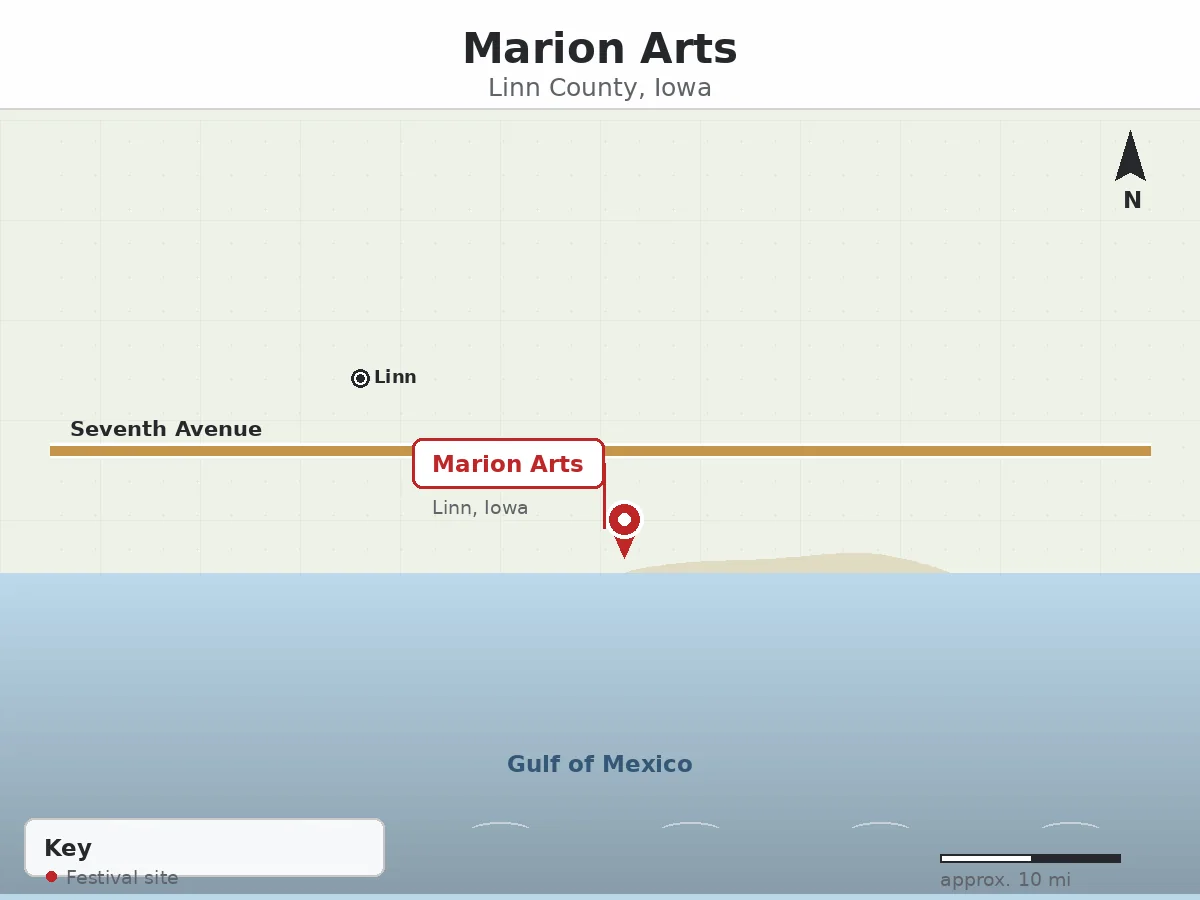
| Venue | Seventh Avenue between Tenth and Twelfth Streets, Uptown Marion, with the Central Plaza, Marion Square Park and the adjoining depot |
| Brought to you by | The Marion Chamber of Commerce, per the Uptown Marion destination layer |
| Timing | The third Saturday of each May, open nine in the morning to five in the afternoon |
| Admission | Free to the public; a donation of one dollar or more casts a fan-favourite ballot |
| Founded | Nineteen ninety-two, per the festival’s own about page |
| Documented editions | Thirty-first annual in twenty twenty-three through thirty-fourth annual in twenty twenty-six |
| Signature elements | Fifty presenting artists, the Empty Bowls sale, a half marathon and five-kilometre races |
History
The festival’s own about page gives the founding plainly: the Marion Arts Festival began in nineteen ninety-two and is held on the third Saturday of each May. The artist-call layers let that claim be followed year by year in recent times. The twenty twenty-three edition fell on Saturday the twentieth of May, open nine in the morning to five in the afternoon, and was billed as the thirty-first annual. The twenty twenty-four edition, on Saturday the eighteenth of May, was billed as the thirty-second annual. In twenty twenty-five, on Saturday the seventeenth of May, again from nine to five, the billing rose to the thirty-third annual, and the artist-call layer for that year records fifty artists presenting to an audience of ten thousand. The city of Marion billed the twenty twenty-six edition, on Saturday the sixteenth of May, as the thirty-fourth annual. One mailing layer’s header strayed from this sequence and called the twenty twenty-three event the thirty-fifth annual, but its own body text and every other layer say thirty-first, so the header figure is treated here as that single layer’s error and nothing is built on it. One artist-call header also prints the name with a singular “Art”, a variant its own body does not repeat and no other layer adopts.
The ground itself has shifted within living memory of the festival. The festival’s material notes that the artists moved in recent years out of Marion Square Park and onto the renovated festival street on Seventh Avenue outside the park, with the park kept for additional activities rather than the main display. Marion carries an older distinction of its own: the city’s own history page records that Marion was founded and platted as the county seat of the new Linn County in eighteen thirty-nine, before anyone actually lived there. That is a historical status only. Cedar Rapids is the present-day county seat of Linn County, and Marion’s festival belongs to a town that was a seat on paper before it was a town at all.
What to Expect
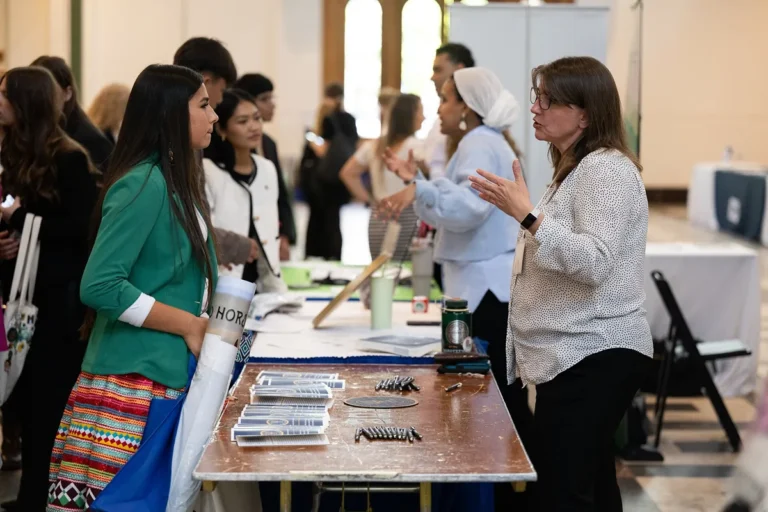
Browsing the artists’ booths is the spine of the day. The festival’s own twenty twenty-six schedule places fifty presenting artists and two emerging artists along Seventh Avenue, and the artist-call layer for twenty twenty-five likewise records fifty artists shown to an audience of ten thousand. A food court occupies the Central Plaza, where the twenty twenty-six schedule also sets music sets and a school music showcase, so the plaza works as the day’s eating and listening room while the avenue handles the looking and buying.
For a useful comparison, see the Linn County Iowa AsianFest Festival for another county festival.
Marion Square Park, relieved of the main artist rows, becomes the hands-on quarter. The twenty twenty-six schedule lists create-and-explore activities there: a canvas graffiti and paint activity, wheel throwing and a clay table, printmaking and storytelling. The Empty Bowls sale belongs to the same generous spirit. The festival’s own about text, as carried in a listing layer, explains that more than five hundred area students create over one thousand ceramic bowls, which are sold on the day to raise funds for area food banks, turning a school pottery project into one of the festival’s largest single acts of giving. Art also spills into the shops: the twenty twenty-six schedule describes a self-guided window gallery of local school students’ art in Uptown shopfronts, running from the eighth to the eighteenth of May, so the exhibition begins more than a week before the festival day itself. And for those who arrive on foot at speed, the city and festival layers record the associated half marathon and five-kilometre races on the Saturday morning, starting at half past seven.
Planning Your Visit
The shape of the day is fixed by the festival’s own about page: the third Saturday of each May, and the documented editions bear the pattern out, falling on the twentieth of May in twenty twenty-three, the eighteenth in twenty twenty-four, the seventeenth in twenty twenty-five and the sixteenth in twenty twenty-six. The gates, such as they are on an open street, run nine in the morning to five in the afternoon, the hours printed for the twenty twenty-three, twenty twenty-five and twenty twenty-six editions alike. Everything happens within a few connected spaces in Uptown Marion: Seventh Avenue between Tenth and Twelfth Streets holds the artists, the Central Plaza holds the food court and music, Marion Square Park holds the making activities, and the adjoining depot stands as part of the printed setting.
Admission is free to the public, as the Uptown Marion destination layer states it. The one sum of money the festival’s own schedule attaches to attendance is voluntary: a donation of one dollar or more casts a fan-favourite ballot, which is a gift toward the event, not a charge for entering it. Runners should plan backwards from half past seven in the morning, when the half marathon and five-kilometre races start, well before the artists open. Everyone else can treat nine o’clock as the natural beginning, with the window gallery already up in the shopfronts for those who came to town earlier in the month.
A Sample Itinerary
A festival day, assembled only from what the twenty twenty-six schedule and the city layer print, might run like this. Arrive before half past seven if you are racing, and watch or run the half marathon and five-kilometre starts while the avenue is still being set. At nine, when the festival opens, walk Seventh Avenue end to end once without buying anything, noting which of the fifty presenting artists and two emerging artists deserve a second, slower pass. Late morning belongs to Marion Square Park: try the clay table or the wheel throwing, watch the printmaking, and buy an Empty Bowl while the choice is widest. Take lunch in the Central Plaza food court and stay for a music set or the school music showcase. Spend the early afternoon on your second pass along the booths and on the self-guided window gallery in the Uptown shopfronts, then cast a fan-favourite ballot with a donation of one dollar or more before the day closes at five.
How It Compares
Marion’s is not the only arts festival within reach, and the layers are careful to keep the neighbours distinct. The Iowa Arts Festival in Iowa City is a different festival in a different county, Johnson County, not a sister edition of this one. Within Marion itself, the Fall Into Marion parade is a separate town event, unrelated to the May festival beyond sharing the town’s streets. One further name deserves a warning rather than a listing: a generated travel-guide page promotes a “Marion Riverside Music and Art Festival” in Marion, but no credible layer documents any such event, and that page’s invention is noted here only so that nobody goes looking for a festival that the record does not contain.
A Visitor’s Checklist
- Arrive for the nine o’clock opening to see all fifty artists before the crowds thicken
- Bring a dollar or more in donation money if you want to cast a fan-favourite ballot
- Try one hands-on activity in Marion Square Park, from wheel throwing to printmaking
- Buy an Empty Bowl early, while the students’ thousand bowls are still well stocked
- Walk the window gallery in the Uptown shopfronts, up from the eighth of May
- Runners: be ready for a half past seven start in the half marathon or five-kilometre race
- Leave time for a Central Plaza music set or the school music showcase at lunch
Beyond the Festival
The festival’s own geography suggests the modest extensions. Uptown Marion is the setting the layers describe: the Central Plaza, Marion Square Park and the adjoining depot all stand within the same few blocks as the festival street, so the day naturally widens from the booths to the plaza and the park without any journey at all. The window gallery turns the Uptown shopfronts into part of the exhibition for ten days, from the eighth to the eighteenth of May, which gives the town a quieter, slower way to meet the festival before its single loud Saturday arrives. Nothing in the layers reaches further than that, and the festival is best understood as an Uptown occasion through and through.
Why It Matters
Plenty of art fairs sell art; this one also empties a thousand bowls into the community’s food banks. The Empty Bowls figures from the festival’s own about text, more than five hundred students making over one thousand bowls, describe a festival that has organised its own generosity into the programme, so that the schools supply the craft, the visitors supply the money and the food banks receive the proceeds. Around that centre, the rest of the day does the same work at different scales: emerging artists share a street with fifty presenting artists, school musicians play the plaza, schoolchildren’s art hangs in shop windows, and the whole event remains free to enter. A festival “by the community, for the community” is a slogan on its own site; the documented programme is what makes the slogan plausible.
Frequently Asked Questions
What is the Empty Bowls sale?
The festival’s own about text, as carried in a listing layer, describes it as the festival’s student pottery project: more than five hundred area students create over one thousand ceramic bowls, and the bowls are sold on the day to raise funds for area food banks. Buying a bowl is therefore both a purchase of a student’s work and a contribution to the food banks the sale supports.
How does the fan-favourite ballot work?
The festival’s own schedule notes that a donation of one dollar or more casts a fan-favourite ballot. It is a voluntary donation toward the event, not a price of admission, since admission itself is free to the public, as the Uptown Marion destination layer states.
What can visitors make themselves in Marion Square Park?
The twenty twenty-six schedule lists create-and-explore activities in the park: a canvas graffiti and paint activity, wheel throwing and a clay table, printmaking and storytelling. These run alongside the artists’ booths on Seventh Avenue, which moved out of the park and onto the renovated festival street in recent years.
When do the races start on festival morning?
The city of Marion’s news layer and the festival’s own schedule place the associated half marathon and five-kilometre races on the Saturday morning, starting at half past seven, an hour and a half before the festival itself opens at nine.
What to Expect From the Next Linn County Iowa Marion Arts Festival
How often is Linn County Iowa Marion Arts Festival held?
The festival’s own about page states that it is held on the third Saturday of each May, and the documented editions follow that rhythm year after year: the twentieth of May in twenty twenty-three, the eighteenth in twenty twenty-four, the seventeenth in twenty twenty-five and the sixteenth in twenty twenty-six, billed in sequence as the thirty-first through thirty-fourth annual editions.
When is the next Linn County Iowa Marion Arts Festival?
The layers read document the run through Saturday the sixteenth of May, twenty twenty-six, the thirty-fourth annual edition, and print no announced date beyond it. The festival’s own stated pattern, the third Saturday of each May, is the only guide the record offers for the edition that follows.
Will the dates change?
No announcement of any change appears in the layers read. The third-Saturday-of-May placement is stated on the festival’s own about page and holds across all four documented recent editions, even as other details, such as the artists’ move from the park to the festival street, have changed around it.
A Final Word
The Marion Arts Festival asks very little of its visitors: one Saturday in May, a walk down Seventh Avenue, perhaps a dollar donated and a bowl carried home. In return it offers fifty artists, a park full of wet clay and paint, students’ work in every window and a town eating lunch together in the plaza. For an event that began, by its own account, in nineteen ninety-two, that is a durable formula, and the record through twenty twenty-six shows it still working.