Starke County Indiana Yellowstone Trail Festival
Each August, the small Starke County town of Hamlet turns its fairgrounds over to a weekend built around one of the most evocative road names in American travel history. The gathering is printed under several closely related names. The organiser’s own website uses the long form, Yellowstone Trail Festival, in its text, while Indiana Bicentennial Commission project lists shorten it to Yellowstone Trail Fest, and the organiser’s site also calls itself Yellowstone Trailfest in places. All three forms point to the same Hamlet event: a themed celebration of the historic Yellowstone Trail, held at the Starke County Fairgrounds on the third weekend of August. The trail it honours was a pioneering coast-to-coast driving route, and the festival borrows the scenery of the national park at the road’s western end, transplanting geysers, a little train and roaming characters onto an Indiana fairground for two days each summer.

About the Festival
The Yellowstone Trail Festival belongs to Hamlet, a town in the southern part of Starke County in northwestern Indiana. Hamlet is not the county seat; that role belongs to Knox, elsewhere in the county. The festival’s home ground is the Starke County Fairgrounds in Hamlet, the venue named in a festival directory listing for the twenty twenty-six edition. A Starke County Public Library tidbit, describing the related Hamlet Rendezvous project in a Bicentennial-era season, calls the same ground the Starke County 4-H Fairgrounds, so the fairgrounds carry both namings across the layers that mention them.
Documentation for the event comes chiefly from the festival’s own website, which serves as the organiser layer, and from the state’s Indiana Bicentennial Commission pages for Starke County, where the county coordinator names the festival among the county’s legacy projects. The Bicentennial Commission’s page for the related Hamlet Rendezvous prints the organisation behind that project as Hester’s Farm and Yellowstone Trail Fest, a name recorded here exactly as it appears there. A festival directory listing supplies the dated twenty twenty-six edition and most of the programme detail. Taken together, those layers describe an annual August weekend that mixes a car show, themed entertainments and fireworks with the memory of the old transcontinental road that once carried motorists through this part of Indiana.
Quick Facts
| Item | Detail |
| Published names | Yellowstone Trail Festival; also printed Yellowstone Trail Fest and Yellowstone Trailfest |
| Host town | Hamlet, Starke County, Indiana |
| County seat | Knox (Hamlet is not the county seat) |
| Venue | Starke County Fairgrounds, Hamlet |
| Timing | Third weekend of August, as stated on the organiser’s own website |
| Twenty twenty-six edition | Fifteenth and sixteenth of August, twenty twenty-six, per a festival directory listing |
| Admission | Described as free in the festival directory listing |
| Theme | Destination Yellowstone National Park, per the directory listing |
| Organiser record | The festival’s own website; the Bicentennial Commission’s Rendezvous page names Hester’s Farm and Yellowstone Trail Fest |
History
The history that gives this festival its name belongs to a road, not to the event itself. Layers describing the trail state that the Yellowstone Trail was established in nineteen twelve as America’s first transcontinental highway, a route stitched together so that motorists could drive from coast to coast in the early automobile age; a road-history blog gives that account, and the festival directory agrees on the nineteen twelve year as printed. Travellers on the trail passed through northern Indiana, and the Bicentennial Commission’s project description notes a campsite at the Hamlet grounds used by Yellowstone Trail travellers from nineteen twelve onward. That inheritance is what the festival celebrates. It would be wrong, though, to hand the road’s nineteen twelve date to the festival: the year belongs to the highway’s establishment, and nothing in the layers checked assigns the Hamlet gathering a founding year of its own. How long the festival itself has run is a question the surviving layers simply leave unanswered.
What the layers do show is the festival’s place in a more recent chapter of local commemoration. When Indiana marked its bicentennial, Starke County’s projects were gathered on the state Bicentennial Commission’s county pages, and the county coordinator named the Yellowstone Trail Festival there as a legacy project, with the shorter Yellowstone Trail Fest form used in the Commission’s project lists. Alongside it sat the Hamlet Rendezvous, a related living-history project at the same fairgrounds, whose Commission page names the organisation as Hester’s Farm and Yellowstone Trail Fest. The festival’s own website, which calls itself Yellowstone Trailfest in its own naming, carries the event forward as an annual fixture on the third weekend of August, and the directory listing for twenty twenty-six shows that rhythm still holding, with the celebration set for the fifteenth and sixteenth of that month.
For a useful comparison, see the Starke County Indiana North Judson Mint Festival for another county festival.
What to Expect
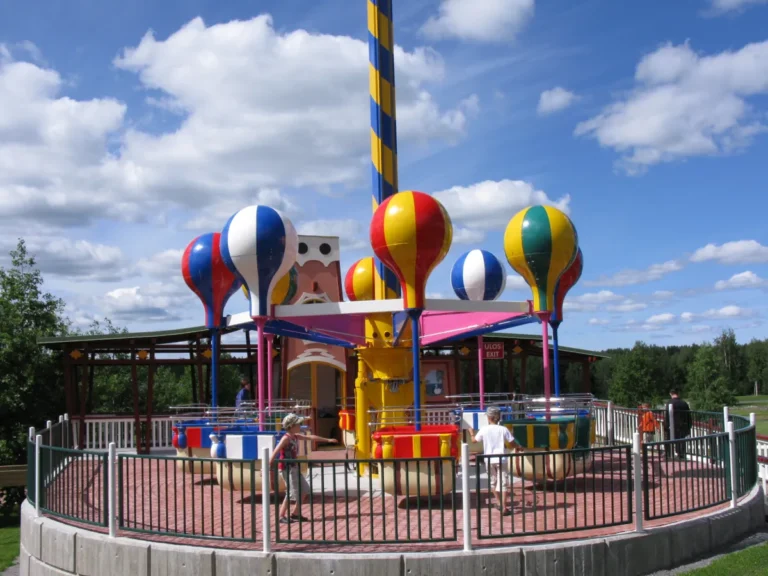
Nearly everything documented about the on-the-ground programme comes from one festival directory listing, and the picture it paints is playful. The listing gives the twenty twenty-six edition a Destination Yellowstone National Park theme, with costumed characters roaming the fairgrounds throughout the weekend. On the hour, a geyser erupts in imitation of Old Faithful, the famous Yellowstone geyser, so the fairground keeps a rough appointment with the park’s best-known spectacle all day long. A train ride carries the joke further under the name Ol’ Faithful Express. For vehicle enthusiasts, the listing describes a car show and swap meet sponsored by Street Freaks, with entry fees benefiting the Starke County Humane Shelter, so the show field raises money for the county’s animal shelter while it displays. Contests run alongside, including a competition for sculpture made from repurposed metal, and fireworks close the programme as the listing presents it.
Separate from that programme, and not to be folded into it, stands the Hamlet Rendezvous as the Bicentennial Commission describes the project. In the Commission’s account, the Rendezvous at the same grounds takes the shape of a living-history village: blacksmithing, spinning, cooking in cast iron over open fires, needlework, weaving, archery and throwing games, all set on the campsite that trail travellers used from nineteen twelve onward. That description belongs to the Rendezvous project layer of the record. It evokes the world of the early motorists and the older crafts behind them, but it is the Commission’s portrait of a related project, not a listing of what the present-day festival itself stages.
Planning Your Visit
The organiser’s own website fixes the festival’s place in the calendar as the third weekend of August, and the directory listing’s twenty twenty-six dates, the fifteenth and sixteenth of August, sit exactly on that weekend for their year. A visitor planning around the event should therefore think in terms of a mid-August Saturday and Sunday at the Starke County Fairgrounds in Hamlet, allowing the weekend to be shaped by the listings that appear closer to the date. Hamlet is a small town, and the fairgrounds are its gathering place for the weekend, with the fair’s entertainments concentrated on the grounds rather than scattered through the town.
On cost, the only statement in the record comes from the festival directory listing, which describes admission as free; that description rests on the listing alone and is best treated as the listing’s account rather than a multiply confirmed policy. One charge that the listing does mention belongs to exhibitors, not visitors: the car show and swap meet carry entry fees, and those fees benefit the Starke County Humane Shelter. They are show-entry contributions directed to the shelter, not a gate price for walking the grounds. Because the documented programme leans so heavily on a single listing, anyone travelling a distance would be sensible to confirm the current year’s dates and lineup through the organiser’s own website before setting out, since that site is the layer that speaks for the festival itself.

A Sample Day at the Fairgrounds
A Saturday shaped by the directory listing’s programme might begin with a walk through the car show and swap meet, where Street Freaks’ entrants line the field and the entry fees quietly do their work for the humane shelter. As the morning turns, the hourly geyser gives the day its rhythm, each imitation eruption drawing a small crowd back toward the centre of the grounds, and costumed characters drift through the scene in keeping with the national park theme. The Ol’ Faithful Express offers a gentler circuit of the grounds by train, and the repurposed-metal sculpture entries reward a slower look, since each piece hides its former life as scrap inside a new shape. Evening belongs to the fireworks that the listing places at the close of the programme, sending visitors home under the same sky the trail travellers camped beneath.
How It Compares
The closest point of comparison is also the easiest to confuse: the Hamlet Rendezvous. The two share the fairgrounds and the Yellowstone Trail inheritance, and the Bicentennial Commission treats them as kindred county projects. But they are documented differently. The Rendezvous is a living-history village in the Commission’s description, built around demonstrations of older crafts on the historic travellers’ campsite. The festival, by contrast, is documented through its own website and the directory listing as a themed summer weekend of geysers, a miniature train, a car show and fireworks. Reading the Rendezvous programme into the festival would invent a festival that no layer describes.
Beyond Starke County, the Yellowstone Trail’s long route means other states along the old highway hold their own trail-themed gatherings and commemorations. Those are separate events, organised by their own communities on their own stretches of the road. Hamlet’s weekend is the Indiana expression of that shared inheritance, anchored to its own fairgrounds and its own campsite history rather than to any national programme.
Visitor Checklist
- Aim for the third weekend of August, the timing the organiser’s website states.
- Check the organiser’s own website for the current year’s confirmed dates before travelling.
- Head for the Starke County Fairgrounds in Hamlet, remembering that Knox, not Hamlet, is the county seat.
- Treat admission as described by the directory listing, which calls the event free.
- Keep some cash or entry money in mind only if entering the car show or swap meet, whose fees benefit the Starke County Humane Shelter.
- Time a walk around the grounds to catch one of the hourly geyser eruptions.
- Stay into the evening for the fireworks the listing describes.
- Do not expect the Hamlet Rendezvous living-history programme as part of the festival itself.
Beyond the Fairgrounds
The fairgrounds sit within a landscape shaped by the trail era itself. The Commission’s project pages preserve the detail that the grounds’ campsite served Yellowstone Trail travellers from nineteen twelve onward, when the route was new and a cross-country drive was an expedition rather than a commute. Hamlet remains a small Starke County town, and the county around it is a rural corner of northwestern Indiana whose seat is Knox. The festival’s setting is therefore part of its meaning: visitors are standing on ground that early motorists actually used, in a county that chose this road story as one of its bicentennial legacy themes.
Why It Matters
A themed weekend at a county fairground might look like simple summer fun, and much of it is. Underneath the geyser jokes and the little train, though, the festival is doing the work of local memory. The Yellowstone Trail was the first highway of its kind in the country, and it ran through communities like Hamlet that the later interstates would leave off the main road. By returning each August to the fairgrounds where trail travellers once camped, the festival keeps that chapter of the town’s past in active use rather than letting it fade into a marker by the roadside. The car show fees flowing to the county humane shelter tie the commemoration to a present-day local cause, so the weekend serves the county as it is while it honours the road as it was.
Frequently Asked Questions
Is the Hamlet Rendezvous programme part of the festival?
Not as the layers describe things. The Rendezvous is a related living-history project at the same fairgrounds, and its programme of blacksmithing, spinning, weaving and other demonstrations comes from the Bicentennial Commission’s description of that project. The festival’s own documented programme, from the directory listing, centres on the national park theme, the car show, the train ride and fireworks.
Why does an Indiana festival carry a Yellowstone National Park theme?
Because the road it celebrates led there. The Yellowstone Trail, established in nineteen twelve as America’s first transcontinental highway, pointed motorists toward Yellowstone National Park, and the directory listing shows the Hamlet festival playing on that destination with its geyser, its costumed characters and the Ol’ Faithful Express.
When did the festival itself begin?
The layers checked do not say. Nineteen twelve is the year the Yellowstone Trail was established, and it belongs to the road’s history. No layer assigns the Hamlet festival a founding year, so any claim that the event dates from the trail’s early days goes beyond what the record supports.
Which name is the right one for this event?
All three printed forms refer to the same Hamlet festival. The organiser’s website text and the Bicentennial Commission’s Starke County page use Yellowstone Trail Festival, Commission project lists and the directory use Yellowstone Trail Fest, and the organiser’s site also styles itself Yellowstone Trailfest.
What to Expect From the Next Starke County Indiana Yellowstone Trail Festival
How often is Starke County Indiana Yellowstone Trail Festival held?
The organiser’s website presents it as an annual event fixed to the third weekend of August, and the directory listing’s twenty twenty-six edition falls on that weekend, so the documented pattern is one edition each year in mid-August.
When is the next Starke County Indiana Yellowstone Trail Festival?
On the organiser’s stated rhythm, the next edition falls on the third weekend of August following the twenty twenty-six edition of the fifteenth and sixteenth of August. Confirming the exact days on the organiser’s own website remains the reliable course, since that site is the festival’s own voice in the record.
Will the dates change?
The third-weekend-of-August placement comes from the organiser’s website rather than from a single year’s listing, which makes it the stable element in the record. Individual years can still shift their particular days as the calendar moves, so the specific dates for any coming edition should be taken from the organiser’s current information.
Closing
For two days each August, Hamlet borrows the grandeur of a national park it never had and sets it down on the fairgrounds of a small Indiana town, in honour of the road that once brought the continent past its door. Geysers erupt on the hour, a little train hauls its passengers, old cars gather for a good cause, and fireworks finish the night. The Yellowstone Trail Festival is modest in scale, but the story it keeps alive, of the first transcontinental highway and the travellers who camped on this very ground, is anything but.