Monroe County Indiana Lotus World Music and Arts Festival
For four autumn days, downtown Bloomington trades its ordinary rhythm for drums, strings and voices drawn from musical traditions across the globe. The Lotus World Music and Arts Festival, staged each fall by the Lotus Education & Arts Foundation, turns the streets around the courthouse square and Kirkwood Avenue into a walkable circuit of stages, tents and gathering places. Bloomington is the seat of Monroe County, and the festival belongs unmistakably to the heart of the city, filling downtown venues within a few blocks of one another. A travel layer describes the event as traditionally falling in late September, and the two most recent editions documented in the record ran from late September into early October. What began in three small downtown rooms has grown into a multi venue celebration that now draws crowds counted in the thousands.
About the Festival
The published name appears in more than one printed shape. The organiser and newspaper layers print it as Lotus World Music & Arts Festival, with an ampersand, while a community radio feature uses the spelled out form, Lotus World Music and Arts Festival. Many people shorten it simply to the Lotus Festival. The organisation behind the event is the Lotus Education & Arts Foundation, the name printed in its own impact report and repeated in secondary layers, with Lotus as the everyday short form for the foundation itself.
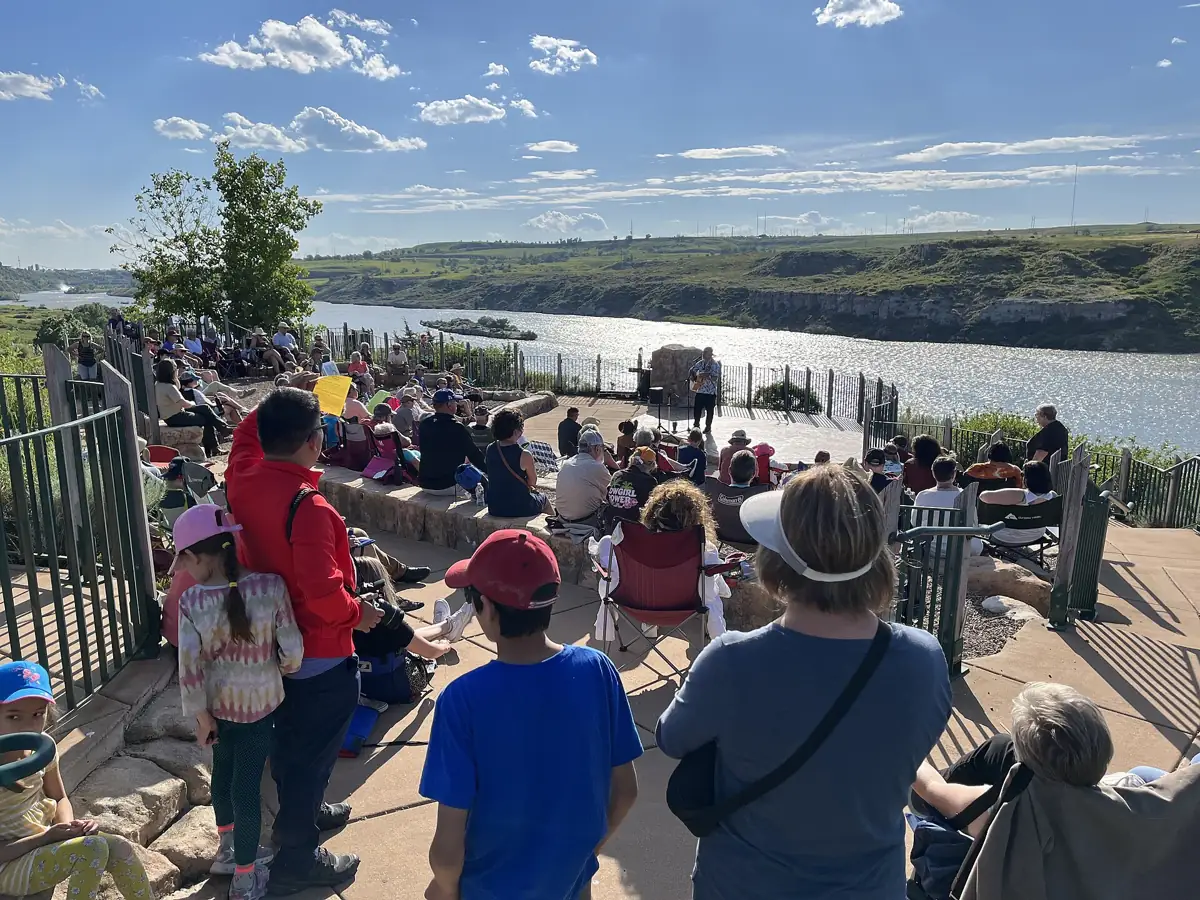
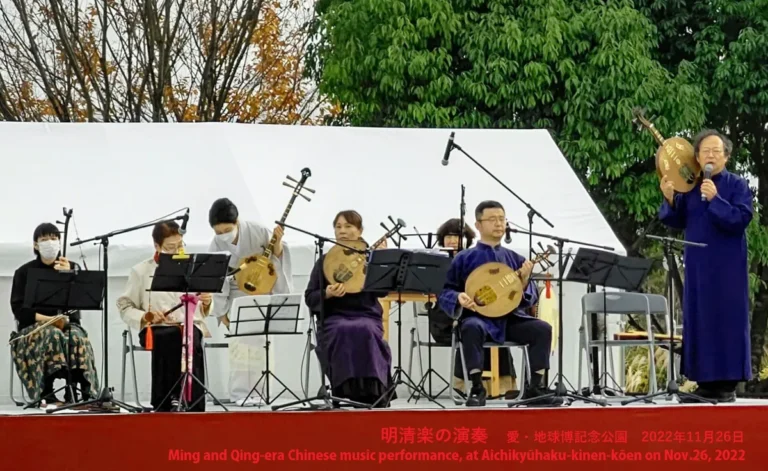
The festival is an annual fall gathering devoted to world music and the arts that travel with it. Performances span global genres, and the programme reaches beyond the stage to include craft demonstrations, workshops, food and an open air Arts Village. The thirty-second annual edition ran from the twenty-fifth to the twenty-eighth of September in twenty twenty-five, according to a music-press layer. The thirty-third annual edition followed from the first to the fourth of October in twenty twenty-six, spanning four days with more than forty performances, dates on which a student-newspaper layer, a community radio feature and a local newspaper layer all agree.
Admission runs through ticketed passes, although part of the programme has historically cost nothing at all. A music-press layer covering the twenty twenty-five edition documents free daytime events and free participation for children. A ticket-tracking layer lists twenty twenty-six pass prices ranging from twenty-two dollars to one hundred forty dollars per person, a range that belongs to that layer and that year alone. The scale of the modern festival is considerable. The local newspaper layer counted twenty-two bands across six venues in twenty twenty-six, supported by more than three hundred eighty-two volunteers.
Quick Facts
| Item | Detail |
| Published name | Lotus World Music & Arts Festival |
| Host city | Bloomington, the seat of Monroe County |
| Organiser | Lotus Education & Arts Foundation |
| Season | Fall, traditionally late September |
| Edition in twenty twenty-five | Thirty-second annual, twenty-fifth to twenty-eighth of September |
| Edition in twenty twenty-six | Thirty-third annual, first to fourth of October |
| Performances in twenty twenty-six | More than forty across six venues |
| Bands in twenty twenty-six | Twenty-two |
| Admission | Ticketed passes, with some free daytime events documented |
| First edition | Nineteen ninety-four, in three small downtown venues |
History
The student-newspaper layer gives the festival a precise beginning. It states that the first annual Lotus Festival was held in nineteen ninety-four, launched by James Combs, Shahyar Daneshgar and Lee Williams in three small downtown venues. A travel layer remembers the first event differently in setting, saying it was staged in front of the then Mathers Museum of World Cultures. Read together, the two accounts describe a modest start: a handful of rooms, a museum front step, and an idea that world music deserved a home in Bloomington.
For a useful comparison, see the Miami County Indiana Cole Porter Festival for another county festival.
Growth came steadily rather than suddenly. The same student-newspaper layer states that the festival has grown from about eight hundred attendees in its first year to around twelve thousand. The thirty-third annual billing attached to the twenty twenty-six edition sits comfortably beside the stated nineteen ninety-four start, but the year itself rests on the layers that name it, not on any arithmetic. By twenty twenty-five the festival was using established downtown rooms including the Buskirk-Chumley Theater, an open air Sixth Street stage, the Waldron Center and First Christian Church. A year later it had widened to six venues, and the local newspaper layer notes that two bars, the Blockhouse Bar and the Bishop Bar, hosted festival performances for the first time. The twenty twenty-six edition also added an Arts Village along Kirkwood Avenue between College Avenue and Walnut Street, stretching the festival further into the street itself.
One nearby event in the record deserves a clear boundary. An events layer lists a separate tribute honouring founder Lee Williams on the thirtieth of September and the first of October in twenty twenty-six. That tribute stood adjacent to the festival rather than inside it, and it is not part of the festival programme described here.
What to Expect
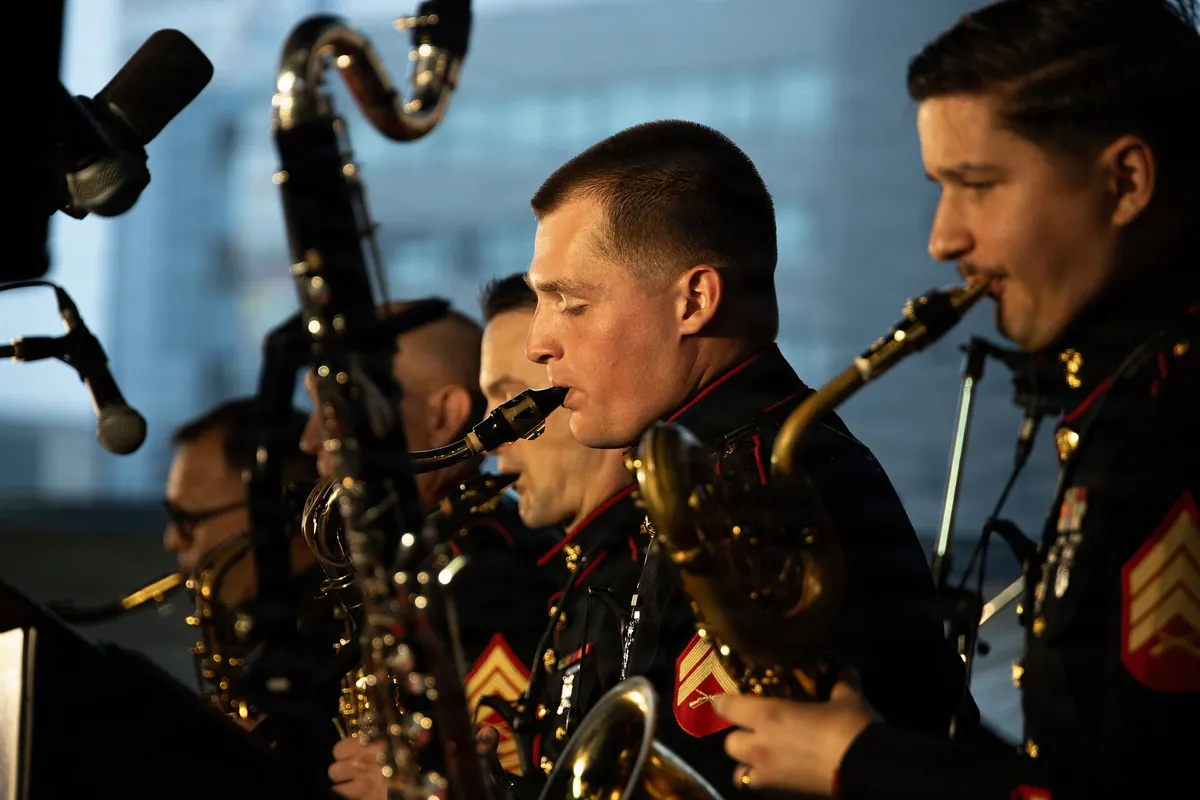
Music comes first, and it comes from everywhere. The twenty twenty-six edition presented twenty-two bands across six venues, with more than forty performances packed into four days. Genres span the globe, so an evening can move from one continent to another simply by crossing the street. The opening night of twenty twenty-six featured a performance at the Buskirk-Chumley Theater by Busman’s Holiday, the one headline act the record names for that year.
The Arts Village adds a second, quieter festival inside the first. In twenty twenty-six it ran along Kirkwood Avenue, where ten artisans working with Traditional Arts Indiana demonstrated crafts, and where ten performances and workshops took place on the Arts Village stage. Twelve food trucks fed the crowds that year. Around the courthouse square, the local newspaper layer reports four thousand people gathered on each of the Friday and Saturday of twenty twenty-six, figures passed from city officials through the executive director. Volunteers hold the whole structure together; the local newspaper count for twenty twenty-six passed three hundred eighty-two.
Planning Your Visit
The shape of the weekend rewards a little forethought. Four days of programming spread across downtown venues means the courthouse square and Kirkwood Avenue become home base, with stages, tents and the Arts Village all within walking distance of one another. The twenty twenty-five edition used the Buskirk-Chumley Theater, the open air Sixth Street stage, the Waldron Center and First Christian Church, while twenty twenty-six expanded to six venues including a Sixth Street tent stage and, for the first time, the Blockhouse Bar and the Bishop Bar. Because venues shift from year to year, the current edition’s venue list is worth checking before settling on a route through the night.
Passes are the main expense. A ticket-tracking layer lists twenty twenty-six prices from twenty-two dollars to one hundred forty dollars per person, figures fenced to that year and that source. Budgets stretch further thanks to the free portions of the programme; the music-press layer for twenty twenty-five documents free daytime events and free participation for children, so families can sample the festival before committing to evening passes. Evenings draw the largest crowds, especially around the courthouse square on Friday and Saturday, so arriving early for headline sets is a practical habit. Comfortable shoes matter more than formal dress, since the festival experience is largely a walking one, moving between rooms and stages as sets change.
A Sample Festival Itinerary
Opening night lends itself to a single anchor performance. In twenty twenty-six that meant the Buskirk-Chumley Theater, where Busman’s Holiday opened the festival; settling into one theatre seat on the first evening gives the weekend a ceremonial start. The following day suits the Arts Village, where craft demonstrations and stage workshops run at a gentler pace than the evening concerts, and where the food trucks make lunch an easy decision.
The middle evenings are for roaming. With six venues running in twenty twenty-six, a listener could begin at the Sixth Street tent, drift toward a first time bar venue such as the Blockhouse Bar or the Bishop Bar, and finish back near the courthouse square as the crowds peaked. The final day works well as a slower circuit: revisit a favourite stage, spend longer with the artisans along Kirkwood Avenue, and close the festival with one last set rather than a frantic sprint between rooms. Four days is long enough that no single night has to carry the whole experience.
How Lotus Compares With Other Bloomington Festivals
Bloomington keeps a busy festival calendar, and Lotus occupies its own distinct corner of it. The Fourth Street Festival belongs to the arts and crafts tradition, a different event with a different character, centred on makers rather than touring musicians. The Strawberry Shortcake festival is another separate Bloomington celebration with its own season and flavour. La Fiesta del Otoño likewise stands apart as its own event. None of these is a preliminary round or a side programme for Lotus; each runs independently, and a visitor in town for one should not expect the others to be folded into the same weekend.
The clearest way to understand Lotus is by its ingredients: global music, multiple downtown venues, an arts village and a foundation devoted to education through the arts. Where a craft fair asks visitors to browse and buy, Lotus asks them to listen and wander. Its fall timing also sets it apart from the warmer weather gatherings on the city calendar, giving Bloomington an autumn anchor built around sound rather than produce or pageantry.
Festival Checklist
- Confirm the current edition’s dates before booking travel
- Check which venues the current edition is using
- Compare pass options against the free daytime programme
- Plan one anchor performance for opening night
- Leave an afternoon free for the Arts Village
- Bring comfortable shoes for walking between venues
- Carry a layer for cool fall evenings outdoors
- Arrive early for Friday and Saturday headline sets
- Keep one day unplanned for discoveries
Beyond the Festival Grounds
The festival’s footprint is downtown Bloomington itself, so the city between venues becomes part of the visit. Kirkwood Avenue, which hosts the Arts Village, is one of the town’s natural gathering streets, and the courthouse square anchors the whole layout, giving visitors an easy landmark for regrouping between sets. The first festival was staged, by the travel layer’s account, in front of the then Mathers Museum of World Cultures, a reminder that the event has always been woven into the civic fabric rather than fenced off from it. A walk between the Buskirk-Chumley Theater and the Sixth Street stages passes through the same streets where three small venues held the entire festival in nineteen ninety-four.
Why Lotus Matters
A festival that starts in three small rooms and grows to six venues, twenty-two bands and thousands of listeners has clearly answered a real appetite. The student-newspaper figures trace that arc from about eight hundred attendees in the first year to around twelve thousand, and the local newspaper’s twenty twenty-six reporting, with more than three hundred eighty-two volunteers, shows how deeply the event now depends on, and belongs to, its community. The Lotus Education & Arts Foundation sustains the work year after year, and the festival’s expansion into new rooms, including bars hosting performances for the first time in twenty twenty-six, suggests an organisation still willing to experiment after three decades. In a county full of worthy gatherings, Lotus stands as Bloomington’s argument that the whole world’s music can fit inside a few downtown blocks.
Frequently Asked Questions
What do passes for the festival cost?
A ticket-tracking layer lists twenty twenty-six pass prices ranging from twenty-two dollars to one hundred forty dollars per person, and that range belongs to that layer and that year. The music-press layer for twenty twenty-five also documents free daytime events and free participation for children, so part of the programme has carried no charge at all.
Which venues hosted the festival in twenty twenty-six?
The student-newspaper layer counts six venues that year. The local newspaper layer names the Buskirk-Chumley Theater and a Sixth Street tent stage among them, notes that the Blockhouse Bar and the Bishop Bar hosted performances for the first time, and places the Arts Village along Kirkwood Avenue between College Avenue and Walnut Street.
Who founded the festival?
The student-newspaper layer states that James Combs, Shahyar Daneshgar and Lee Williams launched the first annual Lotus Festival in nineteen ninety-four, in three small downtown venues. A separate tribute honouring Lee Williams took place on the thirtieth of September and first of October in twenty twenty-six, adjacent to the festival rather than part of it.
How large has the festival become?
The student-newspaper layer describes growth from about eight hundred attendees in the first year to around twelve thousand. For twenty twenty-six specifically, the local newspaper layer reports four thousand people around the courthouse square on each of the Friday and Saturday, figures attributed to city officials via the executive director.
What to Expect From the Next Monroe County Indiana Lotus World Music and Arts Festival
How often is Monroe County Indiana Lotus World Music and Arts Festival held?
The festival returns every fall as an annual event, staged by the Lotus Education & Arts Foundation in downtown Bloomington. A travel layer describes its traditional timing as late September, while the two most recent documented editions ran from late September into early October.
When is the next Monroe County Indiana Lotus World Music and Arts Festival?
Going by the documented pattern, the next edition would be expected in the fall following the thirty-third annual edition of the first to the fourth of October, twenty twenty-six. Forward looking listings beyond the documented record venture into speculation, so the firmest guide is the foundation’s own announcements as the season approaches.
Will the dates change?
They have already shifted within a narrow window. The thirty-second annual edition ran in late September twenty twenty-five, and the thirty-third moved to the first days of October twenty twenty-six, so a move of a week or so either way is entirely possible while the fall season itself stays constant.
Closing Notes
The Lotus World Music and Arts Festival has spent more than three decades proving that a mid sized Indiana city can host the world. From three small venues in nineteen ninety-four to six venues, an Arts Village and thousands of listeners in twenty twenty-six, its story is one of patient, volunteer powered growth. For anyone within reach of Bloomington in the fall, it offers four days in which a short walk can carry the ear across continents.

One Comment