Kankakee County Illinois Momence Gladiolus Festival
Momence marks its August with a flower, and it has done so, on the strongest paper the town’s festival can show, since the summer of 1938. The event travels under several names: the bare “Gladiolus Festival,” the fuller “Momence Gladiolus Festival,” the local shorthand “Glad Fest” or “Glad Festival,” and, in a 2010 news layer, “Momence Glad Festival.” Each form names the same celebration, and none should be quietly substituted for another. Momence sits on the Kankakee River in Kankakee County, and one point of geography deserves stating plainly: Momence is not the county seat. Kankakee holds that position, and the festival belongs to a smaller river town that built a late-summer identity around its county’s gladiolus fields.
About the Momence Gladiolus Festival
The organising name printed in the festival’s own early record is the Momence Gladiolus Festival Assn., met here exactly as the association printed it. The 1938 brochure states that the festival was organised and promoted by the various civic bodies of the city of Momence, working in conjunction with the Kankakee County Gladiolus Association, so the event was civic in construction from its first edition rather than one club’s project. What the layers preserve is a Wednesday-to-Sunday August run, a coronation, parades, a carnival, and a Sunday gathering at Island Park, all in the same town and month as the first edition the brochure describes.
Quick Facts
| Item | Detail |
| Published names | Gladiolus Festival; Momence Gladiolus Festival; Glad Fest; Glad Festival; Momence Glad Festival |
| Host town | Momence, Kankakee County, Illinois |
| County seat | Kankakee, not Momence |
| First edition | 19 to 21 August 1938, billed as the first annual in the festival’s own brochure |
| Organiser | Momence Gladiolus Festival Assn., with the town’s civic bodies and the Kankakee County Gladiolus Association in the founding account |
| Documented later editions | 11 to 15 August 2010; August 2019; 6 to 10 August 2025; 5 to 9 August 2026 |
| Billings on record | The seventy-third annual in 2010; the eighty-second annual Glad Fest in 2019 |
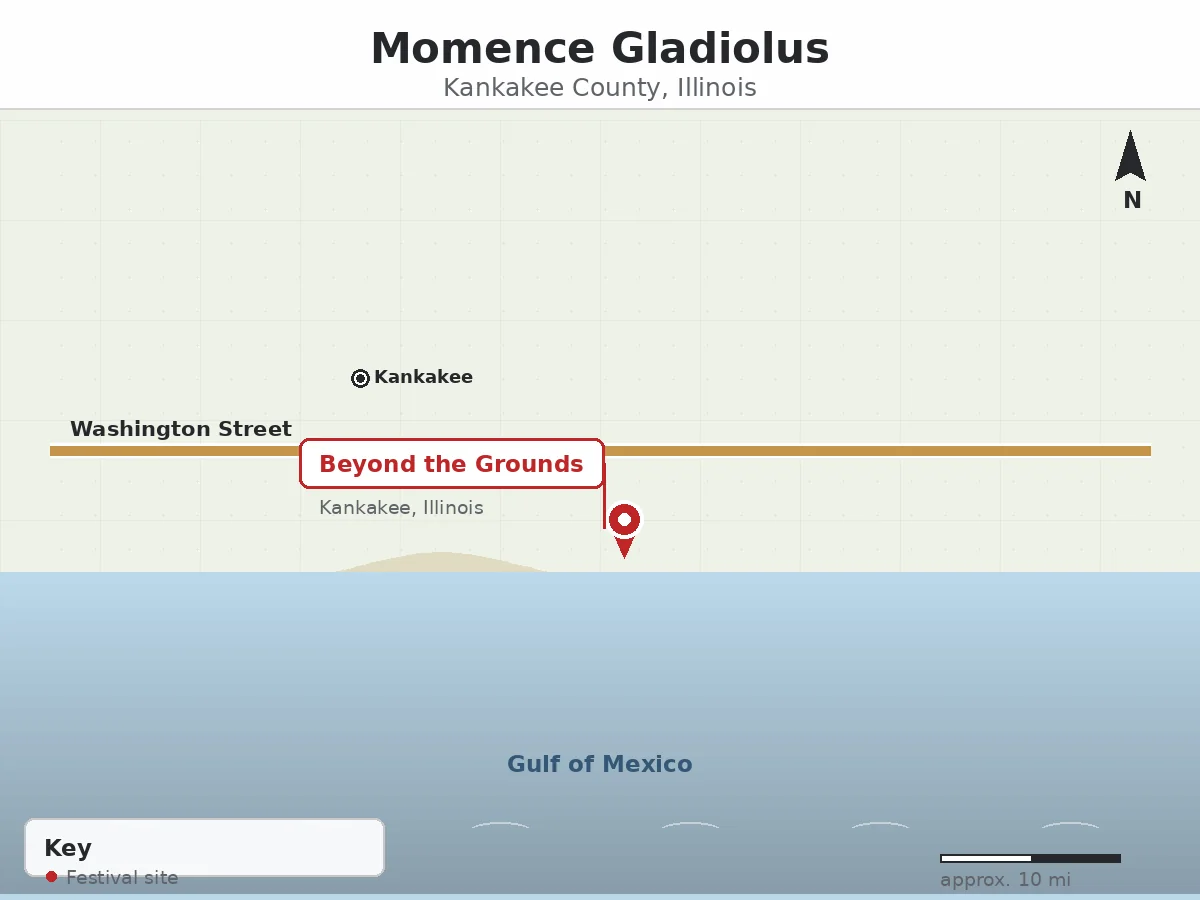
| Principal grounds | Island Park, with the Grand Parade running down Washington Street |
| Modern admission | No organiser-published general admission price appears in any layer read |
| Attendance | No figure of any kind is published in any layer read |
History
The festival’s beginning rests on a primary source rather than on arithmetic. The association’s own 1938 brochure bills the event as the first annual Gladiolus Festival and dates that first celebration from Friday to Sunday, 19 to 21 August 1938, so the founding year comes from contemporary printing, not from counting backwards from a later billing. Two later layers agree: a news layer from 2010 states that the first Gladiolus Festival dates back to 1938, and a county visitors-bureau layer says the town has held the festival annually since 1938. Because those statements align, 1938 stands here as the stated first year on their combined authority.
The 1938 programme had a centrepiece unlike a modern fairground attraction. The brochure sets a historical pageant on the banks of the Kankakee River, depicting events in the history of Kankakee, Iroquois and Will counties: the region’s past as outdoor theatre beside the water. The brochure also carries a pageant-grounds admission line, a component charge belonging to that edition alone, with no amount recorded in the layers read and nothing in it describing admission practice in any modern year.
One genuine disagreement sits inside the organising record, and it is left standing. The 1938 brochure, the association’s own publication, states that the association was organised in 1938. The 2010 news layer, a later and secondary statement, says instead that in 1939 the association was formed which is still in existence today. The two cannot both be right about the year, and the available evidence does not settle which one slipped, so the tension stands openly: the brochure speaks from within 1938 itself, while the news layer looks back across seven decades.
For a useful comparison, see the Kankakee County Illinois Bourbonnais Friendship Festival for another county festival.
The billings that survive are consistent with the 1938 record without proving it. A news layer bills the edition of 11 to 15 August 2010 as the seventy-third annual, and a radio layer of 8 August 2019 bills that year’s event as the eighty-second annual Glad Fest. Both numbers sit comfortably beside a 1938 start, yet they are treated strictly as billings, never as evidence from which the founding year is derived. Against that trail, one content-farm page claims a 1947 first festival in one paragraph and a 1948 first festival in another; a page contradicting itself and the association’s own brochure is excluded as evidence in full.
What to Expect
The documented programme is assembled from layers of different years, and each element belongs to the layer that printed it. A radio layer for the August 2019 edition, matched by a guide layer’s pattern, places a Queen and Princess Coronation on the opening Wednesday, at the Momence High School football field, giving the festival a ceremonial opening tied to its young court. A guide layer adds a children’s parade among the week’s fixtures, so younger residents appear in the procession as well as in the audience.
Evenings carry their own documented character. The guide layer describes a carnival in place across the run and live music nightly, while a news layer from 2010 preserves a more specific musical fixture: a drum corps show presented under the name Gladiolus Festival of Music. That show belongs to the 2010 record alone, just as the 2019 coronation details are not projected backwards onto 1938, when the pageant held the programme’s centre.
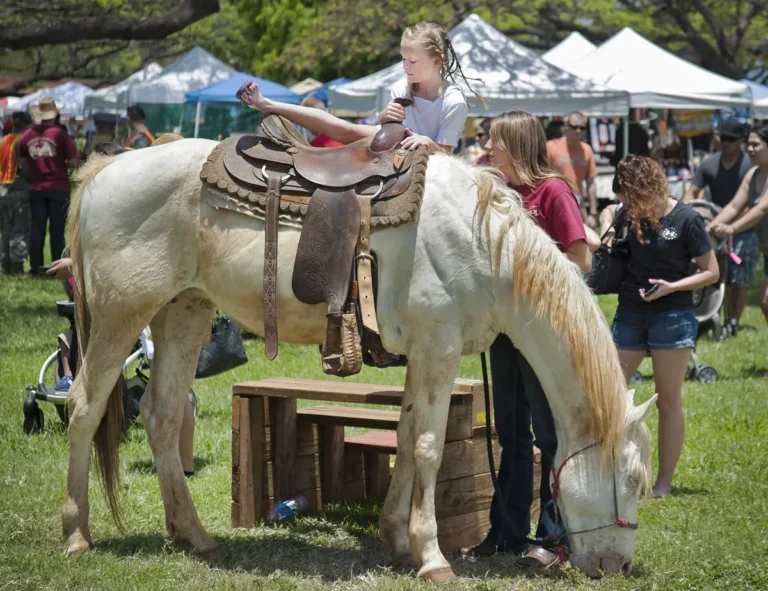
The weekend closes the run in the layers’ accounts. A guide layer places a car show and a flea market on the Saturday and gives the festival its Grand Parade, which a visitor-guide layer routes down Washington Street. Sunday belongs to Island Park, where listing and guide layers for 2026 put craft and antique markets and an antique tractor show; the listing layer names that Sunday fixture the River Valley FFA Chapter Tractor Show, dated Sunday 9 August 2026. The flower in the title is carried by the town’s identity rather than by any documented floral programme in these layers, and no flower show is invented to fill that space.
Planning Your Visit
The honest starting fact about cost is an absence: no organiser-published general admission price for a modern edition appears in any layer read, so a visitor budgeting from published sources will find no gate figure issued by the association itself. One secondary fan-and-travel guide describes the event as a festival with no entrance fee, and that wording is recorded here as that guide’s claim only: a commercial description written without the organiser’s authority is not an organiser-published statement that admission is free, and the association’s own layers never address a general price.
The one admission line anywhere in the record belongs to 1938, when the brochure noted pageant-grounds admission for its riverbank production; it is a historical component of a long-past edition and says nothing about what a modern visitor pays, if anything, at Island Park. Within town, listing layers place the festival office on West River Street, recorded without any number, and the same listing tradition puts the Sunday events at Island Park. The organiser’s own website carries the events schedule for the current edition, the layer a planner should consult for the year’s exact arrangement, since documented spans shift within August.
A Sample Visit on the 2025 Shape
The organiser’s own events page documents the 2025 edition from Wednesday 6 August through Sunday 10 August, and that Wednesday-to-Sunday frame makes a workable model for picturing a visit, understood as the 2025 shape rather than a promise about any other year. A visitor following that frame might open with the Wednesday coronation pattern documented for the festival, when the Queen and Princess are crowned and the week formally begins. The middle days suit the guide layer’s standing fixtures, the carnival and the nightly live music, taken at an unhurried pace.
Saturday, on the guide layer’s account, concentrates the car show and the flea market, with the Grand Parade bringing the route down Washington Street. Sunday then moves to Island Park for the craft and antique markets and the antique tractor show the 2026 listing names under the River Valley FFA chapter. Shaping a trip uses only documented fixtures, each fenced to its layer, and leaves the visitor’s discoveries unscripted, which is where a small-town festival keeps most of its value anyway.
The Printed Record Against the Invented One
Few small festivals can put a contemporary brochure from their first year on the table. The Momence record shows why that document matters: the association’s 1938 printing, the agreeing 2010 news statement and the visitors-bureau’s account give the founding a firm documentary footing, while the one content-farm page that wandered into the record offered two different founding years, 1947 and 1948, in adjoining paragraphs, the first of them making 2025 the seventy-eighth edition. A reader who met the farm page first would carry away a founding nearly a decade too late, expressed with total confidence. Set side by side, the genuine trail is specific, dated and internally consistent, while the invented one is vague about everything except the numbers it gets wrong.
A Visitor’s Checklist
- Confirm the year’s exact August span on the organiser’s own events schedule before fixing travel dates.
- Plan the Wednesday around the documented coronation pattern that opens the festival week.
- Keep Saturday open for the car show, the flea market and the Grand Parade on Washington Street.
- Reserve Sunday for Island Park, its craft and antique markets and the antique tractor show.
- Carry the admission position as published: no organiser-issued general price, with one secondary guide claiming no entrance fee.
- Treat any site offering a 1947 or 1948 founding for this festival as unreliable against the 1938 brochure.
- Remember that Momence is the host town while Kankakee, a separate community, is the county seat.
Beyond the Grounds
The river is the festival’s oldest piece of scenery. The 1938 pageant was staged on the banks of the Kankakee River, placing the town’s waterway behind its celebration from the first edition, and Momence remains a river town in the layers describing the modern event. Island Park, the documented Sunday ground, carries that relationship into the present programme, giving the tractor show and the markets a park setting. A visitor with an hour beyond the scheduled fixtures could do worse than attend to the town itself: Washington Street for the parade, West River Street for the festival office, and the water that explains where the town grew.
Why the Festival Matters to Momence
The gladiolus itself arrived in the county long before the festival did, and the two histories must be kept apart. The 1938 brochure preserves the growing background: Dutch growers were established at Wichert from 1909, and eastern Kankakee County developed as a gladiolus-growing centre. That agricultural story is the festival’s background, the reason a flower could headline a town celebration, but it is not the festival’s founding, and no sentence here converts the growers of 1909 into the organisers of 1938. The founding belongs to the civic bodies of Momence and the association their brochure printed into existence. What the festival then added was an annual civic frame for an existing agricultural identity, a coronation, parades and a carnival wrapped around the flower, and the visitors-bureau layer’s judgment that the town has held the event annually since 1938 describes that endurance: a small town returning each August to the bloom it chose as its emblem.
Frequently Asked Questions
Which of the festival’s several names is the right one to use?
Each printed form is right in its own layer: the 1938 brochure and later listings use Gladiolus Festival, the association’s name gives Momence Gladiolus Festival, local radio and news usage favours Glad Fest and Glad Festival, and a 2010 news layer prints Momence Glad Festival. The forms are recorded as printed rather than merged into a single official style.
What evidence actually supports the 1938 first edition?
The support is documentary and contemporary: the association’s own 1938 brochure bills the event as the first annual and dates it 19 to 21 August 1938. A 2010 news layer independently says the first festival dates back to 1938, and a county visitors-bureau layer says the town has held it annually since that year, so the founding rests on agreeing statements rather than on the later annual billings.
Why do the sources disagree about when the association was formed?
The association’s own 1938 brochure says it was organised in 1938, while the 2010 news layer says the association was formed in 1939 and still exists. One of the two years is misstated, and the available layers do not identify which, so both statements stay visible with their sources attached.
Does any published figure describe how many people attend?
No attendance figure of any kind, counted, estimated or claimed, appears in any layer read. A real-estate blog layer from around 2008 describes the festival as having run for nearly seventy years, a longevity characterisation about the event’s age, not a measurement of its crowds.
What to Expect From the Next Kankakee County Illinois Momence Gladiolus Festival
How often is Kankakee County Illinois Momence Gladiolus Festival held?
The documented spans cluster in August across the record, from the first edition in 1938 through editions in 2010, 2019, 2025 and 2026, and the county visitors-bureau layer describes the town as holding the festival annually since 1938. That bureau statement is the rhythm’s published form; the edition-by-edition proof in the layers read is the dated August runs listed in this article.
When is the next Kankakee County Illinois Momence Gladiolus Festival?
Listing layers document the edition of 5 to 9 August 2026, and beyond it a secondary visitor-guide layer gives the following edition as 4 to 8 August 2027. That 2027 span is recorded strictly as the guide layer’s forward statement, rather than as an organiser-published announcement, and the organiser’s own events schedule remains the place to confirm it.
Will the dates change?
The documented spans have moved within August rather than holding fixed days: the first edition ran 19 to 21 August, the 2010 edition ran 11 to 15 August, and the 2025 and 2026 editions ran in the month’s opening days. A visitor should expect the month to be the stable element and the Wednesday-to-Sunday span to be settled afresh for each edition.
Closing
Momence’s festival is unusually well anchored for its size: a primary brochure from its first August, agreeing later statements, billings that behave like billings, and even its internal disagreement, the association’s year, preserved in the open. Against that record the invented foundings collapse on inspection. What remains is a river town that has crowned its queens, paraded down Washington Street and gathered at Island Park around a flower since 1938, and an article that would rather show its evidence than tidy it.