Wayne County Georgia Jesup Dogwood Festival
Jesup keeps its courthouse, its rail lines and, each spring, a festival named for the dogwood trees that flower across Wayne County. It is a modest celebration by the standards of Georgia’s big-city festivals, and its surviving paper trail is modest too: a state government snapshot from 2006, a newspaper column from a neighbouring county written in 2024 and remembering Aprils past, and listing entries that place its present form on a single Saturday in March at the county tourism fairgrounds. Read together, those layers describe one event sitting in April in the older account and in March in every newer one, with no layer explaining the difference.
About
The fullest published form of the name is Wayne County Dogwood Festival, carried by a festival-listing layer; the title of this article drops the word County from that form. A state community-affairs county snapshot from 2006 calls the same Jesup event Jesup’s Dogwood Arts and Crafts Festival, while the 2024 newspaper column shortens it simply to the Dogwood Festival. No captured source chooses among the three printings, so none is chosen here.
Jesup is the county seat of Wayne County, and the festival belongs to the town in every layer that mentions it. The one organiser credit in the captured record belongs to a festival-listing layer, which names the Wayne County Arts Council, Inc. as organiser of the edition listed for March 20, 2027. That credit is recorded for that edition alone; nothing in the captured sources says how long the council has carried the event, and a listing is not stretched into a history here.
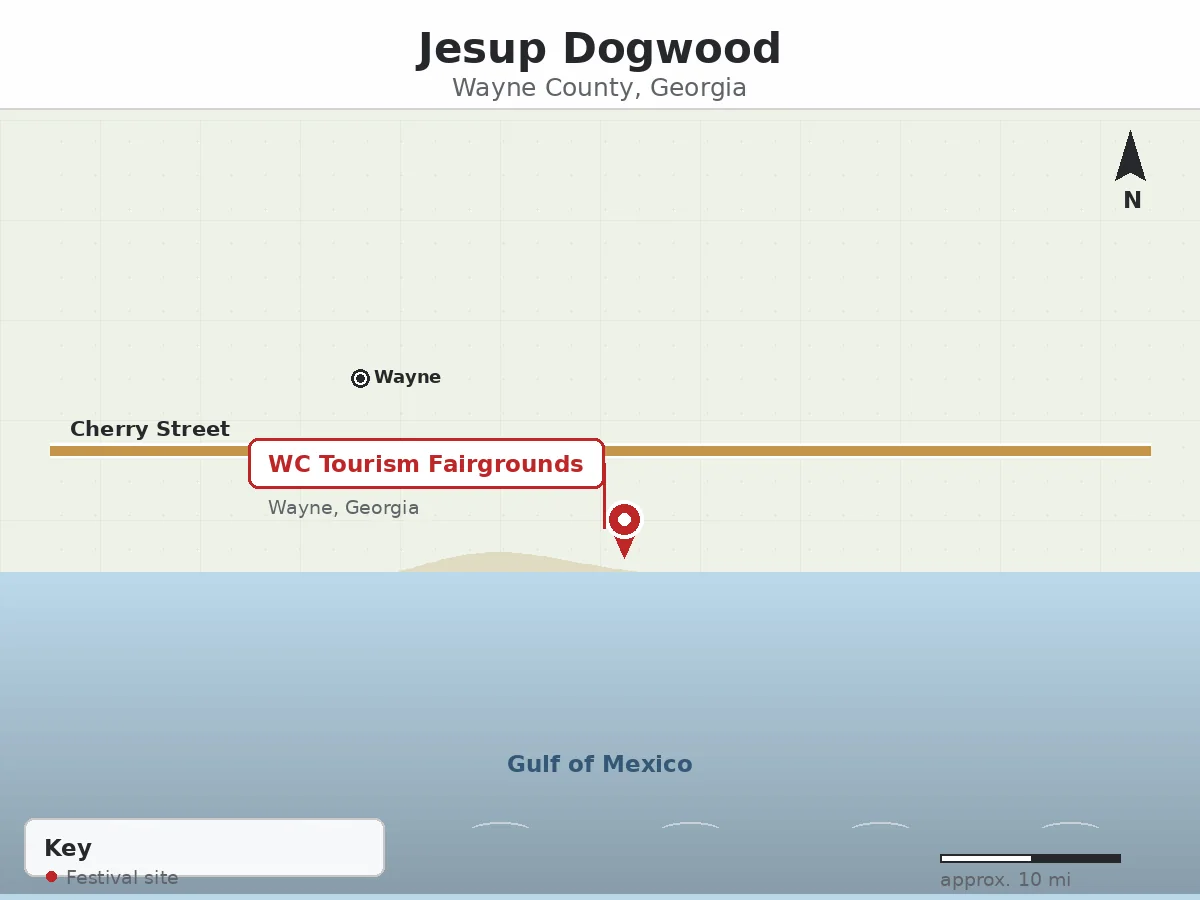
Where the festival happens depends on which layer is speaking. The listing layer behind the 2027 edition places it at the WC Tourism Fairgrounds in Jesup. The 2024 column, remembering the festival as held in April, puts it in Cracker Williams Park, about a block east of downtown and just south of the big Baptist Church on Cherry Street. No captured source describes a relocation, so none is described here: the fairgrounds belong to the recent listings, the park to the remembered editions, and the two are not merged into a single settled home.
Quick Facts
| Item | What the published layers show |
| Fullest published name | Wayne County Dogwood Festival, in a festival-listing layer |
| Name in the 2006 state snapshot | Jesup’s Dogwood Arts and Crafts Festival |
| Host town | Jesup, county seat of Wayne County |
| Organiser credit | Wayne County Arts Council, Inc., named for the 2027 edition in a listing layer |
| Grounds in the recent listings | WC Tourism Fairgrounds, Jesup |
| Grounds in the older column account | Cracker Williams Park, near downtown Jesup |
| Season in recent listings | March |
| Season remembered in the column | April, in editions the column does not date |
| Next documented edition | Saturday, March 20, 2027, ten in the morning until five in the afternoon, per a listing layer |
| Admission | No price appears in any captured layer |
History
The honest beginning for this festival’s history is a confession: no layer in the captured record states the year it began, and none prints an ordinal billing — no fifth, tenth or twenty-fifth annual — from which a beginning could be counted. Anyone who assigns the Jesup dogwood festival a founding year is going beyond the sources gathered here.
For a useful comparison, see the Washington County Georgia Sandersville Kaolin Festival for another county festival.
The earliest documentary trace in the record is the state community-affairs snapshot of Wayne County published in 2006, which lists Jesup’s Dogwood Arts and Crafts Festival among the county’s events. A mention in 2006 proves the festival existed by then; it does not prove it began then, and it is not treated here as a founding.
The fullest picture of the festival’s earlier life comes from the 2024 newspaper column, written from a neighbouring county’s memory of Jesup. The column recalls the event in April, at Cracker Williams Park, with bounce houses and concession stands, a small arts exhibition in the community center, local bands, and clogging and dance routines. It assigns no year to those editions, so they float in the record as an undated older era: real in description, unplaceable in time.
Against that April past, every recent listing layer puts the festival in March. A festival-guide listing gives March 25, 2023. A Georgia festival guide for 2026 prints March 20, 2026 with an asterisk marking the date unconfirmed. A festival-listing layer gives March 20, 2027, a Saturday running from ten in the morning to five in the afternoon, in an entry updated on June 9, 2026. Why the season reads April in the older account and March in the newer ones is a question no captured source answers; the shift is recorded here exactly as printed, without a reason invented to smooth it over.
A generated template page about a 2026 dogwood festival also circulates, written in generic wording that names nothing specific to Jesup; it is set aside here as no evidence at all.
What to Expect
The record holds two programmes for this festival, from two different eras, and they are not blended here into a single imaginary lineup.
The listing layer behind the 2027 edition promises exhibitors across antique and collectibles lines, crafts, fine art, fine craft and homegrown products, with twenty food booths, one stage given to local talent, and children’s activities. That is the documented present tense of the festival: a market of makers and growers, food in quantity, a single stage, and things for children to do.
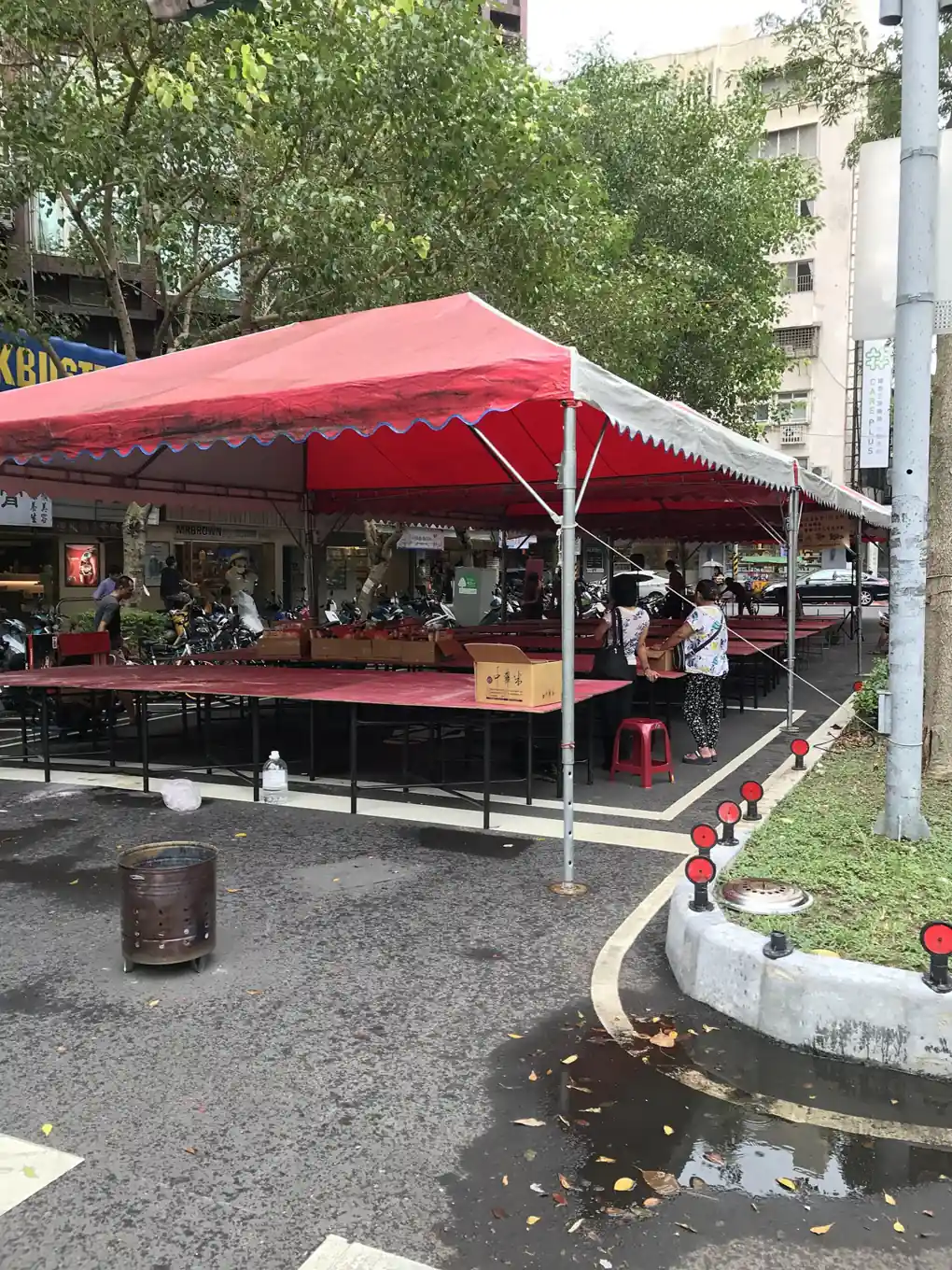
The older era, as the column remembers it, ran differently: bounce houses, concession stands, a small arts exhibition inside the community center, local bands, and clogging and dance routines. Whether any of those elements survive into the March fairgrounds editions is something the recent listings do not say. A visitor in 2027 should plan around the listing’s own programme and treat the column’s livelier picture as history rather than as a promise.
Planning Your Visit
Work from the most recent layer you can find, because this festival’s record rewards the reader who checks dates rather than assuming them. The working date is Saturday, March 20, 2027, from ten in the morning until five in the afternoon at the WC Tourism Fairgrounds, as published by a festival-listing layer whose entry was updated on June 9, 2026. The asterisk that one Georgia guide attached to its 2026 date for this same festival warns how the listing ecosystem behaves: guides print dates before organisers confirm them, so recheck the current listing close to the day.
Aim for the fairgrounds named in the recent listings, not the park named in the older column; Cracker Williams Park belongs to the remembered April editions. On admission, the record is silent in both directions: no layer publishes a price, and no layer declares the festival free. Carry spending money for the food booths and exhibitor stalls, and budget around neither a gate charge nor a free gate, since the sources settle neither. Families should note that the 2027 listing includes children’s activities. The documented day is a single Saturday, so there is no second chance within the same weekend if weather or timing goes wrong.
A Sample Itinerary
The plan below is built from the listing layer’s published shape for Saturday, March 20, 2027 — the only edition whose hours any layer states — and it should be read as an assembly of that layer’s programme, not as an organiser’s timetable. Arrive near the ten o’clock start and give the first hour to antiques and collectibles, the lines most likely to reward early browsing. Move on through the fine art and fine craft stalls, then the homegrown products, before the grounds fill. Spend the middle of the day among the twenty food booths, timing lunch to the stage, where the listing promises local talent. Leave the afternoon for the children’s activities if you have brought a family, and for a second, unhurried pass at the exhibitors you marked in the morning. The documented shape closes at five, so plan the drive out of Jesup for the early evening.
How It Compares
Georgia is crowded with dogwood festivals, and sharing a namesake tree does not make them the same event. The Atlanta Dogwood Festival belongs to Fulton County and to a large metropolitan spring calendar. Perry and Tallapoosa each hold dogwood festivals of their own, in their own towns, under their own arrangements. None of their dates, organisers or grounds have anything to do with Jesup’s celebration, and none of their facts appear here. Jesup itself keeps a second festival season in October, when Arch Fest and Jesup Train Day occupy the town’s autumn; that event is separate from the spring dogwood celebration in every particular. The Wayne County event is the most thinly documented of the state’s dogwood family — known through listings, a snapshot and a memory column rather than through an organiser’s own archive.
Checklist
- Recheck the current listing entry for the edition you plan to attend, since at least one recent guide date for this festival circulated with an unconfirmed asterisk.
- Navigate to the WC Tourism Fairgrounds named in the recent listings, not the park named in the older column.
- Keep the whole of Saturday, March 20, 2027 between ten in the morning and five in the afternoon, the only hours any layer publishes.
- Carry spending money for food booths and exhibitor stalls; no admission price is published, and no layer promises free entry either.
Beyond the Festival
Jesup repays a little wandering beyond the fairgrounds. It is a working county seat, and the festival’s older ground tells its own story: Cracker Williams Park sits about a block east of downtown, just south of the big Baptist Church on Cherry Street, the setting the newspaper column remembered from the festival’s April era. A traveller who comes for the dogwoods in spring and returns for the town’s separate October festivities will have seen Jesup wearing both of its festival seasons.
Why It Matters
A one-day festival documented mainly by listings might seem a slight subject, yet for Wayne County it is the recurring spring entry in the county’s account of itself. The state snapshot listed it among the county’s named events as far back as 2006, and listing layers are still carrying it two decades later, now with an arts council’s name attached as organiser. The column’s judgement that the event was usually well-attended is the only attendance evidence the record offers, and it is a neighbour’s fond memory rather than a count; but it points at what the festival is for, which is a county seat gathering its own people around local art, local food and a flowering tree. Its thin documentation is not a defect to be disguised. It is the normal condition of small-town festivals, which live in the calendars of listing services and the memories of columnists, and which deserve describing at exactly the weight their evidence will bear.
Frequently Asked Questions
Why do older accounts remember an April festival while every recent listing says March?
Both seasons are recorded here exactly as their layers print them. The 2024 newspaper column recalls undated April editions at Cracker Williams Park, while the listing layers from 2023 onward place the festival in March, most recently on March 20, 2027. No captured source explains the difference, and no reason is asserted here. What can honestly be said is only that the printed season differs between the older account and the recent listings; trust the newest listing for the newest edition, not the column’s memories.
Has the festival always been held at the WC Tourism Fairgrounds?
The record does not support the word always in either direction. The fairgrounds appear in the recent listing layer as the ground for the 2027 edition, while the older column account places its remembered editions at Cracker Williams Park, about a block east of downtown. No source describes a relocation, and none dates either ground’s tenure, so the two venues are presented as belonging to different layers and eras of the record, not as chapters of a documented move.
Which organisation is credited with organising the festival?
Exactly one organiser credit survives in the captured layers, and it is a narrow one: a festival-listing layer names the Wayne County Arts Council, Inc. as organiser of the March 20, 2027 edition. The listing does not say when the council took the event on, and no other layer names an organiser at all — neither the 2006 snapshot nor the 2024 column — so no longer organisational history is claimed here.
Does any published source state an admission price for this festival?
No. Admission is the record’s blank page: the listing layers and the news column alike print no gate price, and, just as importantly, no layer declares the festival free. The honest answer is that the published record does not settle the question, and a visitor should arrive prepared for ordinary spending at food booths and stalls without assuming either a charge or a free gate.
What to Expect From the Next Wayne County Georgia Jesup Dogwood Festival
How often is Wayne County Georgia Jesup Dogwood Festival held?
The captured layers show a spring festival recurring across the years they cover: an April event in the column’s undated memories, then March listings for 2023, an asterisked March date in a 2026 guide, and a March date published for 2027. Nothing in the record takes the form of an organiser’s own statement of frequency, so the rhythm is described from the listings themselves rather than announced as a rule.
When is the next Wayne County Georgia Jesup Dogwood Festival?
On the evidence captured, the next documented edition is the one a festival-listing layer publishes for Saturday, March 20, 2027, from ten in the morning until five in the afternoon at the WC Tourism Fairgrounds, in an entry updated on June 9, 2026. That date is a listing layer’s publication and is labelled as such; no organiser announcement of a future date appears in the record. The March 20, 2026 date printed in the state festival guide remains marked unconfirmed in that guide and is not treated here as settled.
Will the dates change?
They already have, at least on paper: the season itself reads April in the older account and March in every recent listing, and one recent guide date reached print carrying an unconfirmed asterisk. Nothing in the captured record guarantees any future date, season or ground, so each new edition’s listing has to be read on its own terms when it appears.
For all its gaps, the record still draws a recognisable portrait: a small county-seat celebration named in a state snapshot in 2006, remembered fondly in April at a downtown park, and listed today as a March Saturday at the fairgrounds under an arts council’s name. The dogwoods, at least, keep their own schedule regardless of what the listings say.
One Comment