Richmond County Georgia Augusta Westobou Festival
For twelve years, downtown Augusta hosted one of Georgia’s most ambitious arts gatherings, a five-day festival that spread music, dance, film, spoken word and visual art across venues and open spaces in the city centre. The Richmond County Georgia Augusta Westobou Festival, published simply as the Westobou Festival, belonged to that run of years and to no others. Its final edition took place in October 2019. The edition planned for 2020 was cancelled outright, and a downtown-development trade account of the festival’s history states plainly that the event will not return in festival form. What follows is therefore a record rather than a preview: an account of what the festival was, how its programme was built, and what its organising body does instead today.
About the Festival
The Westobou Festival was a multi-arts event presented in Augusta, the seat of Richmond County, where city and county operate under a consolidated government. Its organiser was Augusta Westobou Festival Inc., the body named in nonprofit directory listings for the event. Across organiser, news and destination accounts, the published name is consistent: Westobou Festival. The organiser’s own styling in a directory mission text renders the name in full capitals as WESTOBOU, a presentation variant rather than a different title, and no layer merges the two forms into anything else.
According to an organiser-derived listing account, the word Westobou carries older geography inside it. Westobou was the name given to the Savannah River by the Westo Native Americans, and that same account records that the festival’s name was selected by the Trustees of the Academy of Richmond County. The festival thus borrowed its identity from the river that shapes Augusta’s edge.
In format, the festival ran five days and ranged widely. Performances, exhibitions and screenings filled indoor rooms and outdoor spaces alike, because the event was never anchored to a single hall. Its footprint was described in an organiser mission account as various venues and spaces across downtown Augusta, and that dispersed geography stayed central to how the festival presented itself throughout its life.
Quick Facts
| Item | Record |
| Published name | Westobou Festival, with the organiser styling WESTOBOU |
| Organiser | Augusta Westobou Festival Inc. |
| Host city | Augusta, seat of Richmond County |
| Run as the sources count it | A first festival in 2008 through the final edition in 2019 |
| Final edition | October 2 to 6, 2019 |
| Format | Five days of music, dance, film, spoken word and visual arts |
| Grounds | Various venues and spaces across downtown Augusta, indoors and outdoors |
| Admission record | No single festival price; the Augusta Common outdoor programme was described as free, while indoor events carried their own tickets |
| Attendance record | No figure published in any account gathered |
| Present status | Concluded; the 2020 edition was cancelled and the festival will not return |
History
No founding charter or inaugural programme for the Westobou Festival survives in the accounts gathered, so its beginning is known only the way the sources themselves counted it. A listing from 2009, derived from the organiser, billed that year’s gathering as the second Annual Westobou Festival, which places a first festival in 2008 by the count the sources used. An arts-news account of the October 3 to 7, 2012 edition described that gathering as the festival’s fifth year, a reckoning consistent with the earlier billing. This article repeats that count as the sources stated it and performs no arithmetic of its own to prove a founding year that no document independently confirms.
For a useful comparison, see the Randolph County Georgia Cuthbert Fall Festival for another county festival.
The 2009 edition, the one carrying the second Annual billing, was listed across September 17 to 26 of that year. That printed span sits beside the organiser’s general description of a five-day format, and the two records are left as their layers give them: a ten-day listing for one early edition against a five-day customary shape. Neither is smoothed into the other.
By 2012 the festival was drawing nationally recognised performers to Augusta, and by 2016 it had settled into a late-September and early-October position, with Augusta University partnership events running inside the festival window. The organisation’s ambitions also extended beyond the festival days themselves. In May 2015, according to the organisation’s reported programmes, the year-round Westobou Gallery opened, giving the body a permanent exhibition home while the festival remained an autumn event.
The last chapter came quickly. The festival’s final edition ran from October 2 to 6, 2019. The edition that would have followed in 2020 was cancelled entirely, and the downtown-development account records that the festival ran twelve years in downtown Augusta, was cancelled in 2020, and will not return. Rather than revive the large gathering, the organisation converted its efforts into smaller events spread through the year. The body itself endures: its nonprofit filings continue through the year ended December 31, 2025. The organisation survives; the festival does not, and the record is clearest when that distinction is kept sharp.
What to Expect
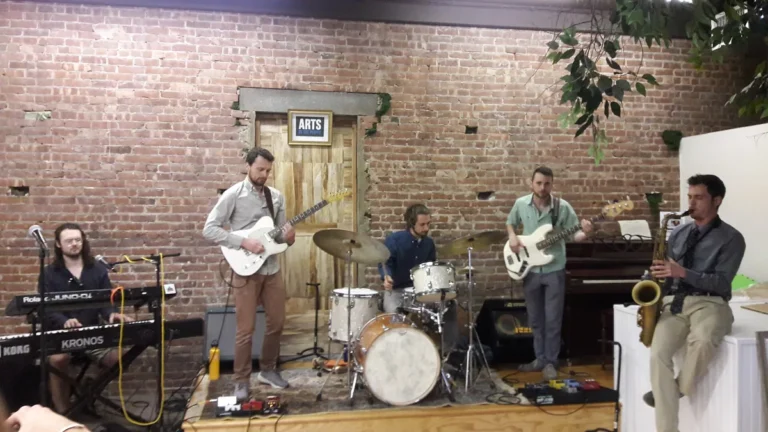
Because the festival has concluded, this section describes what its documented editions offered rather than what any future gathering promises. A Westobou programme was deliberately mixed. Music shared the bill with dance companies, film screenings, spoken word performers and visual art exhibitions, and the schedule moved between indoor stages and outdoor ground. No single art form owned the festival, and attendees built their days by crossing between disciplines as much as between venues.
The outdoor heart of the event sat at the Augusta Common. An organiser account describes the Common’s programme as free, built around a Ferris wheel, outdoor concerts and movies shown in the open air. That free outdoor layer coexisted with ticketed indoor components: a university account of the 2016 edition lists individual event tickets at set prices for particular performances and screenings, naming a chamber concert and a film screening among them. No ticket amount is stated here, and no festival-wide gate price ever existed to quote.
Headline names marked the later editions. The 2012 bill included L.A. Dance Project, Janelle Monáe and Maceo Parker, according to the arts-news account of that year. The final edition in 2019 included Gov’t Mule, St. Paul and The Broken Bones and Amanda Shires, as a music-listing account records. Each lineup belongs to its own year, and together they show the range the festival aimed for, from contemporary dance to soul and Americana songwriting.
Planning Your Visit
Honesty has to govern this section: there is no upcoming Westobou Festival to plan around. Anyone who finds an old listing suggesting a future edition should treat it as a leftover from the years when the festival was alive, because the documented record closes with the cancellation of 2020 and the statement that the event will not return. Planning a trip to Augusta for this festival today would mean planning for something that no longer happens.
What a reader can still plan for is the organisation’s continuing work. The Westobou Gallery operates year-round at 1129 Broad Street in Augusta, an address that belongs to the gallery as the organisation’s successor venue rather than to the festival, which never had one settled home. The same body also stages smaller events through the year, among them a Halloween-themed programme called Westoboo and an offering named SpringBoard by Westobou. Those programmes are the organisation’s present tense; the festival is its past.
For readers researching how a visit worked while the festival ran, the historical shape is worth recording. Grounds were scattered across downtown rather than fenced into one site, so a festival day involved walking between venues. The Augusta Common’s outdoor programme cost nothing, while chosen indoor performances and screenings required their own individual tickets, bought event by event. No single pass or gate price tied the whole five days together, and no attendance figure was ever published.
A Sample Itinerary From the 2019 Edition
The final edition ran five days, from October 2 to 6, 2019, and the shape below follows the elements that edition’s record documents, offered as a picture of how those days were built rather than as a surviving printed schedule.
- An opening day that begins outdoors at the Augusta Common, taking in the free programme of open-air music before the evening turns toward an indoor performance.
- A second day given to the galleries and exhibition spaces downtown, where the visual art side of the bill carried the daylight hours.
- A middle day mixing a film screening with spoken word, the two seated forms the festival programmed alongside its stages.
- A fourth day weighted toward the headline concerts, the part of the programme where the 2019 music bill did its heaviest work.
- A closing day that drifts back outside, ending the run where the festival always felt most public, among the Common’s concerts and open-air film.
How It Compares
Augusta’s other major arts gathering, Arts in the Heart of Augusta, is the comparison that matters most, and also the one most easily confused. That festival is run by the Greater Augusta Arts Council, a different organiser entirely, and although its dates once ran concurrently inside the 2009 Westobou programme window, the two events were always separate undertakings with separate bills. Nothing from one festival’s record belongs in the other’s.
The subtler comparison is internal. The Westobou Gallery, SpringBoard by Westobou and Westoboo all carry the same name and the same organisation, yet none of them is the festival continued under a new label. They are successor offerings that followed the festival’s end: a year-round gallery, smaller staged events and a Halloween programme. The festival itself was the five-day, multi-venue gathering, and it alone is what concluded in 2019.
Checklist
- Read any Westobou Festival date later than 2019 as an outdated listing, not an announcement.
- Separate the festival from the Westobou Gallery when researching, since the gallery continues and the festival does not.
- Keep the 2012 and 2019 lineups in their own years when citing the bills.
- Remember that the outdoor Common programme was free while indoor events were individually ticketed, and that no overall price existed.
- Treat attendance claims with care, because no figure was published for any edition.
- Look to the organisation’s smaller year-round events, including Westoboo, for its current activity.
Beyond the Festival
The organisation’s afterlife is unusually visible for a concluded festival. Its gallery on Broad Street keeps exhibitions in front of Augusta audiences in every season, and its smaller events carry the Westobou name into parts of the calendar the five-day festival never touched, Halloween among them. The body’s filings running through the end of 2025 confirm this is continuation of an institution, not the paperwork of one winding down. Augusta also keeps its wider festival life through other organisers, so the city’s autumn did not empty when Westobou left it; only this particular gathering ended.
Why the Festival Mattered
Westobou mattered because of the bet it placed on breadth. For twelve years it argued that a mid-sized Georgia city could hold dance, film, literature, visual art and popular music inside one civic occasion, staged across the downtown streets rather than behind the walls of a single arts centre. Its name reached back to the Westo people’s word for the Savannah River, tying a contemporary programme to the oldest recorded naming of the landscape it occupied. Even its ending is instructive: the festival stopped, the organisation adapted, and the gallery and smaller events that followed show one model of how an arts body outlives its flagship.
Frequently Asked Questions
Why did the Westobou Festival come to an end?
The final edition ran in October 2019, and the edition planned for 2020 was cancelled in its entirety. A downtown-development account of the festival states that after twelve years in downtown Augusta it will not return as a festival. No more detailed reason is given in the accounts gathered, and none is invented here; what the record shows instead is a redirection, with the organisation putting its energy into smaller events across the year.
When did the festival actually begin?
The sources count the beginning themselves. The 2009 edition was billed as the second Annual Westobou Festival in an organiser-derived listing, and an arts-news account called the 2012 edition the festival’s fifth year. Both reckonings point to a first festival in 2008, and that is how the start is reported here: as the count the sources published, not as a founding year verified by a separate document.
Was entry to the festival free, or did it cost money?
Both arrangements ran side by side. The outdoor programme at the Augusta Common was described by the organiser as free, Ferris wheel, concerts and open-air movies included. Individual indoor performances and screenings were ticketed separately, event by event. No single admission price covered the festival as a whole, so neither a blanket free claim nor a gate price can honestly be attached to it.
Does anything of Westobou still operate in Augusta today?
The organisation does, even though the festival does not. Augusta Westobou Festival Inc. maintains the year-round Westobou Gallery at 1129 Broad Street and stages smaller events through the year, including the Halloween-themed Westoboo and SpringBoard by Westobou, and its nonprofit filings continue through the year ended December 31, 2025. Those are successor programmes of a surviving body, distinct from the concluded festival itself.
What to Expect From the Next Richmond County Georgia Augusta Westobou Festival
How often is Richmond County Georgia Augusta Westobou Festival held?
It is not held anymore. During its life the festival appeared once each autumn across a run the downtown-development account totals at twelve years, ending with the edition of October 2019. That pattern belongs to the past tense: the gathering has concluded, and its organiser has replaced it with smaller events spread through the calendar rather than a single annual festival.
When is the next Richmond County Georgia Augusta Westobou Festival?
There is no next edition. The 2020 edition was cancelled outright, and the trade account of the festival’s history states that it will not return. Any date for a future Westobou Festival found in an old listing or an uncorrected guide is a remnant of the years before 2020 and should not be relied on when making plans.
Will the dates change?
The question no longer applies in the way it would for a living festival. Westobou’s dates moved modestly during its run, falling in mid-September in 2009 and in early October by its final editions, but there are no future dates to move. The settled fact is the ending itself: October 2 to 6, 2019 stands as the festival’s last edition, and the record contains no announced revival.
The Westobou Festival’s story closes with a distinction worth keeping. Augusta did not lose the organisation that built one of its most distinctive gatherings; it lost the gathering. The gallery doors still open on Broad Street, smaller events still carry the name through the year, and the twelve autumns of the festival remain on record as the period when all of that energy was concentrated into five days at a time.
One Comment