Fairbanks North Star Borough Alaska Golden Days Festival
Every July, downtown Fairbanks trades its ordinary summer rhythm for gold pans, parade floats and a river dotted with yellow rubber ducks. Golden Days is the city’s annual mid-to-late July celebration of its gold rush founding, organised by the Greater Fairbanks Chamber of Commerce. The festival honours the moment in July 1902 when Felix Pedro struck gold in the hills outside town, a discovery that set Fairbanks on its path. Across its run, the celebration gathers Alaska’s largest parade, a downtown street fair and a rubber duckie race on the Chena River into one long, good-humoured commemoration. Residents dress in Gold Rush-era costume, marching bands roll along First Avenue, and sponsored ducks bob their way toward the finish line. The result is part history lesson, part homecoming and part midsummer party, staged in the borough seat itself, because Fairbanks serves as the seat of the Fairbanks North Star Borough.
About Golden Days
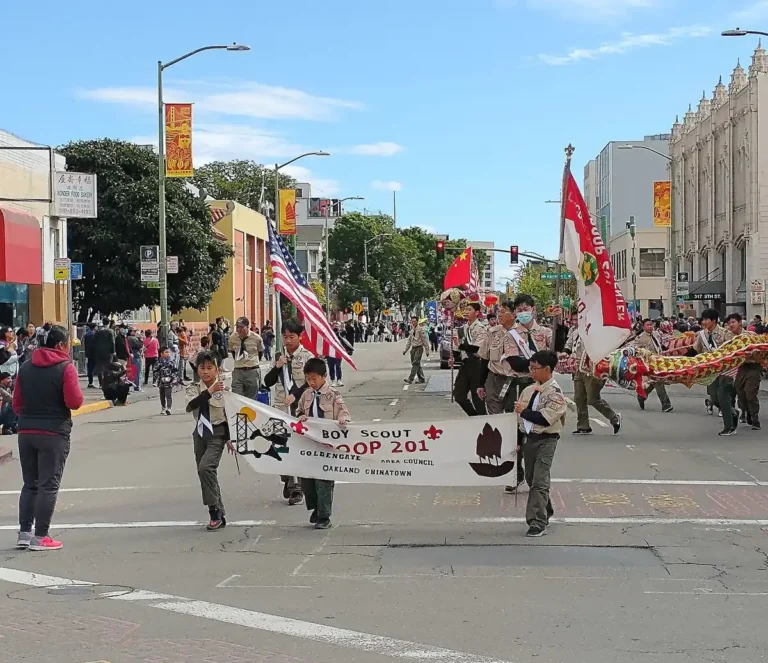
Golden Days belongs to the Greater Fairbanks Chamber of Commerce, which organises the celebration and publishes its programme each season. The Chamber keeps its office at 100 Cushman Street in Fairbanks, but that is the organiser’s administrative address rather than a festival venue; the events themselves unfold outdoors across the downtown core, mostly along the Chena River. Three anchors give the festival its shape. The Grande Parade is billed as Alaska’s largest parade, drawing roughly one hundred floats, marching bands and residents in period dress. The street fair brings vendors and crowds into the downtown streets. The rubber duckie race sends its floating field down the Chena River, turning a fundraiser into one of the week’s most watched spectacles. Around those anchors sit costume contests, foot races, a barbecue cook-off and a rededication of the Felix Pedro monument, so the week mixes pageantry with playful competition. A news account published on July 24, 2026 noted that the annual timing near July 22 commemorates Pedro’s discovery, which explains why the festival settles into that part of the summer.
Quick Facts
| Item | Detail |
| Festival name | Golden Days |
| Host city | Fairbanks, seat of the Fairbanks North Star Borough, established in 1964 |
| Organiser | Greater Fairbanks Chamber of Commerce |
| Season | Mid-to-late July each year |
| Setting | Downtown Fairbanks, mostly along the Chena River |
| 2026 edition | July 18–25, 2026, under the theme “Stars, Stripes & Gold Strikes” |
| 2027 edition | July 17–25, 2027, billed by the Chamber as the “75th Anniversary” of Golden Days, with its duck race billed as the “40th Annual Rubber Duckie Race” |
| Duration | Some layers describe a five-day festival, while listings and the 2026 span describe a week-long run; the two descriptions sit unmerged |
| Signature events | Grande Parade, street fair, and the rubber duckie race on the Chena River |
| Admission | No overall festival admission is published; the parade and street fair are open street events, while duck race tickets cost five dollars or ten dollars |
History
The story Golden Days tells begins in July 1902, when Felix Pedro discovered gold in the hills outside Fairbanks. That strike drew prospectors, merchants and camp followers, and the settlement that grew around the diggings became Fairbanks. Half a century later, the city decided to celebrate that origin formally. A tourism account records that Golden Days began in 1952, when the Chamber of Commerce decided to honour Fairbanks’ Gold Rush and its proud mining tradition, and a cultural-heritage account agrees that the festival began in 1952. From that starting point, the celebration grew into the city’s signature summer gathering, returning each July close to the anniversary of Pedro’s discovery. Its programme kept the mining story at the centre: residents wear Gold Rush-era costume, a monument to Felix Pedro is rededicated, and the parade turns the founding tale into street theatre. The rubber duckie race added a modern, comic counterweight to the pioneer pageantry, and the Chamber now bills the 2027 running of that race as its 40th Annual edition, a billing recorded here exactly as published. The Chamber likewise bills the 2027 festival itself as the 75th Anniversary of Golden Days, and that description stands in this article alongside the sourced 1952 founding layer, with no arithmetic performed in either direction. Descriptions of length also vary between sources: heritage and tourism accounts call Golden Days a five-day festival, whereas recent listings lay it across a full week, and both versions are left standing rather than flattened into one settled figure.
What to Expect
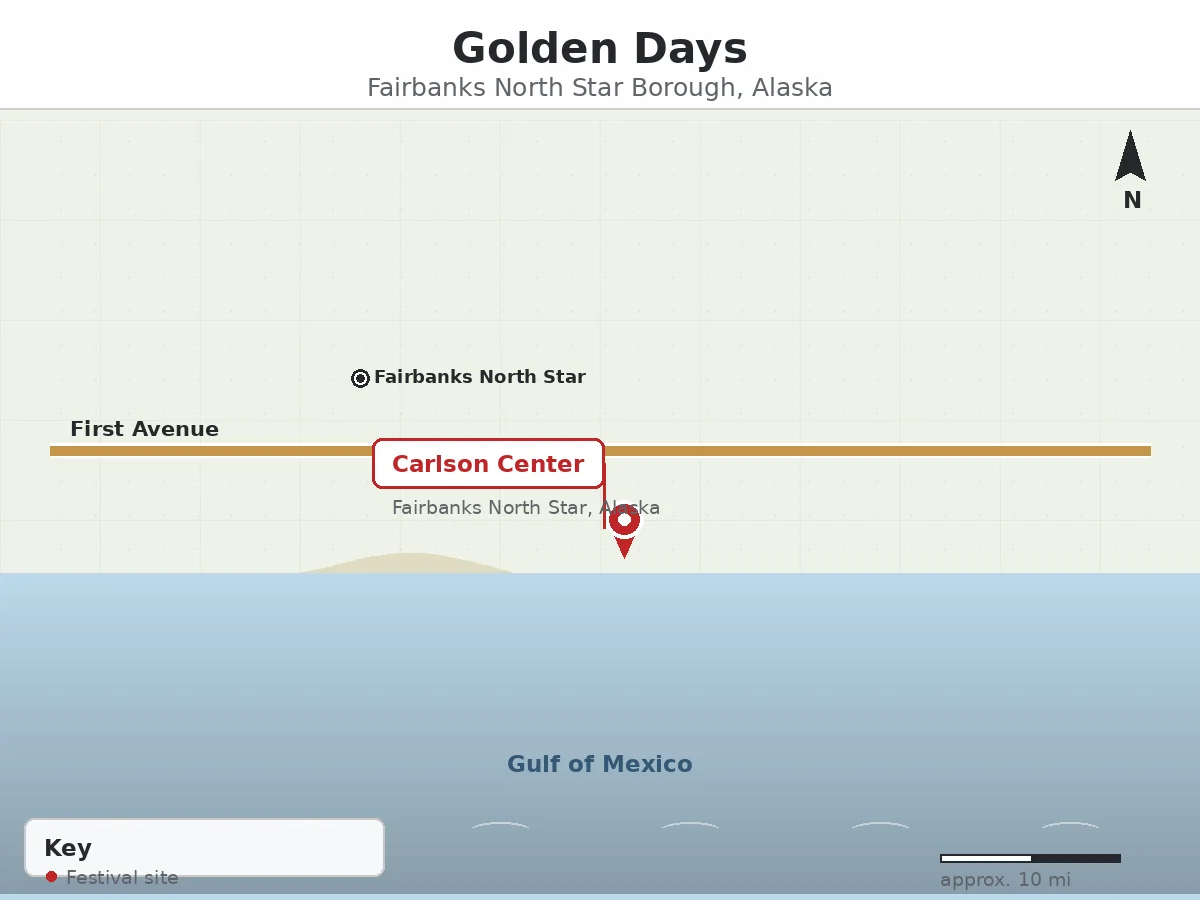
The Grande Parade anchors the festival’s finale. In 2026 the parade, presented by Kinross Alaska, started near the Carlson Center and travelled toward downtown along First Avenue, with the street fair sharing that Saturday finale. The Chamber’s own wrap of the 2026 edition names its elements the Kinross Alaska Grande Parade, the Alaska 529 Street Fair, and the Mt. McKinley Bank Rubber Duckie Race, and those sponsor name forms are reproduced exactly as the Chamber publishes them. The street fair, in a 2025 account, spread around Golden Heart Plaza, along First Avenue and into the Courthouse parking lot. For the duck race, spectators buy tickets at five dollars or ten dollars, with the chance to win up to five thousand dollars or ten thousand dollars respectively if their duck wins, and the proceeds fund community programmes and the Chamber’s operations; a weaker visitor account speaks of eight thousand ducks and a ten-thousand-dollar first prize, and that version is recorded as that layer only. The race runs on the Chena River and can be watched from the Wendell Street Bridge. The 2026 programme, as reported at the time, added a community-wide Poke of Gold scavenger hunt, the Golden Days luncheon, old-time games at Pioneer Park, pie-eating contests, a comedy night, and a Kidz Korner running from 9 a.m. to 5 p.m. on parade day. Pioneer Park, where the old-time games were held, is a forty-four-acre historical theme park described in the heritage account as admission-free, though that free entry belongs to the park rather than to the festival.
Planning Your Visit
Golden Days falls in mid-to-late July, so travellers aiming for it should anchor their plans to that window and then confirm the year’s exact dates with the Chamber. The 2026 edition ran from July 18 to July 25, and the Chamber has posted July 17 to July 25, 2027 as the save-the-date span for the next edition. Because most activity concentrates downtown along the Chena River, a base within walking distance of First Avenue puts the parade route, the street fair and the river viewing points within easy reach. No overall festival admission is published, and the parade and street fair are open street events, so the main spending decisions involve duck race tickets, food and whatever the fair’s vendors tempt you with. Anyone hoping to watch the ducks should claim a spot near the Wendell Street Bridge before the field is released, while parade watchers do best by settling along First Avenue ahead of the start near the Carlson Center. Parade day runs long, with the Kidz Korner alone open from 9 a.m. to 5 p.m. in 2026, so families should pace the day with breaks rather than trying to catch everything at once. July daylight in Fairbanks stretches late, which softens the scheduling pressure and leaves evenings open for the luncheon’s leftovers, the comedy night or a slow walk along the river.
For a useful comparison, see the Dillingham Census Area Alaska Beaver Round Up Festival for another county festival.
A Sample Parade Day Itinerary
Begin the morning along First Avenue, finding a parade vantage point before the floats and marching bands set off from near the Carlson Center. Once the parade has passed, drift into the street fair around Golden Heart Plaza and the Courthouse parking lot, grazing the food stalls and browsing the vendors while the crowds thin. Families can give the middle of the day to the Kidz Korner, which ran from 9 a.m. to 5 p.m. on parade day in 2026, or cross to Pioneer Park for the old-time games on the programme that year. By afternoon, position yourself at the Wendell Street Bridge to watch the duck race come down the Chena River, ticket in hand if you have backed a duck. Close the day the way the 2026 programme suggested, with the comedy night or a relaxed evening downtown while the long northern twilight lingers.
Three Ways Into the Festival
Golden Days offers three distinct doors, and choosing between them shapes the visit. The parade is the ceremonial door: roughly one hundred floats, bands and costumed residents telling the founding story in motion, best for anyone who wants the full civic pageant. The street fair is the social door, a slower wander among vendors, food and neighbours around Golden Heart Plaza and First Avenue. The duck race is the comic door, a raffle disguised as a river spectacle, where a five-dollar or ten-dollar ticket buys a stake in the outcome and the proceeds feed back into community programmes and the Chamber’s work. Serious planners sample all three, but first-time visitors short on time should pick the parade and the duck race, the two elements no other Fairbanks week can offer in quite this combination.
A Golden Days Planning Checklist
- Confirm the current year’s dates with the Greater Fairbanks Chamber of Commerce before booking travel.
- Choose accommodation within walking distance of First Avenue and the Chena River.
- Decide early whether to watch the parade near its Carlson Center start or further along First Avenue.
- Buy a duck race ticket at the five-dollar or ten-dollar level if you want a stake in the finish.
- Reserve time at the Wendell Street Bridge before the ducks are released.
- Build family plans around the Kidz Korner hours on parade day.
- Carry layers for a long day outdoors, since events run from morning into the evening.
- Leave gaps in the schedule for the scavenger hunt, contests and street fair browsing.
Beyond the Parade Route
The festival’s centre of gravity is downtown, yet its themes spill outward. Pioneer Park, the forty-four-acre historical theme park that hosted the old-time games in 2026, rewards a separate visit for its preserved buildings and mining-era atmosphere, and its admission-free status in the heritage account makes it an easy add-on. The Felix Pedro monument, rededicated during the festival, gives the founding story a fixed point that visitors can seek out after the crowds disperse. The Chena River itself remains the city’s summer spine once the ducks are collected, with the Wendell Street Bridge still offering the view that race watchers enjoyed. Travellers with extra days can treat Golden Days as the hinge of a longer Fairbanks stay, using the quieter mornings before events begin to explore the downtown streets that the parade later fills.
Why Golden Days Matters to Fairbanks
Many summer festivals celebrate a harvest, a hero or a holiday; Golden Days celebrates the reason its city exists. Pedro’s 1902 discovery is the founding fact of Fairbanks, and the festival keeps that fact in front of residents every year, not as a museum label but as costume, parade and river theatre. The Chamber’s role ties the commemoration to the city’s present-day commercial life, while duck race proceeds flow back into community programmes, so the town’s origin story literally funds its current projects. For newcomers, the week explains Fairbanks faster than any brochure: why the streets carry mining names, why a monument matters, and why a community this far north throws its biggest party in the brightest part of summer. That blend of memory and merriment is what the 1952 founders were reaching for, and it is why the celebration still anchors the Fairbanks calendar.
Frequently Asked Questions
Why does Golden Days fall in July rather than another month?
The timing commemorates Felix Pedro’s gold discovery in the hills outside Fairbanks in July 1902, and a news account from July 24, 2026 noted that the annual placement near July 22 marks that discovery. Mid-to-late July has therefore become the festival’s settled home in the calendar.
What exactly happens during the rubber duckie race?
Sponsored rubber ducks are set afloat on the Chena River and race with the current while spectators watch, including from the Wendell Street Bridge. Tickets cost five dollars or ten dollars, carrying the chance to win up to five thousand dollars or ten thousand dollars respectively, and the proceeds support community programmes and the Chamber’s operations.
Which parts of Golden Days carry a charge?
No overall festival admission is published, and the parade and street fair are open street events. The priced element is the duck race, where a ticket buys a duck’s chance in the finish. Pioneer Park is described as admission-free in the heritage account, but that fact belongs to the park itself, not to the festival.
What did the 2026 edition add beyond the parade and fair?
Reporting on the 2026 edition listed a community-wide Poke of Gold scavenger hunt, the Golden Days luncheon, old-time games at Pioneer Park, pie-eating contests, a comedy night, and a Kidz Korner open from 9 a.m. to 5 p.m. on parade day, all wrapped around the parade, street fair and duck race.
What to Expect From the Next Fairbanks North Star Borough Alaska Golden Days Festival
How often is Fairbanks North Star Borough Alaska Golden Days Festival held?
Golden Days returns every summer as Fairbanks’ annual celebration of its gold rush founding, settling into mid-to-late July. Its modern editions have been laid across spans such as July 18–25 in 2026, and heritage accounts also describe a five-day festival, with both descriptions recorded rather than merged.
When is the next Fairbanks North Star Borough Alaska Golden Days Festival?
The Greater Fairbanks Chamber of Commerce has posted a save-the-date of July 17–25, 2027 for the next edition. The Chamber bills that edition as the 75th Anniversary of Golden Days and its duck race as the 40th Annual Rubber Duckie Race, and those billings are recorded exactly as published, alongside the sourced layer that Golden Days began in 1952.
Will the dates change?
The festival’s July anchor is firm, because it follows the anniversary of Pedro’s 1902 discovery, but the precise span moves from year to year, running July 18–25 in 2026 and posted as July 17–25 for 2027. Checking the Chamber’s current listing before travelling remains the sensible final step.
Golden Days endures because Fairbanks keeps finding itself in the story it tells each July: a strike in the hills, a city that followed, and a community still willing to dress up, march and race ducks down its river in honour of both. Whether the next edition marks an anniversary billing or an ordinary year, the parade will roll down First Avenue and the Chena will carry its yellow fleet, and Fairbanks will once again celebrate the week it became itself.