Bethel Census Area Alaska Cama-i Dance Festival
Each spring, the community of Bethel opens its doors to dancers, drummers, singers and guests travelling in from villages across the Yukon-Kuskokwim Delta, all gathering for three days of Yup’ik dance, song and shared food. The occasion is the Cama-i Dance Festival, a celebration whose very name is an invitation. In the Yup’ik language, “Cama’i” is a greeting of welcome, offered with a handshake, and the festival carries that spirit through every performance, workshop and meal. Presented by the Southwest Alaska Arts Group, the gathering has grown into a landmark of the region’s cultural calendar. The state tourism body describes it as believed to be the largest gathering of Yup’ik people in the world. For residents of the delta, it is a homecoming written in drumbeats. For visitors, it is an introduction to living traditions that the region’s culture bearers pass from one generation to the next, one dance at a time.
About the Festival
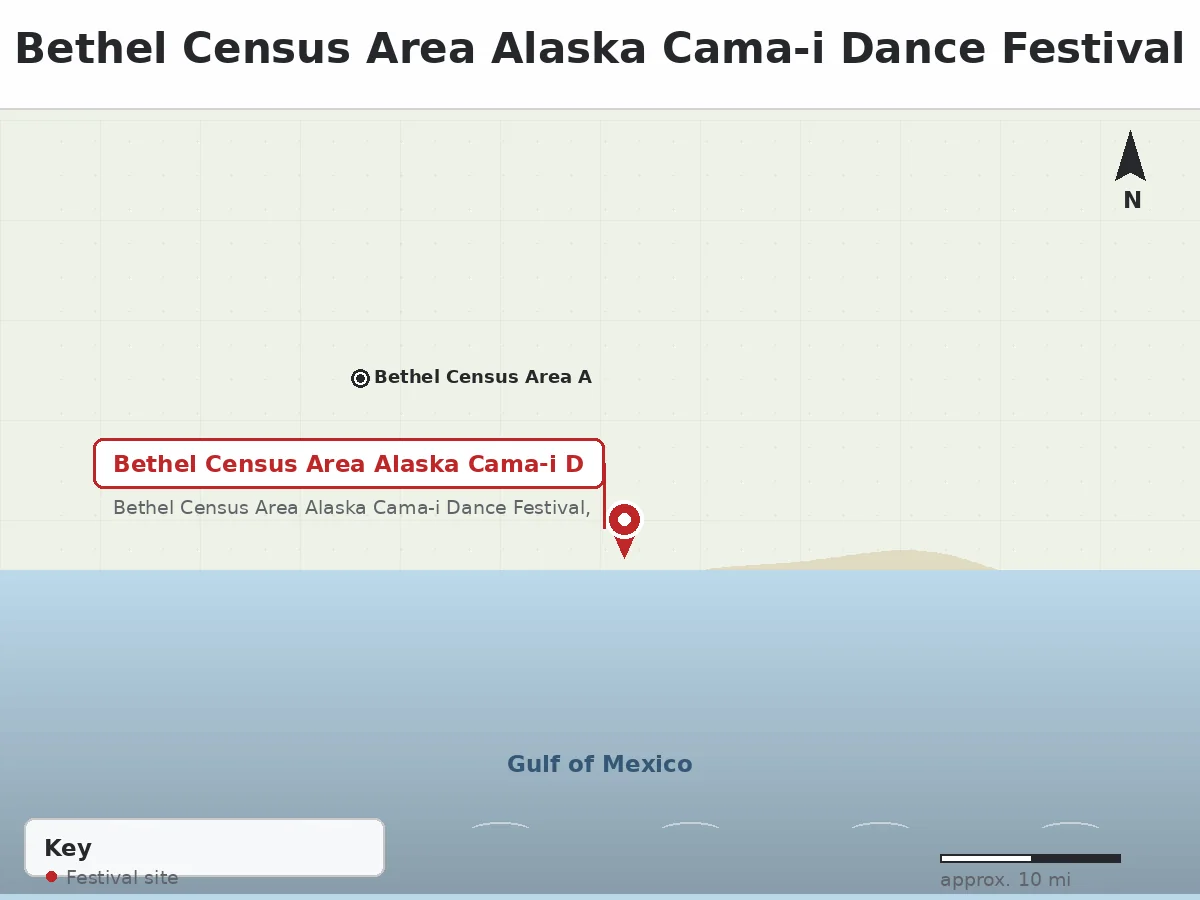
The Cama-i Dance Festival, also styled “Cama’i” by its organiser, is a three-day Yup’ik dance festival held in Bethel each spring. Its presenter is the Southwest Alaska Arts Group, whose own site gives the organisation’s name in that form. A partner profile published by a state humanities forum capitalises the name slightly differently, as “SouthWest Alaska Arts Group,” but the organiser’s own spelling stands as the primary record, and the group is commonly shortened to SWAAG. Bethel serves as the hub community of the Bethel Census Area and of the wider Yukon-Kuskokwim Delta region. That position deserves a word of explanation, because census areas in Alaska work differently from counties elsewhere. They are statistical divisions of the state’s Unorganized Borough, drawn for counting and record-keeping rather than for local government, so they have no borough government and no seat of their own. Each year’s festival is shaped around a theme announced in the Yup’ik language with an English rendering, and recent editions have carried themes honouring dance, drumming and song as inheritances from earlier generations.
Quick Facts
| Item | Details |
| Festival name | Cama-i Dance Festival, also styled Cama’i by its organiser |
| Meaning of the name | “Cama’i” is the Yup’ik greeting of welcome, offered with a handshake |
| Host community | Bethel, hub community of the Bethel Census Area and the Yukon-Kuskokwim Delta region |
| County-equivalent status | Census areas are statistical divisions of Alaska’s Unorganized Borough, with no borough government and no seat |
| Organiser | Southwest Alaska Arts Group, shortened to SWAAG |
| Season | Spring, across three days |
| 2026 edition | Friday, March 27 to Sunday, March 29, 2026, themed “Atualuki Piciryaraput – Singing Our Traditions” |
| Venue | Not named on the organiser’s 2026 page; guide and news layers place the festival in the Bethel Regional High School gym |
| Admission | No general admission price is published on the organiser’s 2026 page, and no public day-pass price is published |
| Attendance | More than four thousand people over the weekend in one account; about four thousand people and twenty dance groups in another |
History
No founding year for the Cama-i Dance Festival appears in the organiser’s published material, and the festival’s history is better told through the milestones its community chooses to celebrate. A partner profile of the arts group calls the festival “a staple for the region for over 35 years,” a phrasing that conveys its longevity without pinning the first gathering to a single date. Individual threads of that history surface in anniversary moments. The group Pamyua first performed on the Cama’i stage in 1996, and when the musicians returned to close the 2026 festival, the appearance was framed as their “30-year Cama’i anniversary.” The Miss Cama’i Cultural Pageant carries its own timeline: an organiser blog post in 2026 described the pageant as standing “thirty-two years after the original pageant,” again recording the span in the community’s own words rather than as a formal founding claim. The festival’s themes trace a recent arc of remembrance. The organiser’s site labels “Yuraq Paiciutekaput – Dance is Our Legacy” as its 2024 recap theme. The 2025 edition, held in late March, danced under “Ciuliamta Cauyait – Drums of Our Ancestors,” while the 2026 gathering sang to “Atualuki Piciryaraput – Singing Our Traditions.”
What to Expect
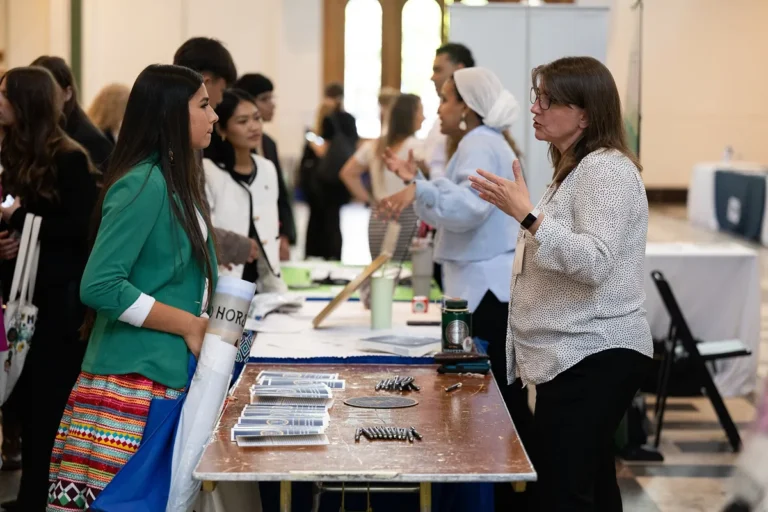
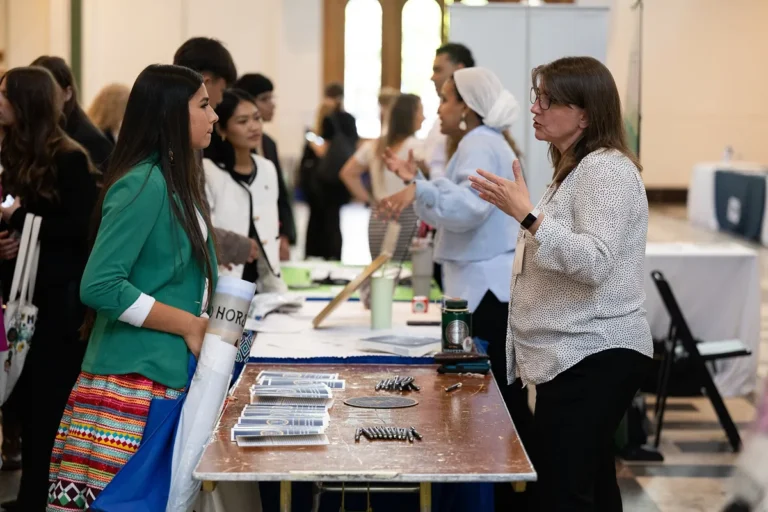
The 2026 edition, held from Friday, March 27 to Sunday, March 29, shows the festival’s shape in detail. Invited dance groups travel from across the Yukon-Kuskokwim Delta and beyond, and the organiser’s page names the Bethel Regional High School Warriors, Ayaprun Elitnaurvik and Pamyua among them. The rhythm of the weekend builds gradually. On Friday, doors opened at 5 p.m. and dancing ran from 5:30 p.m. to midnight. Saturday stretched longest, with doors at 11:30 a.m., dancing from noon to midnight, and a Native foods dinner served from 4 p.m. to 7 p.m., built on donated game, fish and traditional foods. Sunday closed more gently, with doors at 12:30 p.m. and dancing from 1 p.m. to 9 p.m. Learning sits alongside performance. A qaspeq workshop led by Nikki Corbett, co-sponsored by ANHC and SWAAG, ran on all three days, and beading workshops with Susan Jones added another hands-on thread. The Miss Cama’i Cultural Pageant crowns a cultural ambassador, with recent winners crowned in 2024 and 2025. Artist vendor tables line the gathering, while annual dedications and “Living Treasure” culture-bearer honours pause the dancing to recognise individuals; in 2026 the Living Treasure honour went to Dr. Arevgaq Theresa John, and a long-serving volunteer usher lead was also honoured.
Planning Your Visit
Because the organiser’s 2026 page publishes no general admission price, the wisest approach is to treat entry costs as an open question until the organiser confirms them for the edition you plan to attend. Day passes do exist in the festival’s workings, since volunteers receive a day pass to the event, yet no public day-pass price is published, so visitors should not budget around a figure nobody has announced. Artists planning to sell work can plan more precisely, because vendor table prices are published on the organiser’s page: a full table is fifty dollars per day or one hundred thirty dollars for three days, a half table is thirty dollars per day or seventy-five dollars for three days, and a table reservation for corporations or organisations is three hundred dollars for the weekend. Those figures are vendor fees only, never admission prices, and confusing the two would misstate what attendance costs. Timing matters as much as money. The festival occupies a single spring weekend, and its days run long, especially Saturday, so pacing yourself across all three days rewards you with the full arc from opening dances to Sunday’s close. As for the venue, guide and news layers place the festival in the Bethel Regional High School gym, although the organiser’s own 2026 page does not name a venue, so checking the organiser’s announcements before travelling is a sensible final step.
For a useful comparison, see the Anchorage Municipality Alaska Folk Festival for another county festival.
A Sample Three-Day Itinerary
Friday belongs to arrival and first impressions. Reach Bethel with time to settle in before doors open at 5 p.m., then take your seat as the dancing begins at 5:30 p.m. and runs toward midnight. Saturday is the festival’s fullest day, so start when doors open at 11:30 a.m. and stay through the noon-to-midnight dancing, breaking for the Native foods dinner between 4 p.m. and 7 p.m. Between sets, browse the artist vendor tables and, if a workshop session fits your schedule, join the qaspeq or beading workshops to learn directly from practitioners. Sunday offers a slower farewell: doors open at 12:30 p.m., dancing runs from 1 p.m. to 9 p.m., and the closing hours carry the dedications and honours that give the weekend its reflective finish.
How the Accounts Compare
Accounts of Cama-i agree on its importance while describing its scale in slightly different words, and the honest way to read them is side by side rather than blended into one figure. One account, from the arts group’s humanities-forum partner profile, counts more than four thousand people over the festival weekend. A magazine account puts the gathering at about four thousand people and twenty dance groups. Both describe the same essential picture, a crowd in the thousands drawn from across the delta and beyond, without being merged into a single official total. A similar layering applies to the venue: the organiser’s own 2026 page leaves the venue unnamed, while guide and news layers place the festival in the Bethel Regional High School gym, so the gym belongs to the guide and news record rather than to the organiser’s announcement. Even the organiser’s name appears in two capitalisations across sources, with the organiser’s own form, Southwest Alaska Arts Group, standing as the primary one. Holding these layers apart shows a reader which claims come from the festival itself and which come from those writing about it.
Planning Checklist
- Mark the spring weekend early, and note the organiser’s save-the-date of April 2, 3 and 4 for the 2027 gathering.
- Check the organiser’s announcements before travelling, since the organiser’s own page did not name a venue for 2026.
- Treat admission as unconfirmed, because no general admission price and no public day-pass price are published.
- If you are an artist, reserve a vendor table using the published full-table, half-table or organisation rates.
- Plan to attend all three days so you catch the Friday opening, the long Saturday and the Sunday close.
- Leave room on Saturday evening for the Native foods dinner served from 4 p.m. to 7 p.m.
- Consider joining a workshop, such as the qaspeq or beading sessions, for a hands-on part of the weekend.
- Stay for the dedications and Living Treasure honours, which recognise culture bearers and volunteers.
- Greet people warmly, since the festival’s name itself is a greeting of welcome offered with a handshake.
Beyond the Festival Floor
The festival’s reach extends well past its dance floor. Dance groups travel in from communities across the Yukon-Kuskokwim Delta and beyond, which turns a Bethel weekend into a regional reunion where relatives, old classmates and fellow performers cross paths. The Saturday Native foods dinner, built on donated game, fish and traditional foods, expresses a culture of sharing that visitors are welcomed into rather than merely watching. Artist vendor tables give makers from the region a place to sell their work to an audience gathered from many communities at once. The pageant adds another dimension, crowning a cultural ambassador whose role carries the festival’s values into the year ahead. Even the volunteer structure tells a story: volunteers receive a day pass, and the 2026 festival paused to honour a long-serving volunteer usher lead alongside its Living Treasure culture bearer. To attend Cama-i is to be received by a region, not just admitted to an event.
The Significance of Cama-i
The festival’s significance begins with its name. A gathering that calls itself a greeting of welcome announces that hospitality is not decoration but purpose, and the handshake that accompanies the word “Cama’i” sets the tone for everything that follows. Its themes reinforce that purpose across the years: dance named as a legacy, drums named as the ancestors’ own, traditions carried in song. When the state tourism body describes Cama-i as believed to be the largest gathering of Yup’ik people in the world, the claim points to something more than attendance; it points to a place where a people’s culture is practised in public, at full strength, by hundreds of performers and thousands of witnesses. The dedications and Living Treasure honours formalise that gratitude, naming culture bearers such as Dr. Arevgaq Theresa John while they can still hear the thanks. In a region of scattered communities, a spring weekend that reliably brings everyone into one room, dancing, is itself a form of continuity.
Frequently Asked Questions
What does the word Cama’i mean, and how is it offered?
“Cama’i” is the Yup’ik greeting of welcome, and the organiser explains that it is offered with a handshake. The festival takes its name and its spirit from that greeting, which is why the welcome extended to dancers, artists and visitors sits at the centre of the weekend rather than at its edges.
Which dance groups were invited to perform at the 2026 festival?
The organiser’s page for the 2026 edition names invited groups from across the Yukon-Kuskokwim Delta and beyond, including the Bethel Regional High School Warriors, Ayaprun Elitnaurvik and Pamyua. Pamyua’s appearance carried special weight, since the group first performed on the Cama’i stage in 1996 and returned as the closing act for their “30-year Cama’i anniversary.”
What are the artist vendor table rates for the festival?
The organiser’s page publishes vendor table prices for artists: a full table is fifty dollars per day or one hundred thirty dollars for three days, a half table is thirty dollars per day or seventy-five dollars for three days, and a table reservation for corporations or organisations is three hundred dollars for the weekend. These are vendor fees for selling space, and they should never be mistaken for admission prices, since no general admission price is published.
What happens during the Saturday Native foods dinner?
The Saturday programme includes a Native foods dinner served from 4 p.m. to 7 p.m., built on donated game, fish and traditional foods contributed for the occasion. It sits in the middle of the festival’s longest day, when dancing runs from noon to midnight, and it gives performers and guests a shared table at the heart of the weekend.
What to Expect From the Next Bethel Census Area Alaska Cama-i Dance Festival
How often is Bethel Census Area Alaska Cama-i Dance Festival held?
The festival returns each spring as a three-day gathering in Bethel. Recent editions show the pattern clearly: the 2025 festival was held in late March, and the 2026 edition ran from Friday, March 27 to Sunday, March 29, so springtime in Bethel reliably brings the drums back.
When is the next Bethel Census Area Alaska Cama-i Dance Festival?
The organiser has posted a save-the-date for the 2027 gathering, giving the days as April 2, 3 and 4. That announcement comes from the organiser’s own page, so those April days are the firmest guide available for anyone planning to attend the next edition.
Will the dates change?
The exact weekend can shift within the spring season, as the recent record shows: the 2025 edition fell in late March, the 2026 edition closed out March, and the announced 2027 days sit in early April. Because the organiser sets the dates, its save-the-date posts and festival pages remain the authority.
The Cama-i Dance Festival endures because it does the simplest and hardest thing a gathering can do: it welcomes everyone in, by name, with a handshake, and then it dances. From the first Friday sets to the Sunday dedications, the weekend holds together artistry, gratitude and reunion in a single room.
One Comment