Jefferson County Alabama Golden Harvest Festival
In Bessemer, a city in Jefferson County, Alabama, one organiser-published ticketing listing carries the entire public record of the Jefferson County Alabama Golden Harvest Festival. It announces an outdoor afternoon of shopping, food, games, contests, and live music at 208 Jefferson Avenue on Saturday, October 24, 2026, from one in the afternoon until six in the evening. Admission is declared free in the listing’s own capital letters, and everyone is said to be welcome. Beyond that page, research found no city announcement, chamber notice, or news report describing the event, so everything here rests on that single source and is presented at exactly that strength.
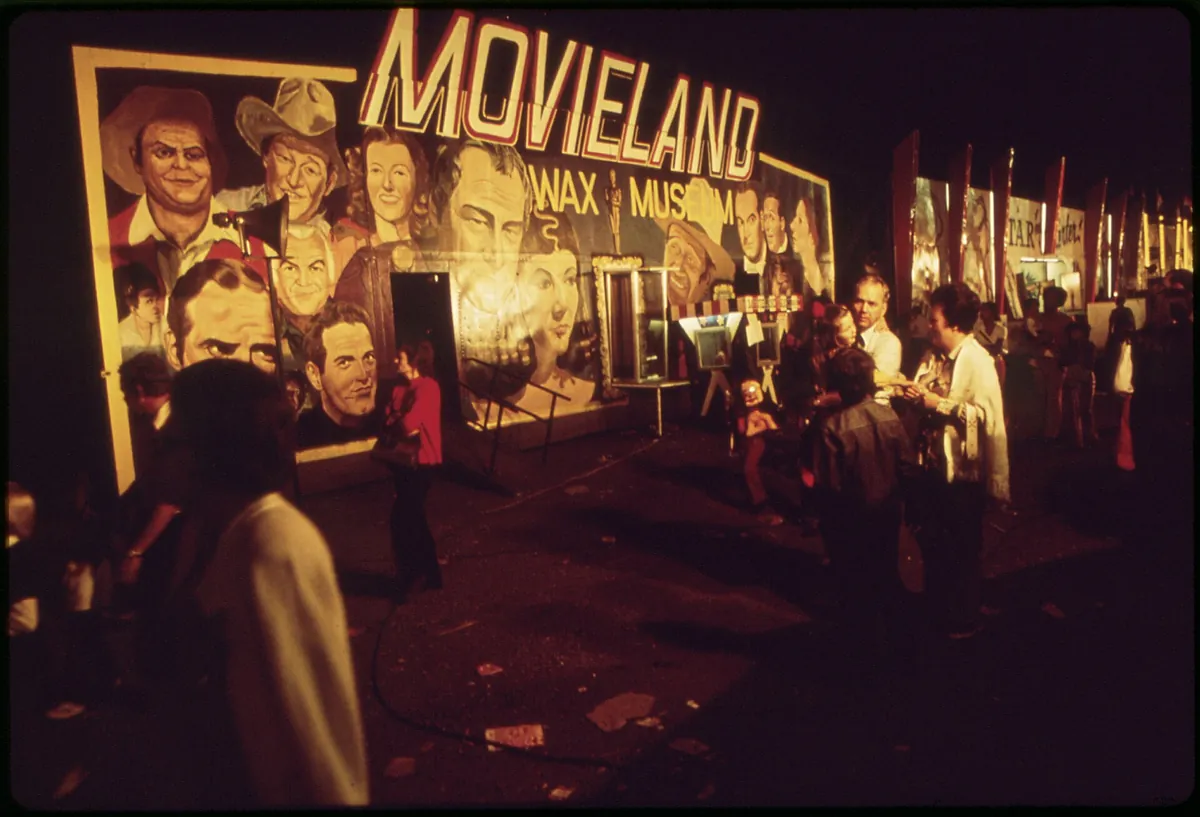
The shape the listing gives the day is easy to picture. Local vendors sell from tents, food trucks and treat sellers feed the crowd, children race in sacks, and performers take turns before the audience, some competing for a cash prize and a best-artist crowning. A funding opportunity presentation sits inside the entertainment, giving the afternoon a double character: part street fair, part small-business gathering, with early Christmas shopping folded in.
This article gathers every confirmed detail the listing contains, marks what the page does not explain, and refuses to invent a history, tradition, or crowd size no source supports.
About the Festival
The listing names Goddess Musiq as the organiser, and its branding carries the tag MoneyQueens among its hashtags. No fuller description of the organising body appears in the material available, and no independent body corroborates the event, so the credit stands exactly as published. The setting is outdoors at 208 Jefferson Avenue in Bessemer; vendors are told to bring a tent, with some tables and chairs provided first-come.
Bessemer itself is worth placing correctly, because the county geography is easy to get wrong. Birmingham has been the seat of Jefferson County since 1873, and Bessemer is not the county seat. What Bessemer holds is the county’s second courthouse, the Bessemer Division, giving the city a civic weight of its own. The festival belongs to Bessemer, not to the seat across the county.
For a useful comparison, see the Jefferson County Alabama Barber Vintage Festival for another county festival.
The listing calls the occasion a free event in emphatic terms, yet its ticket display also shows prices running from zero up to one hundred eight dollars and fifty-five cents. Those paid tiers are never itemised in the listing text, so nobody can say what they buy, and they must not be read as admission prices. Admission, as the listing states it, costs nothing.
What the page itemises carefully is the vendor and performer money. Food trucks pay one hundred dollars, food, beverage, and treat vendors pay seventy-five dollars, and retail vendors pay sixty dollars. Artists may perform without charge, while entering the music-artist contest costs fifty dollars, with a five hundred dollar cash prize and the best music artist title waiting for the winner. The day’s economics run through the sellers and competitors rather than through the gate.
Quick Facts
| Fact | Detail |
| Organiser as published | Goddess Musiq |
| Branding tag on the listing | MoneyQueens |
| Host town | Bessemer, Jefferson County, Alabama |
| County seat note | Birmingham is the county seat; Bessemer holds the second courthouse, the Bessemer Division |
| Venue | 208 Jefferson Avenue, Bessemer, Alabama, outdoors |
| Date | Saturday, October 24, 2026 |
| Hours | One in the afternoon until six in the evening |
| Admission | Free, as the listing states |
| Vendor fees as published | Food trucks one hundred dollars; food, beverage, and treat vendors seventy-five dollars; retail sixty dollars |
| Artist contest | Entry fifty dollars; prize five hundred dollars in cash plus a best music artist crowning |
History
No history of this festival can responsibly be written, and this section exists largely to explain why. The listing gives no founding year, no edition number, and no account of earlier gatherings in Bessemer under this name. Nothing calls the event annual, and no prior edition is documented in any source the research could find. Whether October 2026 is a first attempt, a revival, or one running of a locally known series is a question the evidence does not answer.
That silence is itself a fact worth recording. A researcher could borrow the long harvest-fair tradition of the American South, where autumn gatherings around crops, food, and music run back generations, and imply that Bessemer shares in it, but the implication would be decoration rather than documentation. Harvest-season celebration is the broad backdrop the festival’s name invokes; it cannot be converted into a past for an event whose past is unpublished.
The honest summary is short. One organiser, publishing as Goddess Musiq, announced one October afternoon in Bessemer with a detailed little programme and an open invitation. If the festival returns in later years, a genuine history may become writable. At present, the record begins and ends with a single listing.
What to Expect
The listing’s programme mixes commerce, food, play, and performance in roughly equal parts. Shopping with local vendors anchors one side of the grounds, and the early Christmas shopping on the page suggests sellers bringing gift-ready stock ahead of the season. Food trucks handle the main eating, joined by treat vendors selling the sweeter end of the menu, so a visitor can graze rather than sit down to one formal meal.
The games give the day its family texture. Sack races are promised, along with a hula hoop contest, a dance contest, and family games in general terms. None carries a published schedule, age division, or prize, so families should expect informal, turn-up-and-join activities rather than bracketed tournaments: a loose, wandering afternoon rather than a tightly staged one.
Live artist performances supply the soundtrack, and the contest layered over them supplies the stakes. Artists may perform free of charge for the exposure, while those who pay the fifty dollar entry compete for five hundred dollars in cash and the best music artist crowning. A visitor hears two kinds of sets, open and judged, though the listing never says when the contest runs or how the winner is chosen.
The odd item out is the funding opportunity presentation, listed among the amusements without explanation. Its presence hints that the organiser aims the event partly at vendors, performers, and small-business hopefuls, not only at shoppers. What it covers, who presents it, and when it happens are unpublished, so the curious should ask on the day.
Planning Your Visit
Begin with the listing itself, because it is both the announcement and the only information desk this festival has. Recheck it before October 24, since a single-page event can change hours or arrangements with no other outlet reporting the change. The confirmed skeleton is simple: 208 Jefferson Avenue, outdoors, one o’clock to six o’clock, admission free.
Money planning is mostly about spending rather than entry. The gate costs nothing, so a visitor’s budget goes on food, treats, and whatever the retail stalls tempt them into, with the early Christmas shopping angle making a gift list worth bringing. Sellers should note the vendor fees instead: one hundred dollars for a food truck, seventy-five dollars for food, beverage, and treat sellers, sixty dollars for retail, plus a tent.
Performers face their own small decision. Playing for free is the default offer, while the contest asks fifty dollars against a five hundred dollar prize and a crowning. With no entry deadline or judging detail published, early contact through the listing page is the sensible move.
Late October in Alabama usually means mild afternoons cooling toward evening, so layers suit a one-to-six outdoor event. Because seating is limited and first-come, arriving nearer one o’clock than five secures chairs and the full run of activities. Five hours is the whole festival, with no second day to catch anything missed.
A Sample Festival Afternoon
Treat this as a suggested rhythm rather than a published timetable, since the listing sets hours but no running order. Arrive close to one o’clock, walk the vendor rows while the grounds are fresh, and claim a seat near the performance area before the music settles in. The first hour suits browsing and a slow lap to learn the layout.
Through the middle of the afternoon, alternate between games and stage. Sack races and the hula hoop and dance contests reward watching as much as joining, and the food trucks make their strongest case once the first performances end. If the funding opportunity presentation interests you, mid-afternoon is the time to ask where and when it happens, since no slot is published.
Save the last stretch for the contest energy and the shopping. As six o’clock approaches, judged performances carry more weight, and a final circuit of the stalls covers any early Christmas buying left undone.
How It Compares With Other Autumn Events
Established fall festivals usually arrive wrapped in documentation: anniversary billings, named committees, printed schedules, attendance claims, and press coverage stretching back years. The Golden Harvest Festival presents the opposite profile: one listing is its entire public footprint, and every question beyond that page meets silence. Judged against documented institutions, it is a newcomer on paper whether or not it is one in fact.
The comparison is not entirely unflattering, because the listing is unusually concrete about money. Many bigger events hide their vendor economics, while this page publishes three tiers of seller fees, a contest entry price, and a prize figure. A food-truck operator comparing autumn bookings learns more about participation costs here than from far larger festivals’ glossy sites.
What it lacks is equally specific: no lineup, parking guidance, rain policy, or track record. A visitor choosing between this and a long-documented harvest fair elsewhere in Alabama is choosing between a known quantity and an open question: free admission and a single afternoon make the gamble cheap.
Planning Checklist
- Recheck the ticketing listing shortly before Saturday, October 24, 2026.
- Head for 208 Jefferson Avenue in Bessemer, arriving near one in the afternoon.
- Remember admission is free, so no ticket money is needed.
- Bring spending money for food trucks, treat sellers, and retail stalls.
- Carry a gift list if the early Christmas shopping appeals.
- Vendors should budget their published fee and bring a tent.
- Arrive early if you want a first-come table or chair.
- Performers should decide whether the fifty dollar contest entry is worthwhile.
- Dress in layers for an afternoon cooling toward six o’clock.
- Ask on site about the funding opportunity presentation’s timing.
Beyond the Festival Grounds
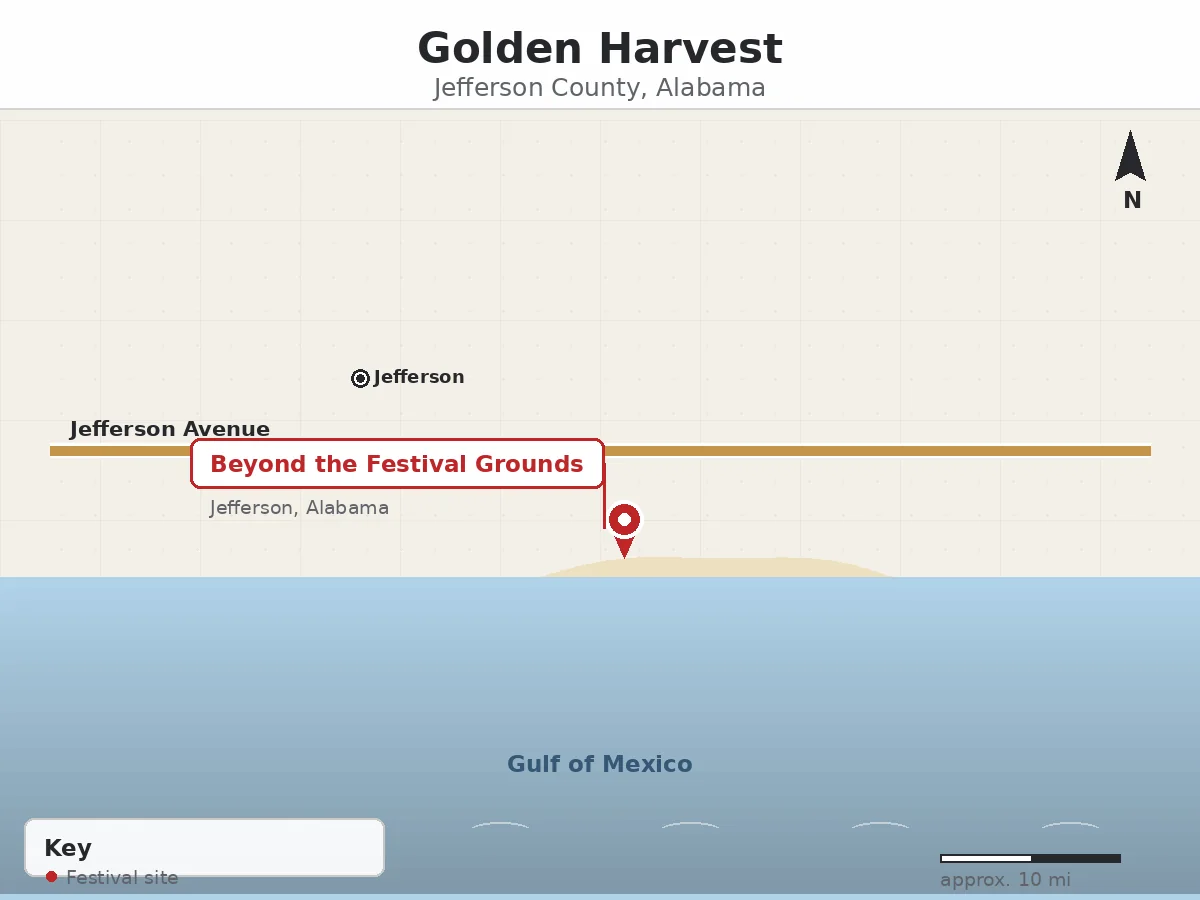
The festival gives an outsider a reason to spend an afternoon in Bessemer, and the town rewards a little curiosity around the event’s edges. Bessemer’s identity in the county is distinctive: it is the city with the second courthouse, the Bessemer Division, a place with real civic standing that is nevertheless not the county seat. That arrangement, dating from Birmingham’s tenure as seat since 1873, explains why Bessemer can feel like a county town in its own right.
A visitor with time before the one o’clock start can treat the trip as a small introduction to that side of the county. The drive in, the streets around Jefferson Avenue, and a meal from a local kitchen before the food trucks open all belong to the same modest expedition. None of it depends on the festival having a past; it depends only on the town being there, which it solidly is.
Why a Single Listing Still Counts
It would be easy to wave away an event known only from one ticketing page, and the dismissal would miss something real about how local festivals begin. Almost every long-running fair started as somebody’s single announcement, and the difference between a debut that vanished and an institution is usually nothing grander than people turning up. This Bessemer afternoon deserves accurate recording rather than inflation or neglect.
The programme is also genuinely hospitable in design. Entry costs nothing, the games cost nothing, performers can play without paying, and the paid elements fall on vendors and contest entrants who stand to earn something back. With the funding opportunity presentation added, the day reads as an attempt to circulate money and attention inside a local economy: shoppers to sellers, sellers to a stage, a stage to a prize.
If later editions follow, they will generate the history this one lacks. If none follow, the listing still documents a complete little civic gesture: an organiser, a date, an open gate, and a harvest-season invitation to everyone.
Frequently Asked Questions
Is entry really free, despite the prices shown on the ticket display?
Yes, on the listing’s own wording. The page declares the event free and welcomes everyone, while its ticket display also shows figures up to one hundred eight dollars and fifty-five cents. Those paid tiers are not itemised in the listing text, so they cannot be identified as admission charges; the free-entry statement is the only admission information published.
What does it cost to sell at the festival?
The listing publishes three vendor fees. A food truck pays one hundred dollars, food, beverage, and treat vendors pay seventy-five dollars, and retail vendors pay sixty dollars. Sellers should also bring a tent, since the event is outdoors and only some tables and chairs are provided, first-come.
How does the music artist contest work?
Artists may perform without paying anything. Those who want to compete pay a fifty dollar entry fee, and the contest offers a five hundred dollar cash prize plus a crowning as best music artist. The listing publishes no judging arrangements, set times, or entry deadline, so performers must seek those details through the listing itself.
Is Bessemer the seat of Jefferson County?
No. Birmingham has been the Jefferson County seat since 1873. Bessemer holds the county’s second courthouse, the Bessemer Division, which gives the city an important civic role of its own. The festival takes place in Bessemer at 208 Jefferson Avenue regardless.
What to Expect From the Next Jefferson County Alabama Golden Harvest Festival
How often is Jefferson County Alabama Golden Harvest Festival held?
No pattern can be stated from the record. Exactly one edition, on October 24, 2026, is documented, the listing never describes the event as annual, and no earlier running has been found. A single announcement cannot establish a yearly rhythm or any other cycle, so none is claimed.
When is the next Jefferson County Alabama Golden Harvest Festival?
No further edition has been announced anywhere the research could reach. If the organiser stages another, it would presumably appear the same way the 2026 event did, as a fresh ticketing listing under the Goddess Musiq name. Until such a page exists, the October 2026 afternoon is the only date on record.
Will the dates change?
The documented date, Saturday, October 24, 2026, from one until six in the afternoon, stands as published, and single-page events can be adjusted with little notice, which is one more reason to recheck the listing before travelling. Beyond that date, nothing has been announced that could hold firm or move.
One free afternoon, one Bessemer address, five hours of vendors, games, food, and competing voices: that is the whole of the verified record, and it is enough to go on. The festival asks its visitors for nothing but their presence, and whatever it becomes in later years will start from whether people answer that first invitation.