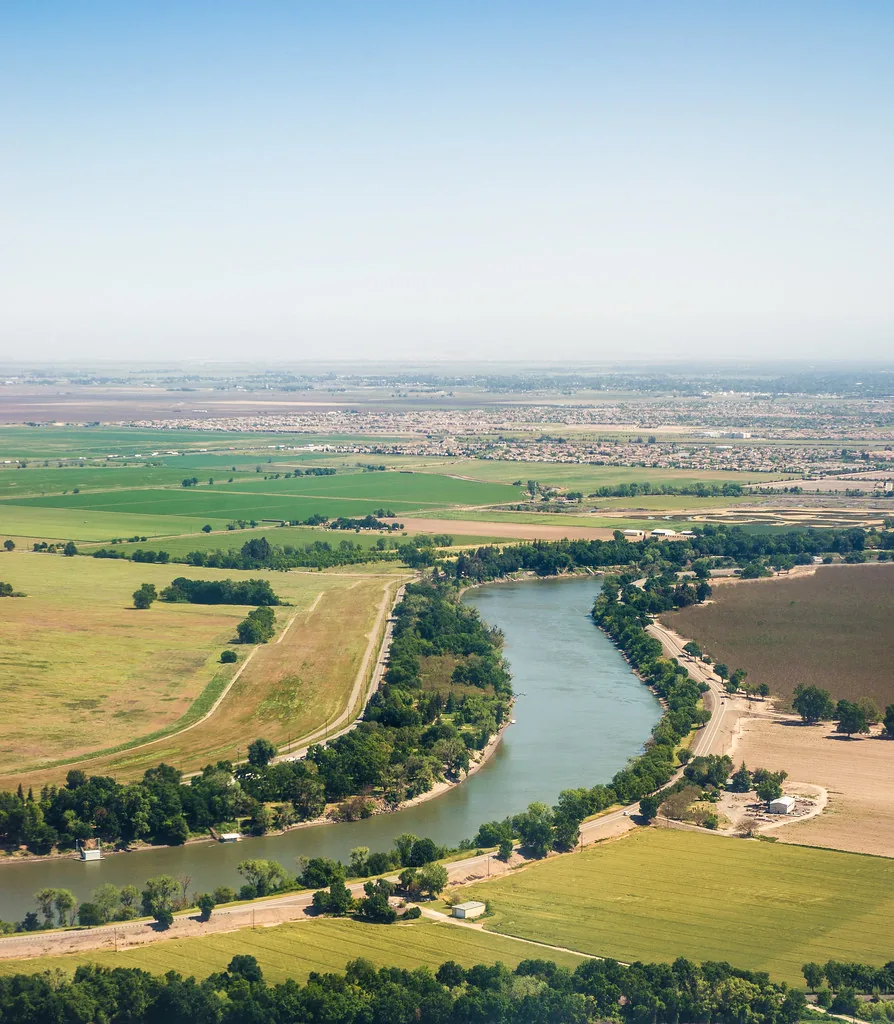
Dale County Alabama Dale County Groundwater Festival
Not every festival is built around food and music. In Dale County, one spring tradition is dedicated entirely to water — how it moves, how it is cleaned, and why it matters. The Dale County Groundwater Festival brings hundreds of elementary students to Ozark for a day of hands-on science.
Held at Wallace Community College and organized with the Dale County Soil and Water Conservation District, the event turns the water cycle into something children can touch, pour, and taste. It is less a street fair than a field trip, and that is exactly the point.
For a rural Wiregrass county that depends on wells, rivers, and farms, teaching the next generation to be careful stewards of water is practical as well as educational. The festival makes that lesson memorable.
Dale County’s spring also brings the Dale County Alabama Crawdad and Music Festival, a free downtown Ozark day of crawfish, live music, and crafts that pairs neatly with a spring visit to the county.
Groundwater Festival at a Glance
| Event | Dale County Groundwater Festival |
| County | Dale County, Alabama (seat: Ozark) |
| City | Ozark |
| Venue | Wallace Community College, Ozark campus |
| Timing | Spring, typically on a weekday morning |
| Audience | Elementary school students, usually attending as school groups |
| Focus | Water filtration, the water cycle, and the edible aquifer |
| Format | Hands-on learning stations led by educators and volunteers |
| Organizer | Dale County Soil and Water Conservation District |
| Cost | No public gate; run for participating school groups |
| Best for | Teachers, students, and families curious about local water science |
What the Groundwater Festival Is
The Groundwater Festival is an annual education event that draws hundreds of elementary-age students to the Wallace Community College campus in Ozark. Over the course of a morning, students rotate through stations that teach them where water comes from, how it is filtered, and how everyday choices affect the supply beneath their feet.
It is organized by the Dale County Soil and Water Conservation District, the local body responsible for supporting sound land and water practices across the county. The district’s role is a clue to the festival’s purpose: it is designed to build habits of conservation early, when lessons tend to stick.
Why Water Education Matters in Dale County
Dale County is farm country. Peanuts, cotton, and other crops depend on water, and much of the county’s drinking supply comes from groundwater drawn through wells. That makes water both an economic resource and a daily necessity, and it makes understanding it a practical skill rather than an abstract one.
Wells, Rivers, and Farms
Across the Wiregrass, households and farms rely on aquifers and on rivers such as the Choctawhatchee and its tributaries. A festival that explains how those systems work helps students connect the water in a glass to the land around them.
Stewardship Starts Young
Conservation districts across Alabama run similar programs for the same reason: children who understand filtration, runoff, and the water cycle are more likely to protect water as adults. The Dale County festival is part of that broader effort.

A Morning of Hands-On Science
Water Filtration
At the filtration station, students build and use simple filters to see how dirt and impurities are removed from water. It is a concrete demonstration of a process most people never think about — the treatment that turns raw water into something safe to drink.
The Water Cycle
Another station walks through evaporation, condensation, and precipitation, showing how water moves endlessly between land, air, and sea. For younger students, the cycle is often presented with models and movement, so the concept becomes something they act out rather than memorize.
The Edible Aquifer
The best-known station is the edible aquifer. Using layers of sweets to represent soil, gravel, and water, students build a model of the ground beneath them and then “drill” into it. It is a clever way to make an invisible system visible — and, of course, a favorite with the children.
Who Takes Part
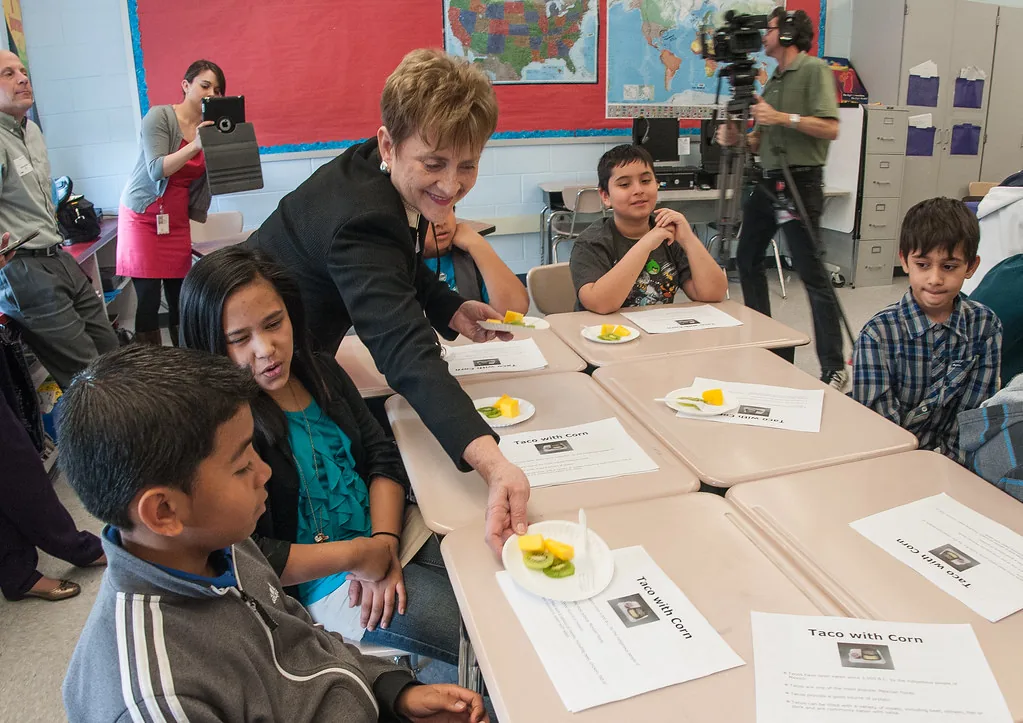
The festival is built around school groups, and attendance is typically arranged through participating elementary schools rather than sold to the general public. Teachers register their classes, and volunteers from the conservation district and partner agencies run the stations.
Because the format depends on organized groups moving between stations, it is best thought of as an educational field-trip experience. Parents who want their children involved should ask the child’s school whether it participates.
The volunteer side is just as important as the student side. Conservation district staff, partner agencies, and local volunteers staff the stations, and their willingness to return year after year is what keeps the festival running. For many of them, the reward is watching a concept click for a child who has never thought about where water comes from.
Planning and Practical Notes
Getting to the Campus
The festival is held at Wallace Community College in Ozark, on Andrews Avenue near the center of town. Ozark sits on US 231, about 20 miles north of Dothan, and the campus is an easy drive from anywhere in Dale County. Buses typically drop students near the activity area.
Who Can Attend
Attendance is generally by school group. Families interested in the program should check with their school or the Dale County Soil and Water Conservation District about how classes are selected and whether any sessions are open to the public.
What to Wear and Bring
Because the stations involve water and hands-on materials, students are usually asked to dress comfortably and be ready to get a little messy. A spring day in the Wiregrass can be warm, so light clothing and sun protection are sensible.
Weather
Spring weather in Dale County is mild to warm, often in the 70s, with the chance of a shower. Because the event is outdoors and on a fixed date, a rainy spring can occasionally affect the schedule.
A Sample Festival Morning
A typical visit begins with a welcome and a short introduction, after which classes rotate through the stations in small groups. Each stop lasts long enough for a demonstration and some hands-on time, and the rotation keeps younger students engaged.
By late morning the groups have cycled through filtration, the water cycle, and the edible aquifer, and the day wraps up with a recap of what they learned. Teachers often carry the lessons back into the classroom in the weeks that follow.
Related Events to Compare
Dale County and the surrounding Wiregrass host a range of community events through the year:
| Crawdad and Music Festival | Ozark, April — free downtown day of crawfish and live music |
| Claybank Jamboree | Ozark, October — arts and crafts on the square |
| Daleville Annual Fall Festival | Daleville, October — vendors, games, and pumpkins |
| National Peanut Festival | Dothan, autumn — the region’s largest fair |
| South Alabama Pro Rodeo Classic | Dale County AgPlex, August — rodeo events and vendors |
Tips for Teachers and Families
- Ask your school early whether it participates, since spaces are arranged by class.
- Dress students for hands-on water activities and a warm spring day.
- Plan for a morning visit; the program runs on a rotating station schedule.
- Reinforce the lessons afterward — the water cycle and filtration make good follow-up projects.
- Check with the conservation district for the current date and any public sessions.
Beyond the Festival
Families who want to extend a water-themed outing can explore Dale County’s outdoors. The Claybank Creek greenway in Ozark offers an easy walk, and the rivers and creeks of the Wiregrass are popular for fishing and paddling. Wallace Community College itself sits close to the heart of Ozark, making the festival an easy add-on to a visit to the downtown square.
For a broader trip, Ozark’s historic downtown, the Wiregrass farm country, and the aviation heritage around Fort Novosel give a visiting family plenty to fill a weekend. The county’s spring festivals — the crawdad celebration and this water-science day — fall close enough together to make a single spring visit worthwhile.
Why the Groundwater Festival Matters
The Groundwater Festival is a reminder that a county’s most important resource is often the one nobody sees. By teaching children how water is filtered, cycled, and stored underground, it builds a generation that understands the stakes. For a farming county that lives on wells and rivers, that lesson has lasting value.
It also keeps a local tradition of conservation education alive, carried forward by the district and its volunteers year after year.
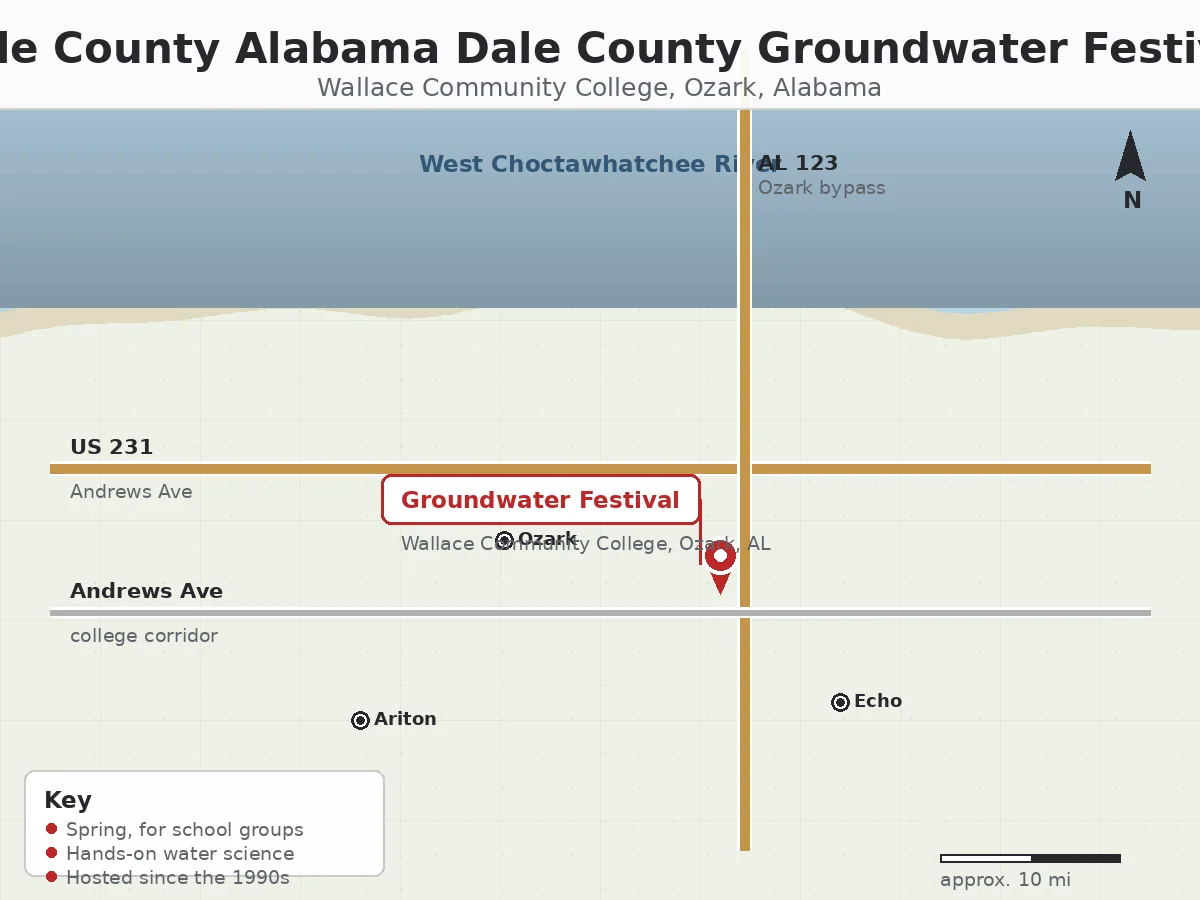
Festival Area Map
The Groundwater Festival is held at Wallace Community College in Ozark, in central Dale County.
Frequently Asked Questions
What is the Dale County Groundwater Festival?
It is an annual water-education event that brings elementary students to Wallace Community College in Ozark for hands-on lessons about filtration, the water cycle, and aquifers.
When and where is it held?
It is held in the spring, typically on a weekday morning, at the Wallace Community College campus in Ozark, Alabama.
Who organizes the festival?
The Dale County Soil and Water Conservation District organizes the event, with educators and volunteers running the learning stations.
Can the public attend?
Attendance is generally arranged through participating schools as a field-trip experience. Families should check with their school or the conservation district about any sessions open to the public.
What is an edible aquifer?
It is a teaching model made from layers of sweets that represent soil, gravel, and groundwater. Students build it and “drill” into it to see how aquifers hold and release water.
Why is water education important in Dale County?
Much of the county’s water comes from groundwater used by homes and farms. Understanding filtration and conservation helps students protect a resource the whole county depends on.
What is Dale County known for?
Dale County is a Wiregrass county in southeast Alabama known for peanut and cotton farming, its county seat of Ozark, and the Army aviation installation at Fort Novosel near Daleville.
What to Expect From the Next Groundwater Festival
The festival is an annual event and is expected to return to the Wallace Community College campus each spring, organized by the Dale County Soil and Water Conservation District.
How often is the Groundwater Festival held?
Every year, in the spring. It has been a recurring part of the county’s school calendar for years.
When is the next festival?
The next edition is expected the following spring. Schools and the conservation district confirm the date as the season approaches.
Will the date or format change?
The weekday, school-group format has been consistent, but the date and station lineup can vary year to year, and spring weather can affect an outdoor event. Confirm details with the district.
Last updated: October 2026
The Dale County Groundwater Festival is a quiet but valuable tradition — a morning of science that gives the county’s youngest residents a hands-on understanding of the water beneath their feet. For teachers and families, it is one of the year’s most worthwhile field trips.