Guilford County North Carolina North Carolina Folk Festival
For three September days, downtown Greensboro stops behaving like an ordinary city centre and starts behaving like a festival ground, with stages around the Greensboro Cultural Center and LeBauer Park and music spilling from one corner of the footprint to the next, all free to attend. The North Carolina Folk Festival is Greensboro’s own festival, held in Greensboro, the county seat of Guilford County, and it is built on a broad idea of folk: not one genre, but the many traditions people carry, from bluegrass to hip-hop, soul, jazz, and music from around the world.
The festival’s identity is best stated plainly: founded in 2018 as a legacy event of the National Folk Festival, which was hosted in Greensboro from 2015 to 2017, it is the successor to that residency, not the same event under a new name.
About the Festival
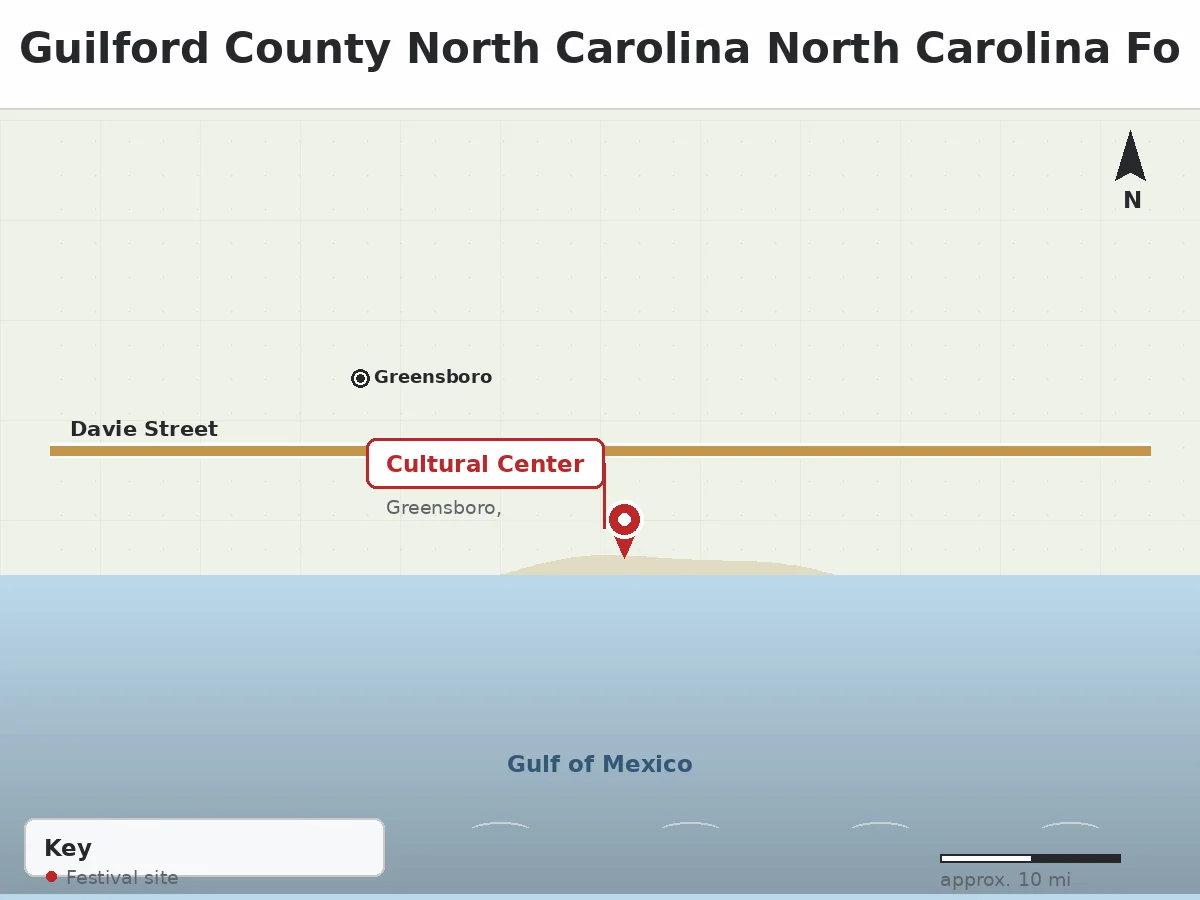
The North Carolina Folk Festival, shortened in its own headlines to NC Folk Festival and NCFF, is a three-day September weekend festival, Friday through Sunday, in downtown Greensboro. Its own releases describe it as a nonprofit organization producing celebrations where music, art, and food unite communities. Its current leadership in the 2025 and 2026 layers is Executive Director Jodee Ruppel, with Savannah Thorne named Programming Director in 2025. The festival’s own office address, 200 North Davie Street in Greensboro, sits inside the footprint at the Cultural Center: an office address, never a claim the whole festival happens in one building.
The programme’s spine is continuous music and dance across multiple downtown stages, spanning folk and traditional forms broadly defined. The festival’s own 2026 wording programmes diverse genres while insisting that all music is rooted in folk traditions, and its releases across the years document bluegrass and Americana, hip-hop, soul, jazz, global and Indigenous traditions, participatory jams and dances, cultural demonstrations, a makers marketplace, regional and ethnic foods, and family activities. There is no single headliner experience and no single stage to camp beside; the festival is designed to be wandered. Admission is the festival’s own published term in every modern layer: free, with food, beverages, marketplace goods, and merchandise for purchase, never admission. Its own boilerplate billing calls it North Carolina’s largest free music festival, reported here as billing rather than as a verified ranking.
Quick Facts
| Item | Detail |
| Festival | North Carolina Folk Festival, downtown Greensboro |
| Host city | Greensboro, county seat of Guilford County, North Carolina |
| 2026 dates and hours | Friday, September 18 through Sunday, September 20, 2026; Friday 5 p.m. to 10 p.m., Saturday and Sunday noon to 10 p.m., in a corroborating account |
| Admission | Free to attend, in the festival’s own published terms |
| Stages in 2026 | Five stages and two auxiliary stages |
| 2026 headliners | Saint Paul and the Broken Bones, The Roots ft Questlove, Molly Tuttle |
| Organiser | The festival’s own nonprofit organization |
| First North Carolina edition | 2018, as the legacy successor to the National residency |
| Parking and camping | No parking price published; no festival camping offered |
How a National Residency Became a Greensboro Festival
Greensboro’s folk festival story has two chapters, and keeping them apart is the whole history. From 2015 to 2017, the city hosted the National Folk Festival, a national event produced elsewhere. In 2018, Greensboro launched its own festival as the legacy of that residency, as the North Carolina festival’s own 2025 release states: founded in 2018 as a legacy event of the National Folk Festival, which was hosted in Greensboro from 2015 to 2017. The first North Carolina edition ran September 7 through 9, 2018, followed by September 6 through 8, 2019.
For a useful comparison, see the Greene County North Carolina Ram Fest Festival for another county festival.
The early production arrangements belong to their own years. The 2018 and 2019 layers bill the festival as produced by ArtsGreensboro, with the 2019 layer adding a partnership with the City of Greensboro and a presenting credit for TowneBank for that year only. A 2020 layer bills it as co-produced by the City of Greensboro, and the early leader Amy Grossmann is billed as president and chief executive in 2021 layers and as festival director in 2019 layers. None of those era forms is the current organiser, and the current independent nonprofit form may not be back-dated to 2018. The 2020 edition, announced for September 11 through 13, 2020, was presented in a movie and virtual format, never as a normal in-person downtown edition.
The anniversary arithmetic is the record’s most instructive tangle, and the article leaves it tangled. The festival’s 2024 edition was billed as its tenth anniversary, a count that only works by including the three National residency years and the virtual 2020 edition. A local press account in the same year corrected the arithmetic: 2024 was technically the North Carolina festival’s seventh anniversary, while still the tenth folk festival to reach the city’s streets since the National residency began. Both wordings stand, unreconciled, and no edition or anniversary number, or uninterrupted-run claim, is asserted here for any year.
What to Expect
Music Across the Footprint
Expect to walk: the festival is not a fairground with a single gate and main stage, but a downtown footprint threaded with stages and activity areas, centred on the Cultural Center and LeBauer Park. The 2026 layers describe five stages and two auxiliary stages, and the named stages in corroborating 2026 accounts include the GO by Raymond James City Stage, the T-Fiber Stage at LeBauer Park, the NC By Train Stage at the Depot, and the Revity Jams Stage. Those sponsor prefixes are credits for that year, never permanent stage names; other years have different maps, including a new fifth official stage, The Flat Iron, in 2025.
The 2026 Headliners
The 2026 bill, fenced to its year, is headed by three acts. Saint Paul and the Broken Bones headlined Friday, September 18, announced in the festival’s second round after its first round had left the Friday slot unannounced; that gap was simply an announcement sequence, never a cancellation. The Roots ft Questlove headlined Saturday, September 19, and Molly Tuttle headlined Sunday, September 20. The scale of the 2026 programme is reported in two layers that do not agree, and the article does not average them: the festival’s own first-round release describes more than fifty performances, while the later full-lineup layers describe sixty-seven performances by more than eighty artists, forty-four of them North Carolina-based, with more than forty food vendors and more than sixty makers.
Dance, Jams, and Participation
Dance is not a side attraction here; it is part of the definition. The 2026 full-lineup layers place a special dance emphasis on Saturday, September 19, coinciding with National Dance Day, at the T-Fiber Stage at LeBauer Park, with special performances by the NC A&T Drumline and the GMAJ Youth Jazz Ensemble. Across the years, the festival’s own releases document participatory jams and dances alongside the staged concerts.
Food, Makers, and Family
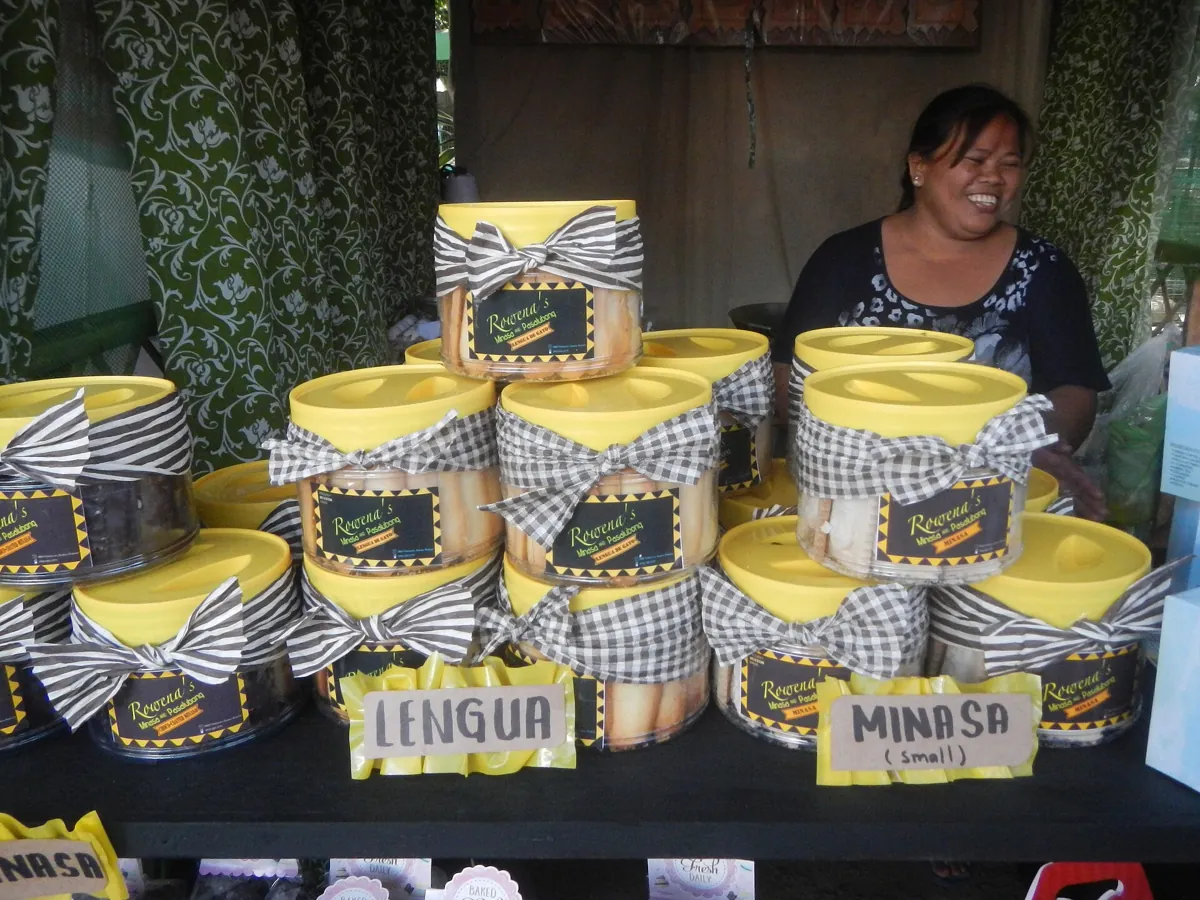
Between sets, the festival feeds its crowds and stocks its streets. The 2026 full-lineup layers count more than forty food vendors and more than sixty makers, and the festival’s own frequently asked questions layer is explicit that food, beverages, marketplace goods, and merchandise are for purchase. The music costs nothing, and the meal, the drink, and the handmade object do. Families are part of the intended audience, with family activities and crafts in the programme’s own description across the years.
Planning Your Visit
Getting Around Downtown
Plan on foot: the stages and activity areas sit throughout the downtown footprint, centred on the Cultural Center and LeBauer Park area. The festival’s own office address, 200 North Davie Street, is useful as a landmark for the Cultural Center, but it is not a single venue: a visitor who goes only to that address and stops will miss most of the festival.
What Admission Covers, and What It Does Not
No ticket is needed, in the festival’s own terms, and every staged performance in the modern layers is free to attend. What it does not cover is everything for sale. Donations, through the festival’s own Bucket Brigade and donation layers, are voluntary support, never a price. Vendor money is trade money, fenced to its own year and document: the festival’s own General Merchants layer for 2026 prices a merchant booth at five hundred twenty-five dollars for a ten-foot-by-ten-foot space when the merchant brings a tent, nine hundred dollars if the festival provides the tent, and one hundred dollars for extra electricity, merchant terms for 2026 only, never a visitor price.
The One Disputed Corner
Honesty requires one qualification, and it belongs to 2025 alone. A local press account of the 2025 festival reports ticketed late-night shows at The Flat Iron on the Friday and Saturday of that festival, listed within the festival’s schedule and marketing, along with after-party cover charges at a non-official venue. That layer’s claim stands against the festival’s own wording for 2025, which calls all performances completely free to attend. Neither layer cancels the other, so no article may assert that every event marketed with the 2025 festival was free, nor that the festival itself charged admission.
A Three-Day Walk Through the Festival
Friday evening is the gentle opening: in the corroborating 2026 account, the festival runs from 5 p.m. to 10 p.m., and the Friday headliner closes the night. Treat Friday as orientation. Saturday is the full day, running from noon to 10 p.m. in the same account, with the heaviest weight in the 2026 layers: the Saturday headliner, the National Dance Day emphasis at the LeBauer Park stage, and the drumline and youth jazz performances. Plan Saturday as the day for range. Sunday, also noon to 10 p.m., is the closing day, with the Sunday headliner as the farewell set and time to revisit a favourite.
How It Compares
Compared with a ticketed arena festival, the difference is structural: no gate, no ticket tier, no single room to fill; the audience is a downtown crowd moving between free stages, and the festival’s economics run on sponsorship, vendor terms, merchandise, and voluntary donations rather than admission revenue. Compared with the National Folk Festival that preceded it in Greensboro, the comparison is one of succession, not identity. The National residency of 2015 through 2017 was a national event produced elsewhere; the North Carolina festival, founded in 2018, carries its legacy in the same city without being the same event. None of the National’s lineups, crowds, or impact figures belongs to the North Carolina record, and none of the North Carolina festival’s facts belongs to the National’s.
Your Festival Checklist
- Arrive on foot and learn the downtown footprint first, around the Cultural Center and LeBauer Park
- Treat Friday as orientation and Saturday as the fullest day, with Sunday as the closing night
- Expect every staged performance to be free to attend, and budget separately for food, drink, and marketplace purchases
- Move between stages rather than camping at one; the programme is designed as a walk
- Look for the dance and participatory programming alongside the concerts
- Bring children in the daytime, and note the evening closing hours when planning the trip home
- Check the year’s own lineup before travelling: headliners, stage names, and stage maps change yearly
- Leave parking and camping plans outside the festival’s own terms: no parking price is published, and no festival camping is offered
Beyond the Festival Grounds
Downtown Greensboro is the festival’s setting and its subject at once: the Cultural Center and LeBauer Park anchor a walkable centre. One boundary deserves stating: Guilford County has an additional courthouse in High Point, but High Point does not host this festival. Other Greensboro downtown festivals and LeBauer Park events are different events with their own dates and programmes, and none of their stages or lineups belongs to this festival.
Why It Matters
The festival matters for two reasons. The first is access: a free, three-day, multi-stage festival in a downtown core removes the ticket barrier entirely, and the festival’s own billing as North Carolina’s largest free music festival names a real ambition, a whole city centre as a concert ground without a gate. The second is the definition of folk itself: by programming hip-hop beside bluegrass, global traditions beside old-time music, and participatory dance beside headline concerts, the festival argues that folk is a living practice, rooted in communities and renewed every September. The North Carolina presence in the 2026 lineup sharpens that argument: forty-four of sixty-seven performances feature North Carolina-based artists in the full-lineup layers, turning the festival from an imported bill into a showcase for the state’s own musicians, dancers, and makers.
Frequently Asked Questions
Do I need a ticket to attend?
No. In the festival’s own published terms, no tickets are needed and admission is always free. Food, drink, marketplace goods, and merchandise are for purchase, and donations are voluntary.
Where exactly does the festival take place?
Across a multi-stage downtown Greensboro footprint, centred on the Cultural Center and LeBauer Park area. The festival’s own office address, 200 North Davie Street, marks the Cultural Center inside that footprint, not a single venue, and the stage map changes yearly.
Is this the same festival as the National Folk Festival?
No. The National Folk Festival was hosted in Greensboro from 2015 to 2017, and the North Carolina Folk Festival was founded in 2018 as its legacy event in the same city: the successor, not the same event, and the two festivals’ lineups, attendance figures, and histories must not be merged.
What should families expect from a festival day?
A free, walkable day of music, dance, cultural demonstrations, a makers marketplace, and food vendors, with family activities and crafts in the programme’s own description. Evenings run to 10 p.m. in the corroborating 2026 account.
What to Expect From the Next Guilford County North Carolina North Carolina Folk Festival
How often is the Guilford County North Carolina North Carolina Folk Festival held?
Every year, as a three-day September weekend festival, Friday through Sunday, in downtown Greensboro. The documented in-person editions run from the first North Carolina edition in 2018 through the 2026 edition; the 2020 edition was presented in a movie and virtual format.
When is the next Guilford County North Carolina North Carolina Folk Festival?
No next date is published in the layers fetched for this article. The documented pattern is a September Friday-through-Sunday weekend in downtown Greensboro, most recently September 18 through 20, 2026, preceded by September 12 through 14, 2025, and September 6 through 8, 2024.
Will the dates change?
Yes: the exact September weekend moves from year to year, from early September in 2018, 2019, and 2024 to mid-September in 2025 and 2026. The season and the Friday-through-Sunday shape are stable; the precise weekend is set edition by edition.
Downtown Greensboro in September, free of charge and open to anyone who walks into the footprint, is the standing offer. Its history is short and deliberately unresolved in its counting, its stages change names with their sponsors, and its lineups are rebuilt every year. What does not change is the shape: three days, a whole downtown, music rooted in folk traditions, and no ticket between the visitor and the stage.