Queens County New York Fair Festival
Queens County has no fair in the state association’s 2026 schedule and no entry in the state agriculture department’s 2026 fairs directory; read in full, the directory’s only use of the word Queens sits inside another fair’s operator name. What Queens does have, each early autumn, is the Queens Agricultural Fair: a ticketed, two-day country fair staged by the Queens County Farm Museum on its own working farm in eastern Queens, billed by the museum as its 43rd Annual for 2026. It is a museum fair, and it should never be mistaken for a state-recognised county fair — nor confused with the celebrated Queens County Fair of 1842, whose lineage survives under a different name in another county.
The Museum Fair Behind the Title
The organiser, in every fair-side layer, is the Queens County Farm Museum itself, presenting one of its own annual public programmes; no agricultural society, borough office or extension body presents it. In the museum’s own words, it is operated by the Colonial Farmhouse Restoration Society of Bellerose, Inc.; an older legislative layer gives the same society’s name without the final corporate word, and the two forms stand unmerged here. A museum profile records the farm as city parks land; ownership is not organisation. No fair director, board or officer list is published in the museum’s fair material, and none is invented here.
The museum’s current title is the Queens Agricultural Fair, shortened to Agriculture Fair on its own calendar; listing and tourism layers also style the same event the Queens County Agricultural Fair, or simply the Queens County Fair: informal names for this one museum fair, never a second event. There are no fairgrounds separate from the museum farm and no grandstand: for one weekend, its fields, farmyard and tents become the fair.
Quick Facts
| Detail | What the Record Shows |
| Event | The Queens Agricultural Fair, the Queens County Farm Museum’s own fair |
| Organiser | The Queens County Farm Museum, operated by the Colonial Farmhouse Restoration Society of Bellerose, Inc. |
| Grounds | The museum farm at 73-50 Little Neck Parkway, in eastern Queens |
| County note | Queens County and the borough of Queens are the same ground; there is no separate county-seat town |
| Timing | One Saturday and Sunday weekend in early fall |
| Billing | The museum bills the 2026 edition as its 43rd Annual |
| Admission | Ticketed, bought online; the museum calendar’s 2026 range is ten to twenty-five dollars |
| Parking | Free event parking at the museum, with bicycle racks |
| Camping | None of any kind is published by the museum |
Three Centuries of Farming, One Much Younger Fair
The museum describes its 47 acres as one of the longest continuously farmed sites in New York State, dating back to 1697; one museum-supplied layer from 2022 says 1693 instead, and the two stand unreconciled, the museum’s standing account governing here. At its centre stands the Adriance Farmhouse, first built as a three-room Dutch farmhouse in 1772, within a historic area of outbuildings, orchard, fields and herb garden. The museum’s founders won landmark protection; the site opened to the public in 1975 and the farmhouse restoration was completed in 1986.
The museum bills its recent editions one number at a time — 39th in 2022, 41st in 2024, 42nd in 2025, 43rd in 2026 — and the billings stand exactly as billed. No source found states when the museum’s fair began, whether it ran every year, or which year held the missing 40th, so no first year is computed and no founding is claimed. The museum’s 50th-year celebrations, marked in its 2025 material, belong to the museum as an organisation, counted from its 1975 opening — never the fair’s age. One earlier shape is fenced off: in 2022 the fair ran three days, opening on a Friday evening — that year alone.
For a useful comparison, see the Putnam County New York Fair & 4-H Showcase Festival for another county festival.
What to Expect
Blue Ribbons and Homegrown Champions
The competitive heart of the weekend is the Blue Ribbon Competition, judged across produce, arts and crafts, culinary work and more, with cultural-heritage exhibits alongside in the 2025 programme. The museum sweetens the pot: entering the competition carries free admission to the fair. A city press layer for 2026 adds a Blue Ribbon awards ceremony on the Sunday afternoon — that layer’s schedule, not museum-published programme.
Contests, Rides and Hayrides
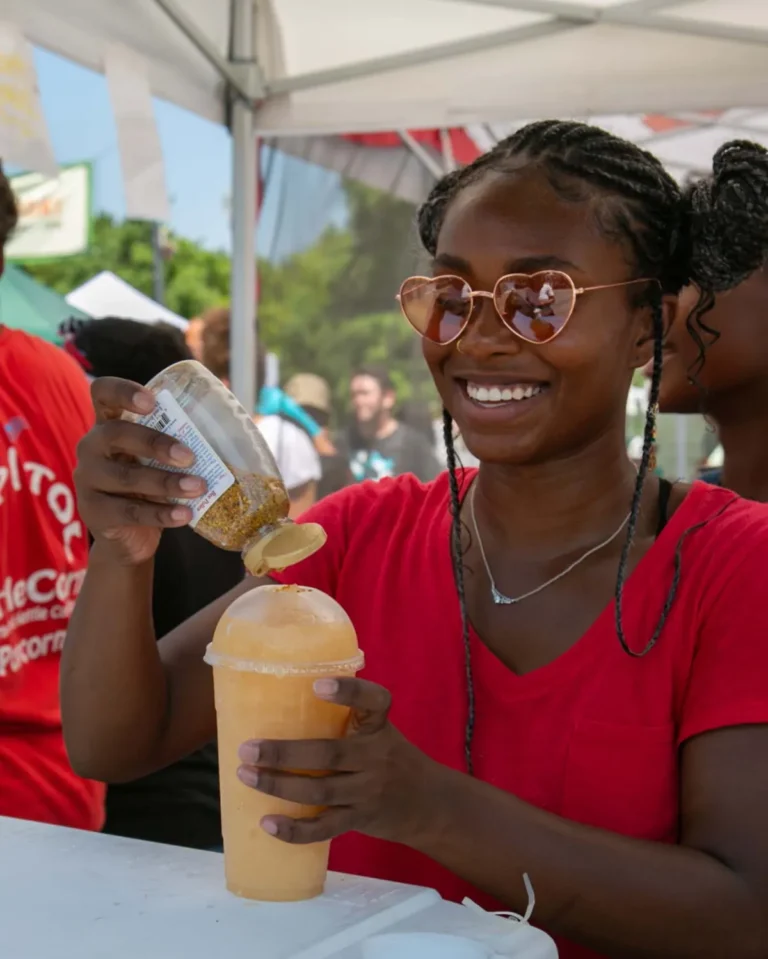
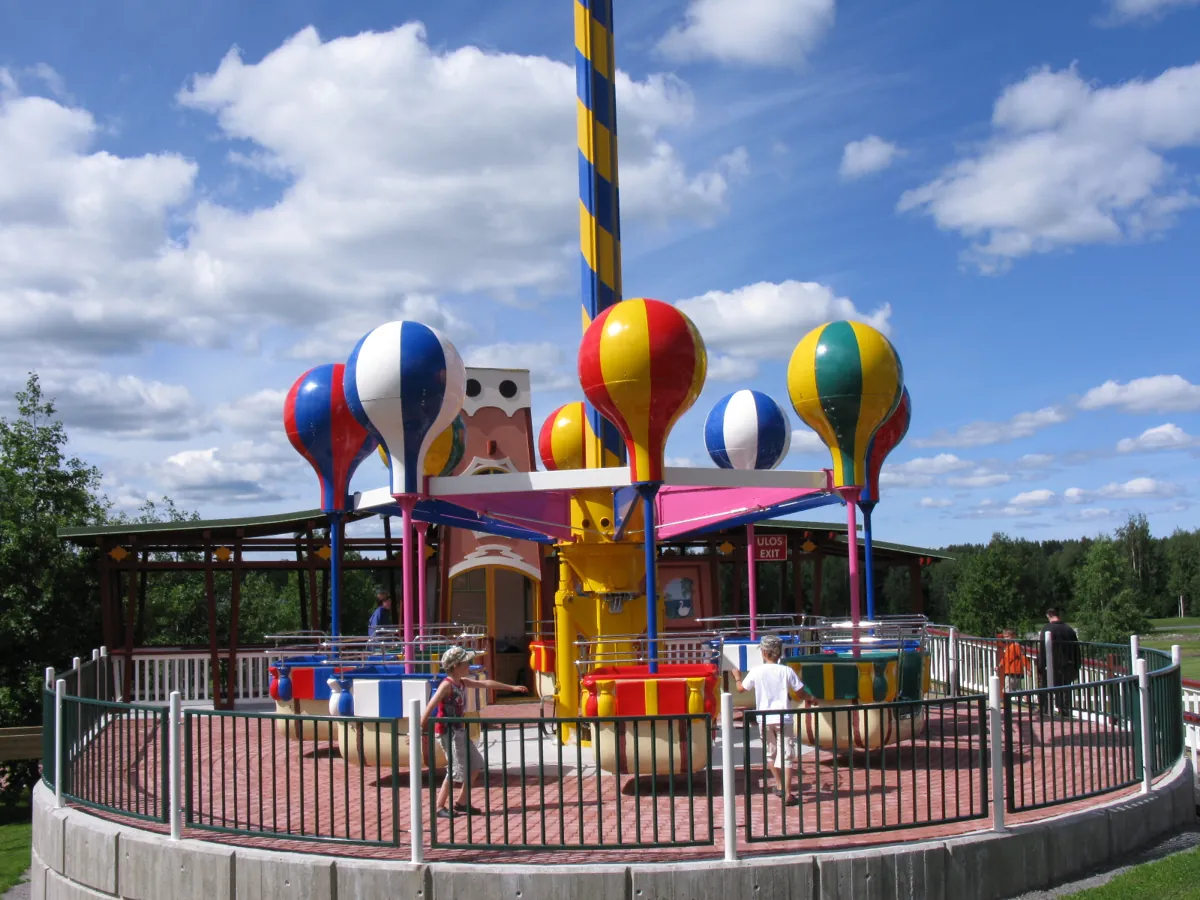
The fair’s standing spine, in the museum’s own copy, is old-fashioned: pie-eating contests, corn-husking contests, hayrides, carnival rides and midway games. The 2025 copy adds sack races and egg-on-a-spoon relays; the museum’s eve-of-fair announcement for 2026 promises the rides, games and hayrides again. One money fence matters: the fair’s own guidance counts hayrides among the extras carrying an additional fee, at no published amount — a hayride is never free.
Music and Theatre Under the Tents
Live music and theatrical performances anchor the Main Stage and the Family Entertainment Tent. A reputable city press layer for 2026 adds square dancing, a merry-go-round and a mechanical bull — press-layer colour for that edition only, never merged into another year’s list.
The Farm’s Own Animals and Old Skills
Because the fair borrows a working farm, its agricultural content is the farm itself: visits with the goats, sheep, alpacas, pigs, hens and the steer, as the 2025 programme lists them, and apiary talks with the farm’s educators. Colonial skills run through the recent programmes — basket weaving, butter churning and historic games in 2025 — with tours opening the Adriance Farmhouse to fairgoers. No livestock show, livestock auction, tractor pull or demolition derby appears in any museum fair layer, and none should be expected.
The Maze on the Same Ticket
The museum’s three-acre corn maze, the Amazing Maize Maze, winds to Victory Bridge and sits inside the fair’s ticket structure as a paid tier, costing more than admission alone in both published ladders. In 2025 the maze was carved as a sunburst honouring the museum’s 50th year, a design fenced to that year. The maze keeps its own separate season and tickets on the museum’s calendar; only its fair-weekend presence and tier belong here.
Planning Your Visit
Tickets, Prices and Their Years
Tickets are required on the fair dates, and the museum requires them bought online; farm members receive fifteen percent off — a membership discount, never a public price. For 2026 the calendar publishes only a range, ten to twenty-five dollars, plus early bird discounts without amounts, so no exact 2026 price is stated here. The complete ladders belong to the two years before. In 2025 a single day cost sixteen dollars for adults twelve and over and ten dollars for children three to eleven, or twenty-four and sixteen dollars with maze access; weekend passes ran twenty-eight and sixteen dollars, or thirty-four and twenty-six with the maze. In 2024 a single day cost fourteen dollars for adults and nine dollars for children, or twenty and fifteen dollars with maze access; weekend passes ran twenty-two and fourteen dollars, or thirty-two and twenty-four with the maze; that year alone added a colonial basket weaving add-on at thirty-five dollars for the Saturday. In both years children aged two and under entered free, no ticket required. Food, drink and craft stalls charge their own varying prices, and the museum’s free ordinary-day admission is not the fair’s price: fair weekend is a ticketed special-event exception.
Hours conflict for 2026 and are left unsettled: the museum’s calendar prints ten in the morning to five in the afternoon both days, while the fair’s standing pattern in earlier museum copy runs eleven to six. Check the fair page before fixing a plan; the fair runs rain or shine, though severe weather can change it.
Getting There and Parking
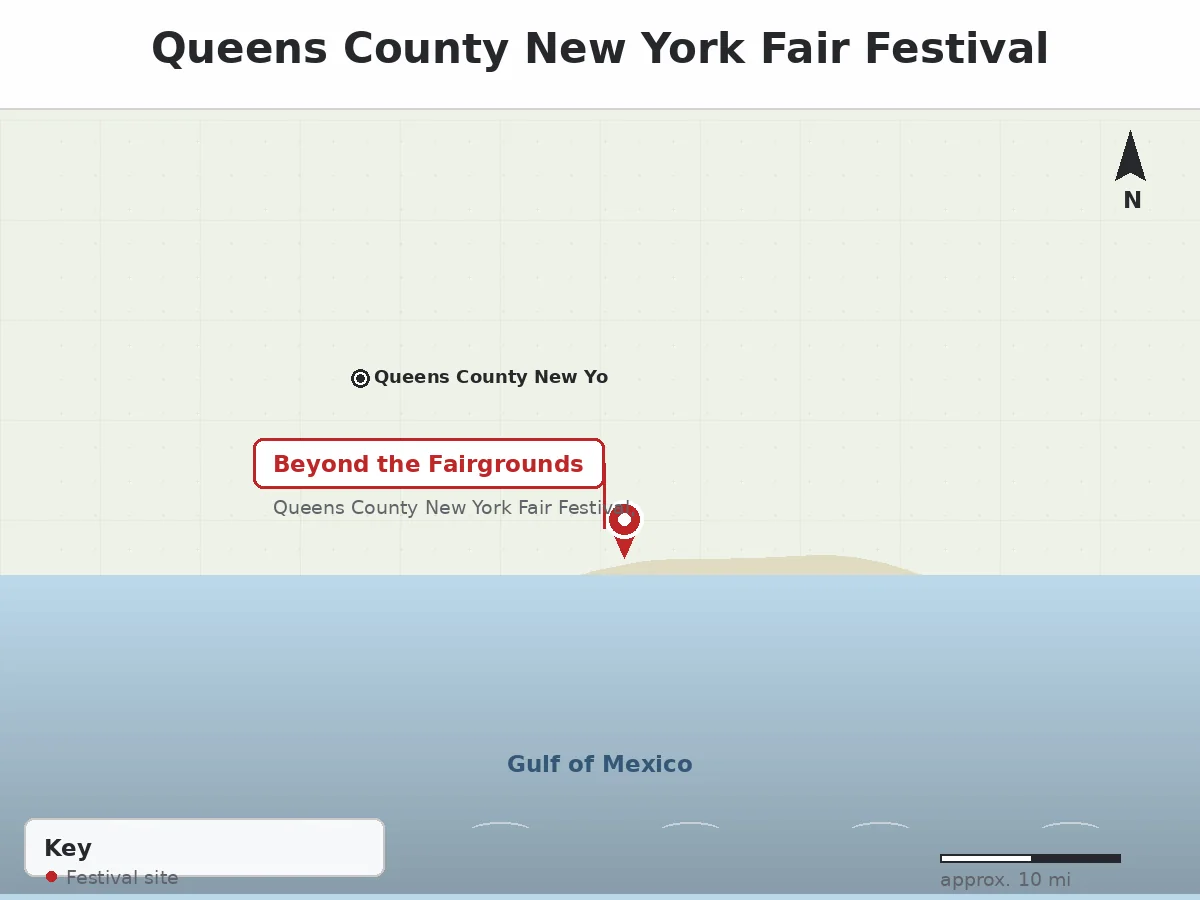
The address is 73-50 Little Neck Parkway. The museum’s own pages give it in two town forms — Queens, New York 11004 on the fair page, Floral Park, New York 11004 in programme boilerplate — standing unmerged; the farm sits in eastern Queens, in the Floral Park and Glen Oaks area, and a stray press misprint of the house number is no alternative address. Parking is simple: free event parking and bicycle racks per the fair’s own guidance, free street parking along Little Neck Parkway, and the on-site lot open during special events.
A Sample Fair Saturday
Arrive near opening and walk the farm while the grounds are quiet. Late morning belongs to the farmhouse tour and the colonial demonstrations; midday, to the lawns for the pie-eating and corn-husking contests. Take the maze after lunch, leaving the afternoon for the Main Stage, the family tent, midway games and a hayride, and finish at the food stalls for the farm’s own baking — donuts, pies and apple cider in the 2025 programme.
Where You Sleep
There is no camping at this fair in any form — no public, exhibitor or vendor camping is published, there is no campground, and the farm closes at each day’s end. Anyone needing a bed is in New York City, served by its ordinary hotels — a general city fact, never a museum offer.
Not the Fair Its Name Suggests
The Long Island Fair, at Old Bethpage Village Restoration in Nassau County, is presented by the Agricultural Society of Queens, Nassau, and Suffolk Counties, whose fair was held annually as the Queens County Fair from its first fair in 1842 until 1899, before the road through Mineola and Roosevelt Raceway led to Old Bethpage. That lineage is real and entirely someone else’s — and it is why the directory’s only Queens is that society’s name. The museum’s fair claims none of it: not 1842, not the society, not Old Bethpage. Two further fences: Richmond County’s fair at Historic Richmond Town is another borough’s museum fair, and the Queens County Fair in Caledonia, Nova Scotia, is Canadian. None of the three contributes a date, price or programme item here.
A Short Checklist for the Weekend
- Buy tickets online before the weekend; the museum requires online purchase on fair dates.
- Choose the ticket tier deliberately, because maze access is priced separately from plain admission.
- Growers and makers: entering the Blue Ribbon Competition carries free admission in the museum’s own words.
- Carry a payment card for the food, drink and craft stalls, and for the hayride fee.
- Park without worry — event parking is free — or use the bicycle racks provided.
- Dress for a working farm and for weather, because the fair runs rain or shine.
- Make no camping plans around this event; book a city bed if the weekend needs one.
- Recheck the fair page in fair week, since the published 2026 hours appear in two forms.
Beyond the Fairgrounds
The fair lasts one weekend; the farm is there all year. On ordinary days the museum opens its 47 acres to individuals and families, with general admission free on all but its special admission days — a fact about ordinary days, repeated only so nobody mistakes it for a fair price. The farmyard, farmhouse, orchard and planting fields reward a quieter return visit, and the museum’s other seasonal programmes run all year, each separate from the fair. Around the farm, eastern Queens keeps a village grain: the garden streets of Floral Park and Glen Oaks, with the wider borough a bus or rail ride away.
Why a Museum Fair Matters in Queens
New York City is not where most people go looking for a county fair, and that is precisely this one’s significance. A farm farmed since the seventeenth century — in the museum’s own account, one of the state’s longest continuously farmed sites — gives one weekend to judged produce, homegrown crafts and lawn contests: the grammar of the American county fair, spoken inside the city limits. For many visitors, this fair is the first time a steer, a corn maze or a butter churn has been something to touch rather than something to read about — a small fair with an outsized job, done on a museum’s terms.
Frequently Asked Questions
Is this a genuine state-recognised county fair?
No. Queens County has no entry in the state association’s 2026 schedule or the state agriculture department’s 2026 fairs directory. The event is the museum’s own agricultural fair — real, current and ticketed — and its standing rests on the museum’s record, not a directory listing.
What will admission cost this year?
For 2026, only the museum calendar’s range is published: ten to twenty-five dollars, with no fuller ladder released. The last complete ladders are 2025’s — sixteen dollars for an adult day, ten for a child’s — and 2024’s, at fourteen and nine dollars; neither is a 2026 price. Members receive fifteen percent off, parking is free, and children aged two and under entered free in both published years.
Must tickets be bought ahead of time?
Yes, on the museum’s own guidance: tickets are required on the fair dates and are bought online. The one documented exception is the Blue Ribbon route: entrants are offered free admission. Food, drink, craft stalls and the hayride cost extra once inside.
Can visitors camp at the farm for the fair?
No. The museum publishes no camping of any kind, there is no campground on the grounds, and the site closes at each fair day’s end. Overnight visitors rely on ordinary city lodging, which the museum does not arrange.
What to Expect From the Next Queens County New York Fair Festival
How often is the Queens County New York Fair Festival held?
Once a year, for one two-day weekend in early fall. Since the three-day exception of 2022, every edition has held that shape, each billed one number higher than the year before.
When is the next Queens County New York Fair Festival?
The next edition follows next early fall, on the museum’s announcement; its calendar is where the weekend first appears. Expect a Saturday and Sunday in the late-September to early-October window recent editions have used, with tickets sold online ahead of the weekend.
Will the dates change?
They have moved within their window before, so they can. The 2025 edition fell on the last weekend of September, while the 2024 and 2026 editions fell on the first weekend of October, and 2022 even added a Friday evening that later years dropped. Expect the same early-fall weekend shape, with days and hours settled only when the museum publishes them.
Country Fun at a City Address
For one weekend each autumn, the most urban county in this series keeps the oldest appointment in American rural life: no grandstand, no livestock auction, no directory listing — just a working farm, a judged table of produce and preserves, a corn maze, and a city crowd learning the contests by doing them. The Queens County New York Fair Festival is the museum’s fair, and it needs no borrowed history to justify the trip.