Belknap County New Hampshire 4-H Fair Festival
Belknap County’s fair does not take place in its county seat. The seat is Laconia, but the fairgrounds sit in Belmont, a smaller town to the south, and the fair that gathers there is a short one: two days in early August, built around children showing animals and exhibits, and run by a local association rather than by the county or the university. It travels under two published names: state fair-season lists call it the Belknap County 4-H Fair, while the fair’s own billing today reads Belknap County Fair. The 4-H connection is the fair’s literal origin, a wartime field day organised so that farm children could practise showing dairy cattle. Its own history page bills it as the smallest of the recognized Agricultural Fairs in New Hampshire, and smallness here is the identity. Everything on the grounds happens within sight of everything else, and the whole event is over by Sunday supper.
The Association Behind the Grounds
The fair is run by the Belknap County Fair Association. That is the name on the fair’s own paperwork, the name its camping form tells people to make cheques payable to, and the body responsible for the Belknap County Fairgrounds at 174 Mile Hill Road in Belmont, with a mailing address of Post Office Box 42. No other organisation should be substituted for it. In particular, UNH Cooperative Extension is not the organiser. Extension’s Belknap County 4-H programme is the fair’s youth partner: it handles how young exhibitors take part, from animal registration through the online EZFair system to the judging in the Colonial Barn and the Cloverbud classes. It is a large job, but running the machinery of youth participation is not the same as staging the fair.
The two names deserve a plain explanation, because visitors meet both. Older state lists kept the words 4-H in the title, reflecting where the fair came from; the fair’s current billing, used by Extension for its 82nd Annual in 2026, drops them. Neither form is wrong: the event at Belmont is one fair, not two.
Quick Facts
| Item | Detail |
| Fair town | Belmont |
| County seat | Laconia (does not host the fair) |
| Grounds | Belknap County Fairgrounds, 174 Mile Hill Road, Belmont |
| Organiser | Belknap County Fair Association |
| Fair’s own current billing | Belknap County Fair |
| Youth programme partner | UNH Cooperative Extension, Belknap County 4-H |
| Length | Two days, a Saturday and Sunday in early August |
| 2026 billing | 82nd Annual, documented for August 1–2 |
| Admission | No gate price published for the 2026 edition |
| Camping | Offered, booked through the fair |
From a Wartime Field Day to Mile Hill Road
The fair’s own history page begins in 1943, at Walker’s Lombardy Farm on Parade Road in Laconia. There, children gathered for a field day devoted to fitting and showing dairy animals. The effort was led by Lillian Walker, whose ambition the history records plainly: she dreamed of a 4-H fair for the county’s young people. Wartime gave that dream a second purpose. The event grew into the 4-H Food for Victory Fair, held at Opechee Park, where War Bonds and stamps were sold alongside the showing. In 1944 the bond effort across the state raised enough to purchase nine training aircraft for the Army Air Corps, and two of those aircraft were credited to Belknap County.
After the war the young fair moved more than once. It spent time at the Belknap County Recreation Area, came back to Opechee Park in 1950, and finally settled in 1977 on the former Royal Smith Farm along Mile Hill Road in Belmont, where it has remained. The 82nd Annual billing carried for 2026 is best read as the fair’s own numbering and nothing more; the documented story stands on the field day, the bond sales and the moves, not on arithmetic worked backwards from a programme cover. What the record supports is a fair born inside the 4-H movement during a war, carried by volunteers through borrowed homes, and rooted at last on farmland of its own.
For a useful comparison, see the White Pine County Nevada Fair Festival for another county festival.
What to Expect on the Grounds
Showing Done Mostly by the Young
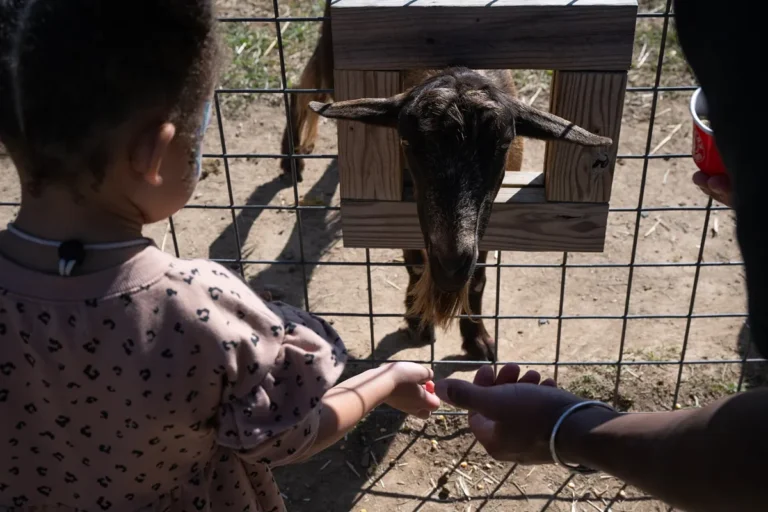
The centre of this fair is the youth show ring. Exhibits and animal shows are open to 4-H participants from the age of five upward, and the judging follows the Danish System, under which entries are measured against a standard rather than ranked against each other. Members aged eight to eighteen receive awards and premium money under that system, while the youngest exhibitors, the Cloverbuds, receive participation awards meant to encourage rather than to rank. The effect is a fair whose programme is weighted toward beginners: animals led by children who may be showing for the first time, judged seriously but scored in a way that sends most of them home with something.
The Colonial Barn and the Entry Machinery
Static exhibits have their own home in the Colonial Barn, where the things young people have made, baked, grown and sewn are displayed and judged. Getting animals into the record runs through EZFair, the registration system Extension uses for the fair, so the paperwork is largely settled before anyone reaches Mile Hill Road. Between barn and rings, the two days carry the full circuit of a small agricultural fair, compressed.
Open Shows and the Baking Contest
The fair is not closed to adults or to the public beyond the 4-H classes. Open Shows sit alongside the youth programme, and the King Arthur Baking Contest gives bakers a judged competition of their own, with registration handled through the fair. The fair’s general billing rounds the weekend out with live entertainment and food, so visitors find a small fair’s ordinary pleasures either way. Colourful extras found in general guidebooks, such as sheep-shearing demonstrations, belong to those guides’ own editions and are not part of the fair’s documented programme for 2026.
Planning Your Visit
A Short Fair With Set Hours
This is a two-day fair, held on a Saturday and Sunday in early August. For the documented 2026 edition, Extension published hours of 9 a.m. to 6 p.m. on Saturday, August 1, and 9 a.m. to 5 p.m. on Sunday, August 2; those hours belong to that edition, and each year’s fair confirms its own. A secondary schedule in circulation stretches this fair across four days, but the fair-side record does not support it and no trip should be planned around it.
What the Gate Costs, Honestly Stated
No admission price for the 2026 edition appears in the fair’s own published record, and this article will not invent one. The most recent priced layer available is a 2024 listing, which set the gate at ten dollars for adults, five dollars for visitors aged sixty-five and over and for police, fire and emergency medical personnel, and nothing for children under ten and for military service members. Those figures are printed strictly as the 2024 layer: evidence of a modest gate, not a promise of what any later edition charges. Guidebooks disagree with each other about this fair’s prices, a further reason to confirm the current gate with the fair before travelling. Parking fares no better in the record: no fair-side statement of a parking charge, or of free parking, was found, so neither is asserted.
Staying Over: Camping Booked Through the Fair
Camping is part of this fair’s arrangements, booked through the fair itself rather than through a separate campground. Extension’s 2026 material confirms that camping registration runs through the fair’s website, so the offer plainly continues. Its prices, however, survive only in an older form: the fair’s 2021 camping paperwork priced a night at fifteen dollars, set fair passes for campers over the age of ten at sixteen dollars per person, and asked that campers be in place by 7 p.m. on the Friday. Read those numbers as a 2021 document, useful for the shape of the offer and useless as a current tariff; anyone planning to stay should take the present rates from the fair directly.
A Sample Saturday on Mile Hill Road
Reach the grounds soon after the nine o’clock opening, while the first animal classes are being called. Spend the morning at the show ring, where the youngest handlers tend to show early, then cross to the Colonial Barn to see the judged exhibits at their freshest. Take lunch from the fair’s food stands, and give the early afternoon to the open shows and the baking contest results. Late in the day, walk the whole grounds once more; at a fair this size the circuit takes minutes. If you are camping, the evening is yours on the grounds; if not, Belmont’s quiet roads make for an easy departure before dark.
How Belknap Compares
New Hampshire’s recognised agricultural fairs include long, multi-day events with midways, grandstand programmes and camping fields, and this fair is the documented opposite end of that scale. Its own billing as the smallest of them is borne out by the shape of the thing: two days instead of five or six, one modest grounds on a single road, and a programme whose centre of gravity is youth showing rather than commercial entertainment. A visitor wanting rides, concerts and a week’s worth of programme should choose one of the state’s bigger fairs. A visitor wanting to watch a nine-year-old present a calf under a judging system built for learners, and to see every exhibit on the grounds before lunch, will find a concentration the large ones cannot match.
A Checklist for the Weekend
- Confirm the current year’s dates and gate price with the fair before travelling; guidebook prices and longer spans should not be trusted.
- Plan around two days only: a Saturday and a Sunday in early August, with Sunday the shorter day.
- Bring cash flexibility for a modest gate, and do not assume parking terms that the fair has not published.
- Arrive near the opening hour to see the youngest exhibitors show, since youth classes anchor the programme.
- Leave time for the Colonial Barn, where the judged exhibits reward a slow look.
- If you bake, look into the King Arthur Baking Contest registration through the fair ahead of the weekend.
- If you intend to camp, book through the fair and take current rates from it rather than from any older form.
- Keep Laconia’s separate town events for another trip; they are not part of this fair.
Beyond the Fairgrounds
The fairgrounds themselves reward a moment’s attention: the level fields on Mile Hill Road were the Royal Smith Farm before 1977, so the fair is held on the kind of working land it exists to celebrate. Belmont around them is a small town of farms and back roads in the county’s southern half, and the fair is its largest annual gathering. Visitors interested in the fair’s beginnings can make a short separate trip to Laconia, the county seat, where Parade Road and Opechee Park hold the sites of the 1943 field day and the Food for Victory years. Those places belong to the fair’s history rather than to its present programme, and seeing them makes a fitting second half to a fair weekend.
Why the Smallest Fair Matters
Belknap’s fair survives as evidence that an agricultural fair does not need scale to justify itself. It began as practice sessions for children in a farmyard, financed part of a war effort with bond sales at a park, and outlasted three changes of home before settling on its own land. Through every move it kept the same purpose: teaching young people to raise, make and show things well, and letting a county watch them do it. That it still runs under local volunteers, with the university’s youth programme working inside it rather than over it, is precisely the arrangement its founders built. Small fairs of this kind are where the larger fair tradition is quietly renewed, one first-time exhibitor at a time.
Frequently Asked Questions
Is this the Belknap County Fair or the Belknap County 4-H Fair?
It is one fair carrying two published names. State fair-season lists use Belknap County 4-H Fair, while the fair’s own current billing, including Extension’s billing for the 82nd Annual, is Belknap County Fair. The 4-H wording reflects the fair’s genuine origin in the youth movement; the shorter name is what the fair calls itself today.
Where is the fair held, and is it in the county seat?
The fair is held at the Belknap County Fairgrounds, 174 Mile Hill Road, in Belmont. Laconia is the county seat, and the fair’s earliest editions did take place in Laconia, but the event moved to Belmont in 1977 and the seat has not hosted it since.
What is known about the cost of admission?
The fair has not published a gate price for its 2026 edition in the record available, so no current figure can be stated honestly. A 2024 listing charged ten dollars for adults, five dollars for older visitors and uniformed services personnel, and nothing for children under ten and military members, but that ladder belongs to 2024. Confirm the current price with the fair before you go.
Is camping available on the fairgrounds?
Yes, camping is offered and is booked through the fair; Extension’s material for 2026 directs campers to register through the fair’s website. The only priced paperwork on record is from 2021, when a night cost fifteen dollars, so take today’s rates from the fair itself rather than relying on that older form.
What to Expect From the Next Belknap County New Hampshire 4-H Fair Festival
How often is the Belknap County New Hampshire 4-H Fair Festival held?
It is held once a year, across a single weekend of two days, a Saturday and a Sunday. It has kept that compact shape throughout its modern history at Belmont.
When is the next Belknap County New Hampshire 4-H Fair Festival?
On the fair’s established pattern, the edition after the documented 2026 fair falls due on the first weekend of August 2027. The fair confirms each edition’s dates through its own announcements, and no specific dates for 2027 should be treated as settled until it does.
Will the dates change?
The weekend itself has been stable: early August, Saturday and Sunday. Within that pattern the exact days move with the calendar, so the Saturday of one year is not the Saturday of the next. Hours are set edition by edition as well, which makes the fair’s own announcement the document to trust each summer.
To leave Belmont on the Sunday afternoon of fair weekend is to leave the smallest recognised agricultural fair in New Hampshire while it is still the event Lillian Walker imagined in 1943: children in a ring, showing what they have raised, to neighbours who came to watch. The names on the programme may vary and the gate may be priced afresh, but that centre has not moved since the field day on Parade Road.