Judith Basin County Montana Fair Festival
Late in July, the Judith Basin County Fair takes over the fairgrounds at Stanford, the county seat, and it runs on a principle most fairs never write down. The fair describes its own purpose in a single sentence: to promote the education of the youth of Judith Basin County, and enrich their experiences and opportunities. That is not a slogan pasted over a midway. It is the organising idea of the whole week, because this fair is built around young exhibitors, the projects they have raised or made during the current 4-H year, and a judging system that interviews every one of them face to face. Two bodies govern the event under a published set of general rules, the Judith Basin County Fair Board and the Judith Basin County 4-H Council, and those rules settle the question every visitor asks first: admission to the fair will be free. For 2026, the documented edition ran from Monday July 27 to Friday July 31, with every project interview, livestock included, gathered onto Tuesday July 28.

The Fair That Publishes Its Own Rules
Some county fairs speak through a glossy fair book or a dedicated website. This one speaks through its general rules, a working document that names who is in charge, fixes how exhibits are judged and placed, sets the entry deadlines, and states the free admission policy in plain words. The rules declare that all decisions made by the Judith Basin County Fair Board and the Judith Basin County 4-H Council regarding the fair are final.
The shape those rules describe is deliberately narrow. Young people may exhibit only from projects they are enrolled in, and the work shown must have been made during the current 4-H year, so nothing is carried over from a previous season to be judged twice. Indoor exhibits go on display in the exhibit building after their interviews, so the conversation with the judge comes first and the ribbon second. Even the premium money carries the philosophy: exhibitors who work both the set-up and the take-down are the ones the premium arrangement rewards.
Judith Basin County Fair Quick Facts
| Item | The documented record |
| Event | Judith Basin County Fair |
| Fair town | Stanford, the county seat of Judith Basin County |
| Season | Late July |
| Documented 2026 edition | July 27 to 31, 2026, with all project interviews held on July 28 |
| Governing bodies | The Judith Basin County Fair Board and the Judith Basin County 4-H Council, under the fair’s published general rules |
| Admission | Free, under the fair’s own published rule |
| Core programme | Interview judging for every project, indoor exhibits in the exhibit building, and livestock shown as well as interviewed |
| Youth entries for 2026 | Due June 22, 2026, through the FairEntry system |
| Edition billing | Billed as the 83rd in regional tourism’s listing of the 2026 fair |
| Fair contact | Through the county Extension office, at (406) 566-2277 extension 104 |
An Edition Number That Refuses to Become a Birthday
Regional tourism’s listing of the 2026 fair bills it as the 83rd Judith Basin County Fair. That number is carried here exactly as what it is: one listing’s billing for one edition. It is not converted into a founding year, because an edition count in a tourism listing cannot prove when the first fair was held, and it is not stretched into a claim of an unbroken run either, since the record documents no such continuity year by year.
The dates themselves tell a quieter story about movement. Montana’s season tables placed Stanford’s fair from July 28 to August 1 in 2025 and from August 5 to 10 in 2024, while the documented 2026 edition sat earlier still, from July 27 to 31. Older season listings put Stanford in August altogether, and those spans belong to the fairs of their own years. The honest summary is a fair lately edging earlier into late July, its exact week set edition by edition.
For a useful comparison, see the Jefferson County Montana Fair Festival for another county festival.
What to Expect
Every Project Gets an Interview
The centre of this fair is a conversation. All projects, including livestock, are interview judged, and in the documented 2026 edition those interviews were concentrated on a single day, Tuesday July 28. A young exhibitor sits down with a judge and accounts for a year of work: what the project set out to do, what it cost in feed, materials or hours, and what went wrong. For a visitor, interview day is the fair at its most revealing, because the learning the fair exists to promote happens out loud, one project at a time.
Ribbons Decided in the Exhibit Building
After the interviews, the indoor exhibits take their places in the exhibit building for public display. The rules place Department A exhibits blue, red or white, and they leave Champion, Reserve and Best of Show awards to the judge’s discretion rather than to any automatic formula. That discretion lets a judge reward an exceptional piece of work across classes instead of merely ranking within them. Walking the building after judging, visitors read a season of baking, sewing, photography, woodworking and project books through the placings left behind.
Livestock, Shown and Questioned
Livestock projects follow the same philosophy as the indoor work: the animals are interviewed and shown, so the young person presenting them is examined alongside the animal itself. A steer or a lamb at this fair is therefore an argument as much as an exhibit, and the interview tests whether its exhibitor can make that argument. Families considering a first entry should understand that the show ring is only half the assessment; the other half is the exhibitor explaining the feeding, the records and the decisions behind the animal.
A Fair Without a Grandstand Bill
Expectations should be set by the record: no carnival, concert or grandstand programme appears in any fair-side source behind this article, and none is promised here. What the fair offers instead is the exhibition week itself, run at a scale where the judges, the councils and the exhibitors all know one another. Visitors who arrive to watch a county examine its own young people’s work, carefully and in public, have exactly the right fair.
Planning Your Visit
The Free Gate Is a Written Rule
The fair’s general rules state, in so many words, that admission to the fair will be free, and this article carries the claim in exactly that frame: it is the fair’s own published position, printed in its rules, not a rumour from a listings page. There is no admission price to quote because the rules decline to charge one, and any third-party page attaching a ticket price to this fair should be treated with suspicion.
Entries Are Settled in June
Anyone exhibiting, rather than visiting, works to a much earlier calendar. Youth entries for the 2026 fair were due on June 22 through FairEntry, and a late window ran from June 23 to July 1 with a late fee of twenty-five dollars handled through the Extension office. That late fee is exhibitor machinery, a charge for missing the entry deadline, and it is the only dollar figure the fair’s record attaches to the event; it has nothing to do with the price of walking in, which the rules set at nothing. Families who miss June entirely should still come in July and watch the interviews.
Finding the Fair and Asking Questions
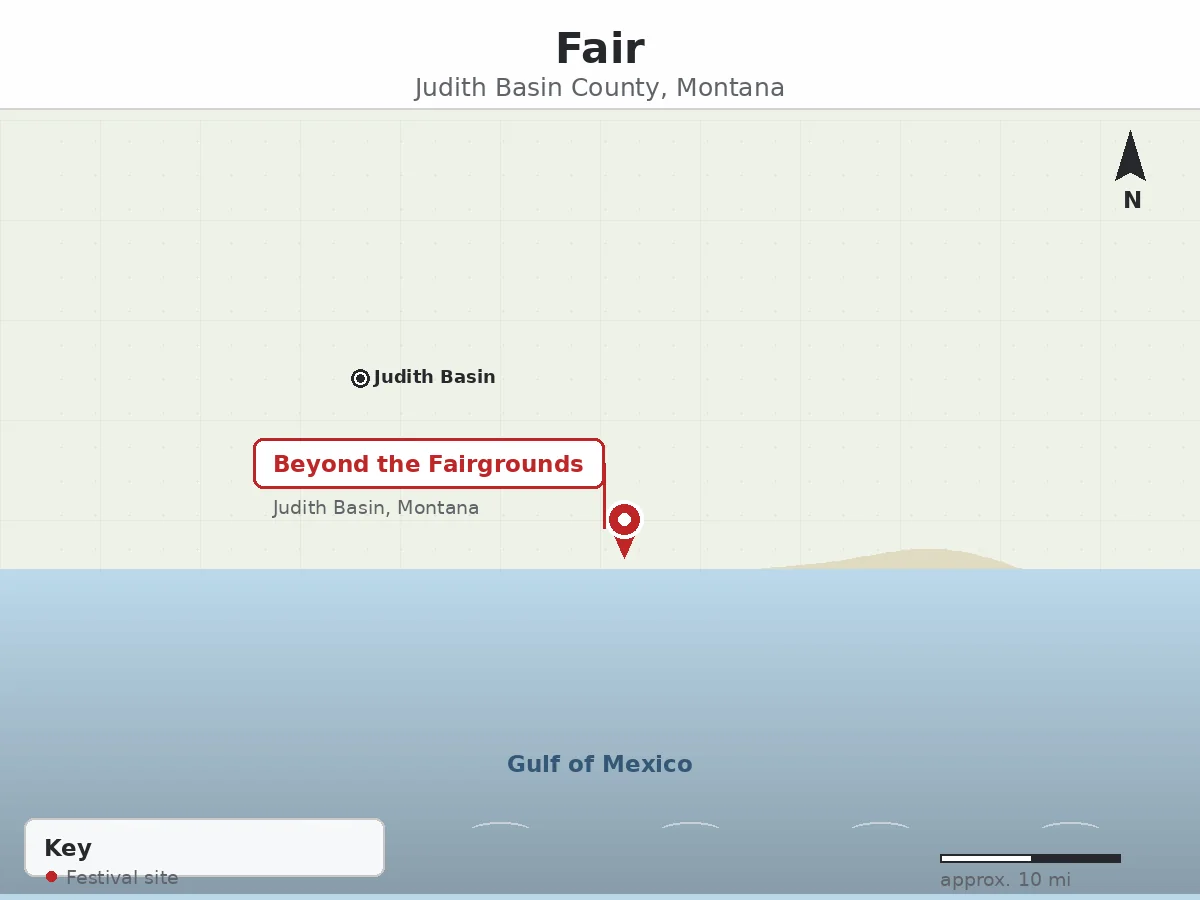
The fair’s regional listing publishes 91 3rd Street North, Stanford, as its event address, and gives the same address for the Extension office, so it is best understood as the fair’s published contact address rather than a surveyed boundary of the grounds. Questions about entries, interviews or the week’s arrangements run through that office at (406) 566-2277 extension 104. Because the public programme beyond the exhibition core is thin in the published record, a short call before travelling is the surest way to learn the current day’s shape.
Sleeping Over Is Your Own Arrangement
No camping offer, rule or rate for fair week appears in any fetched fair-side source, so this article makes none on the fair’s behalf. Visitors travelling from the far corners of the county should arrange their own overnight plans in advance rather than assuming a campground waits at the grounds. Stanford is a small county seat, and late-July demand from exhibitor families alone rewards early arrangements.
A Visitor’s Day on Interview Tuesday
A sample day built from the documented pieces of the week begins early on Tuesday, when the interview schedule takes over the grounds. Start near the exhibit building as the first exhibitors sit down with their judges, and listen to how differently a foods project and a photography project are each explained. Move mid-morning to the livestock interviews, where the questioning turns to feed records and daily care. By midday the earliest indoor exhibits are settling into their display places with their placings attached, the best hour to walk the building and read the judges’ verdicts class by class. Spend the afternoon with whichever interviews remain, because the single interview day means the whole educational programme can genuinely be watched in one visit.
How This Fair Compares
The obvious comparison stands at Lewistown, where the Central Montana Fair runs as the region’s large fair, with ticketed grandstand nights and a programme built at several times this fair’s scale. Judith Basin 4-H families are even eligible to exhibit in that fair’s divisions under its rules, yet the two events are built on different ideas: Lewistown’s fair is a regional showplace, while Stanford’s is a county examination, intimate enough that every project gets its interview. The second comparison is closer to home and easier to get wrong. Stanford’s C. M. Russell Stampede rodeo fills the same town a week earlier in July with arena spectacle, and it is a standalone event with its own identity; the fair that follows it is quieter, later and entirely separate, and the two should never be read as one festival in two parts.
Before You Go: A Checklist
- Confirm the current edition’s dates before travelling, since the week has shifted earlier in recent years.
- Plan your visit around interview day if you can, when the whole judging programme is visible at once.
- Bring no expectation of a gate charge, because the rules state that admission will be free.
- Exhibitors: treat the June entry deadline as the real start of fair season, and note the late window carries a fee.
- Allow time for the exhibit building after judging, when the placings are up.
- Make overnight arrangements in advance, as the fair publishes no camping offer of its own.
- Keep the Russell Stampede’s separate July weekend distinct in your diary from the fair’s own late-July run.
Beyond the Fairgrounds
Stanford repays a slower look once the interviews are done. The town sits in Charlie Russell country, and its C. M. Russell Stampede, held on July 18 and 19 in 2026, is the community’s own rodeo celebration of that heritage; it belongs in a visitor’s summer plans on its own merits and on its own weekend, a full week before the fair opens. Later in the season, the Montana Bale Trail runs in September through Hobson, Utica and Windham, turning the hay harvest into a roadside show of decorated bales. That, too, is its own event in its own month. Between those bookends, the fair week is Stanford’s working celebration: less a show put on for visitors than a county institution opened up so visitors can watch it work.
Why a Rules-First Fair Matters
A fair that publishes its constitution is making a claim about fairness itself. By writing down who governs, how exhibits are placed, when entries close and that admission costs nothing, the Judith Basin County Fair gives every family the same information at the same time, and removes the quiet advantages that unwritten customs hand to insiders. The interview system deepens that claim: a ribbon here certifies not only an animal or an exhibit but a young person’s ability to explain and learn from a year of work. For a small agricultural county, that is a serious civic function dressed as a summer week. The mission sentence says the point is the education of its youth and the enrichment of their opportunities, and the machinery of the week, from the June deadlines to the premiums earned at take-down, is that sentence carried out in practice.
Frequently Asked Questions
Is admission really free, and who says so?
Yes, on the fair’s own authority. The general rules published for the fair state plainly that admission to the fair will be free, so the free gate is a rule of the event rather than a promotional claim.
Which week does the fair occupy?
The fair’s season is late July. The documented 2026 edition ran from July 27 to 31, while the state’s season tables placed the fair across the turn into August in 2024 and 2025, so the precise week should be confirmed for the year of your visit.
Who actually runs this fair?
Two bodies share the government of the fair under its published general rules: the Judith Basin County Fair Board and the Judith Basin County 4-H Council. The rules make their decisions final, and the county Extension office serves as the fair’s contact point.
What can a young exhibitor enter, and by when?
Exhibitors enter projects they are enrolled in, with the work made during the current 4-H year; livestock and indoor projects alike are interview judged. For 2026, entries closed on June 22 through FairEntry, with a late window to July 1 carrying a twenty-five dollar late fee, and every interview took place on July 28.
What to Expect From the Next Judith Basin County Montana Fair Festival
How often is the Judith Basin County Montana Fair Festival held?
The fair is an annual event, held once each summer in Stanford. Its rules, entry cycle and interview system are all built around a single edition per year, prepared for months in advance by the families who exhibit.
When is the next Judith Basin County Montana Fair Festival?
The next edition will fall in the fair’s established season of late July, following the documented 2026 run of July 27 to 31. Because the week has moved earlier across recent years, the exact dates should be taken from the fair’s own announcements rather than assumed from any earlier edition.
Will the dates change?
They may. The season tables behind this article show the fair in early August in 2024, across the turn of August in 2025 and in late July in 2026, so the slot is plainly one the organisers adjust. The late-July season is the reliable guide; the specific span belongs to each edition alone.
The Judith Basin County Fair asks little of its visitors: no ticket, no grandstand, no headline act competing for attention. What it offers in return is rarer, a county fair reduced to its essentials and honest about them, where the rules are public, the gate is free by written policy, and the whole week turns on young people explaining what they made, grew and learned. Arrive on interview day, and walk the exhibit building after the ribbons go up.