Garfield County Montana Fair Festival
Some fairs announce themselves with posters, price ladders and concert bills. The Garfield County Fair does almost none of that, and a reader who goes looking for it online will mostly find somebody else’s fair wearing the same name. Montana’s Garfield County Fair is nonetheless real: a living county fair held each summer at the Garfield County Fairgrounds in Jordan, the county seat. Its paper trail sits where small fairs usually keep it — in the entry listings and the working accounts of the people who run it.
What that record shows is a compact, working fair. It runs Thursday to Saturday in early August, and its 2026 edition is listed for August 6–8. Its heart is a 4-H youth fair — interview judging, a livestock weigh-in, a horse show, a Friday of livestock shows and a Saturday sale — with an Open Class division alongside it. Nothing in the Montana record attaches a carnival, a concert stage or a rodeo to this fair, and none will be invented here; what it documents instead is a county fair’s essential machinery, run at the smallest of scales.
About the Garfield County Fair
The fair’s published name is plain: the Garfield County Fair, with a second listing for its Garfield County Fair Open Class. It does not run through a standalone fair board whose name appears in the record — no officer list, fair association or board paper has been published in the sources behind this article. Instead it runs through the county’s Extension and livestock-board machinery: Extension’s programme accounts describe the county’s Extension agent at the centre of fair week and a livestock board weighing in the animals, and entries flow through the state’s entry system.
That machinery gives the fair its particular character. This is an exhibition fair, built around the show ring and the exhibit entries rather than gate attractions. Garfield County’s population is roughly 1,250 people, with Jordan as its seat and service centre, so its pool of exhibitors, volunteers, judges and buyers is very small. It is the same institution a big fair runs, carried by far fewer hands: the interviews still happen, the animals are still weighed and shown, and the sale still closes the week.
Quick Facts
| Item | Detail |
| Fair | Garfield County Fair |
| Town | Jordan, the county seat |
| Grounds | Garfield County Fairgrounds, Jordan (no street address is published) |
| Season | Early August, Thursday to Saturday |
| Documented 2026 dates | August 6–8, 2026, per the fair’s entry listing |
| Core programme | Interview judging, livestock weigh-in, horse show, livestock shows, livestock sale |
| Divisions | 4-H youth exhibits and an Open Class division |
| Runs through | The county’s Extension service, with the county livestock board |
| Admission | No price is published in the fair’s record |
| Camping | No fair camping offer is published |
A History the Record Keeps Short
Anyone writing honestly about this fair has to begin by admitting what is missing. No founding year is published in the fair-side record, and no edition number is claimed for it, so neither will be supplied here.
For a useful comparison, see the Baldwin County Alabama Shrimp Festival for another county festival.
What the record does show is continuity of practice. The state’s 4-H fair-date tables carry Jordan in the same early-August slot year after year — August 8–10 in 2024, August 7–9 in 2025, and the listed August 6–8 in 2026. A county account of the 2020 fair records the livestock sale, the week’s closing event, held virtually for the first time that year. A fuller account of the 2022 fair describes the working week in its settled shape — interviews, weigh-in, horse show, Friday shows, Saturday sale — the same skeleton the entry listings still describe.
The fair’s history, as far as the record tells it, is that repeated fact: a small county assembling its exhibitors, its livestock board and its buyers in the same week of August, in much the same order, year after year.
What to Expect at the Fairgrounds
Interview Judging Opens the Week
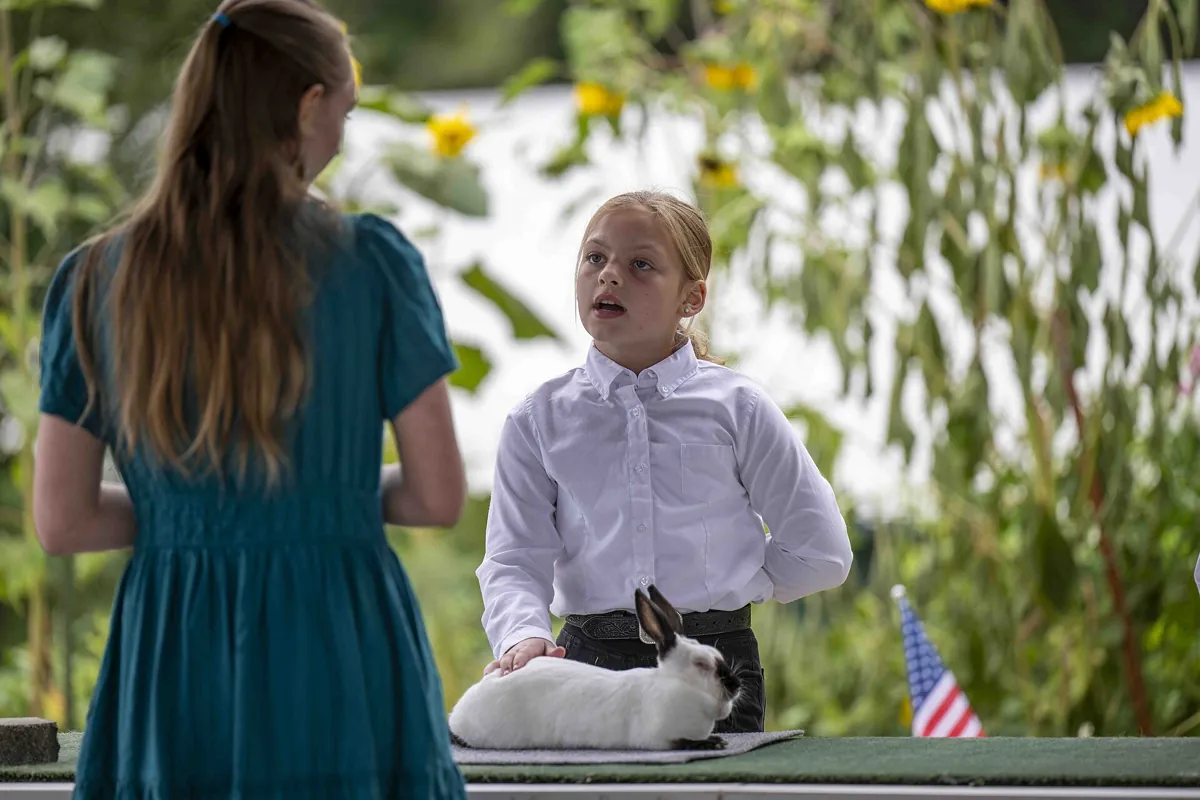
The documented account of the fair’s week begins not with an animal but with a conversation. In 2022 the fair kicked off with interviews for 4-H members — the standard 4-H practice in which an exhibitor sits down with a judge and talks through a year of project work: what was attempted, what went wrong, what was learned. It is the quietest part of fair week and the most revealing, because it shows the fair to be an examination as much as a show.
Thursday: Check-In, Weigh-In and the Horse Show
Thursday is the fair’s working day. Animals check in and are weighed by the livestock board — the weigh-in matters beyond order-keeping, because market classes and the Saturday sale both depend on recorded weights. Alongside the check-in runs the horse show, which the 2022 account notes drew strong attendance in both the 4-H classes and the open show.
Friday Belongs to the Show Rings
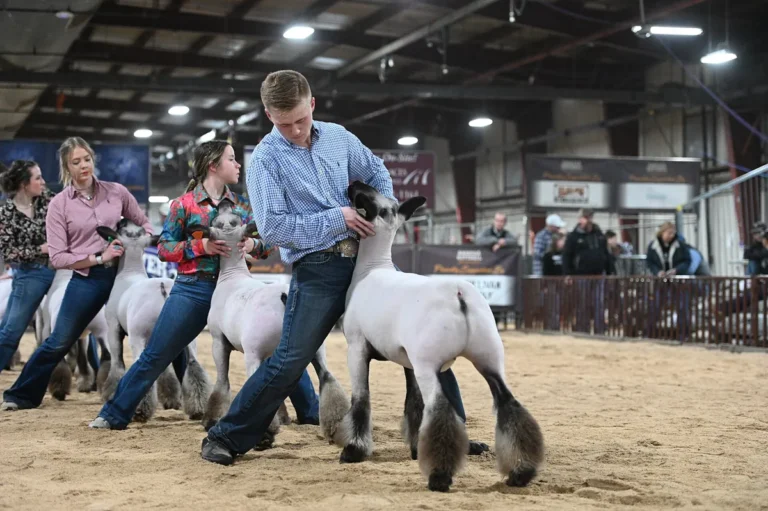
Friday is the fair’s fullest day. The 2022 account puts the livestock shows starting at 8 a.m. and names the species that fill the rings: hogs, sheep, goats and steers. It also noted a record lamb entry that year, a detail belonging to 2022 alone. Friday is the day for the fair’s central spectacle: young handlers presenting animals they have raised and fitted for months.
The Saturday Sale
The week closes with the livestock sale on Saturday. For exhibitors, it is the point toward which the whole project year has aimed — the moment the market animals change hands and a season of feed bills, early mornings and placings resolves into a cheque and a handshake. For the families and businesses in the seats, bidding is how the community underwrites its own young people. When the sale ends, the fair is effectively over.
The Open Class Side of the Fair
Alongside the 4-H programme, the fair carries an Open Class division, listed in its own right in the entry record. Open class is the part of a county fair where any resident, not only enrolled youth, may put work before the judges. The division’s full department list is not published in the record behind this article, so no catalogue of classes will be invented here; it is entered through the same system as the rest of the fair and gives Jordan’s adults their own reason to compete during fair week.
Planning Your Visit
Getting to Jordan
Garfield County is remote even by Montana standards, and a trip to this fair should be planned as a journey rather than an errand. Jordan sits well off the main corridors, so expect long stretches between services, fuel up with margin to spare and aim to arrive in daylight. No street address for the fairgrounds is published in the fair’s record, so navigate by the fairgrounds name and ask in town if in doubt — anyone you ask will know where the fair is held.
Prices the Record Does Not Publish
No admission price for this fair is published anywhere in the fair-side record — no gate figure, no pass price, no parking charge. That silence cuts both ways: the fair must not be described as free, because the record never says so, and no price should be quoted, because it never gives one. Carry cash in small bills and confirm current arrangements locally before travelling. The same honesty applies to camping: no fair-week camping offer, rule or rate appears in the record, so ask in the county rather than assume.
Timing Your Days
The documented shape of the week rewards choosing your day deliberately. Come Thursday for the weigh-in and the horse show. Come Friday for the livestock shows, which the documented pattern starts early in the morning. Come Saturday for the sale, the week’s climax and conclusion. Exact days shift slightly from year to year while the slot holds steady, so check the current year’s listing before setting out.
A Sample Visit Across Friday and Saturday
Treat what follows as a suggested shape built from the fair’s documented pattern, not a published timetable — the fair does not print one in the record behind this article. On Friday, arrive before the 8 a.m. start and work through the morning’s shows species by species, with the exhibit entries and open-class work filling the middle of the day. On Saturday, give the morning to Jordan itself and return for the sale, where the week’s animals go under the hammer. Stay to the last lot if you can: trailers loading in the late light are the truest picture of what the week was for.
How This Fair Compares
The Garfield County Fair is best understood by what it does not try to be. Fairs built around a midway compete on rides, headline acts and gate receipts; this fair’s documented programme contains none of those things, and its rewards are of a different kind — the quality of the stock, the polish of the young handlers, the size of the cheque at Saturday’s sale. Judged as entertainment it would barely register; as the annual public accounting of a farming county’s work, it is complete.
A second comparison matters more, because it is the one search engines get wrong. This fair shares its name with a much larger fair in another state entirely, whose website dominates the results for the name, and almost everything a casual search surfaces — the rodeo bills, the concert names, the board announcements, the anniversary claims — belongs to that fair, not to Montana’s. Anyone planning a trip to Jordan should take their facts only from Montana’s record and treat the rest as a different county’s business.
Before You Set Out
- Confirm the current year’s exact days before travelling, because the fair’s early-August dates drift by a day or two between editions.
- Carry cash in small bills, since no admission or other price for this fair is published in its record.
- Do not assume entry is free: the record publishes no price and never claims a free gate.
- Fuel up well before Jordan and plan the drive for daylight, because the county is remote and services are far apart.
- Ask locally for the fairgrounds rather than searching for a street address, because none is published.
- Book any lodging early and directly, as a county this size has few rooms and fair week fills them.
- Match your day to the pattern: Thursday for the weigh-in and horse show, Friday for the shows, Saturday for the sale.
- Ignore details drawn from the larger same-named fair found in search results, because its programme is not Montana’s.
Beyond the Fairgrounds
Jordan rewards a visitor who treats the fair as one part of a longer stay. The town is the county’s seat and its only real service centre, a ranching community that measures its year in calving, haying and fair week. Around it lies the country that gives this corner of Montana its character: the broken, fossil-bearing badlands running north toward the Missouri River breaks, in the fringe of the Fort Peck country. It is dinosaur country in the plainest sense, its eroded hills famous among fossil hunters, and the distances are part of the experience.
One caution belongs here. A rodeo runs in Jordan under its own separate listing in the summer calendar, and it is its own occasion; no fair-side record joins it to the county fair, so it should not be mistaken for fair programme or used to date a fair trip. The fair’s week is the Thursday-to-Saturday span in early August.
Why This Fair Matters
For a county of roughly 1,250 people, the fair is not a leisure amenity; it is a rare occasion when the whole community’s work is gathered in one place and judged in public. The 4-H projects shown here are the county’s young people being examined in skills the local economy actually runs on — feeding, fitting, record-keeping and showing up on time — and the Saturday sale is the moment the adult community pays for those skills in the most literal way available to it.
The fair’s thin public record is itself part of the story. A fair run through an Extension office and a livestock board has no marketing department and little reason to build one: everyone it serves already knows when it is. That the Garfield County Fair persists in that form is the surest sign of what it is for.
Frequently Asked Questions
Where in Garfield County does the fair take place?
The fair is held at the Garfield County Fairgrounds in Jordan, the county seat. No street address for the grounds is published in the fair’s record, so navigate by the fairgrounds name and ask in town if you need directions.
Which days does the fair occupy in early August?
The fair runs Thursday to Saturday. Its 2026 edition is listed for August 6–8, and the same early-August slot held in the two years before it — August 7–9 in 2025 and August 8–10 in 2024.
Is there a published admission charge for the fair?
No admission price is published anywhere in the fair’s own record — no gate figure, pass price or parking charge. The fair is also never described there as free, so carry cash and confirm the current arrangement locally rather than assume either way.
Is this the fair with the big rodeo and concert bills found online?
It is not. Those bills belong to a larger same-named fair in another state whose website dominates searches for this name. Montana’s Garfield County Fair is a 4-H and open-class fair built around interviews, livestock shows and a sale, with no rodeo or concert programme attached.
What to Expect From the Next Garfield County Montana Fair Festival
How often is the Garfield County Montana Fair Festival held?
The fair is held once a year, each summer. Its documented editions sit in the same early-August position in consecutive years, and nothing in the record suggests any change to that annual rhythm.
When is the next Garfield County Montana Fair Festival?
The next edition after the listed August 6–8, 2026 fair should fall in the same early-August, Thursday-to-Saturday slot in 2027. Its exact days will come with that year’s entry listing and should not be assumed to repeat the 2026 dates.
Will the dates change?
The slot appears stable while the days themselves move: 2024 ran August 8–10, 2025 ran August 7–9 and 2026 is listed for August 6–8. A similar small drift is the reasonable expectation, so the current year’s listing is always the authority worth checking before travel.
A fair like this one asks a little more of its readers than most. Its facts are few, plainly fenced and easily confused with a bigger fair’s publicity, but they describe something no larger fair can offer in the same way: a whole county, all 1,250 or so of its people, gathering in the first week of August to weigh, show and sell the year’s work. For the visitor willing to make the drive, it is Montana’s county-fair tradition at its most concentrated.