Cascade County Montana Montana State Fair Festival
Some titles in this series point to a county fair. This one points somewhere bigger. The event behind the Cascade County Montana Montana State Fair Festival is the Montana State Fair itself, the statewide fair of Montana, and the unusual part is who stands behind it: Cascade County owns and presents the fair, staging it at Montana ExpoPark in Great Falls, the county seat. No separate Cascade County Fair hides behind the name. The state fair is the county’s fair, held on the county’s own grounds in the middle of its largest city.
The shape of the event matches the scale of the name. The fair runs nine days, filling the last week of July and finishing on the first day of August, with exhibits and a carnival occupying the daylight hours and a professional rodeo and concerts taking over after dark. The documented 2026 edition ran from July 24 to August 1, 2026, on a published gate ladder that held adult admission to ten dollars and made parking free. Every specific in this article — each date, price and named act — belongs to an edition the fair has published, and the fences matter, because two other Montana events wear similar names.
The State Fair a County Runs
Most state fairs answer to a state agency or a private fair corporation. This one answers to a county. Cascade County presents the Montana State Fair at Montana ExpoPark, and the fair’s own documents address exhibitors to the ExpoPark and the fair together, as a single operation. The fair’s 2022 general information named a Montana State Fair Advisory Board alongside fair management, a small piece of paper that underlines the structure: a public owner, an advisory board, and a professional staff running a statewide event out of a county facility.
That arrangement shapes the fair’s character. The competition is statewide in reach, drawing entries from across Montana, and the fair’s 4-H exhibits belong to the same statewide programme, entered ahead of the fair rather than at the gate. Yet the grounds feel local. ExpoPark sits inside Great Falls, so the city’s hotels, restaurants and riverfront absorb the crowds, and the county’s name sits on the fair in a way no distant agency’s name could. Visitors get a state fair’s scale delivered with a county fair’s directness about exactly who is in charge.
Quick Facts
| Detail | What the record shows |
| Fair | The Montana State Fair |
| Presented by | Cascade County, at its own ExpoPark |
| Fair town | Great Falls, the Cascade County seat |
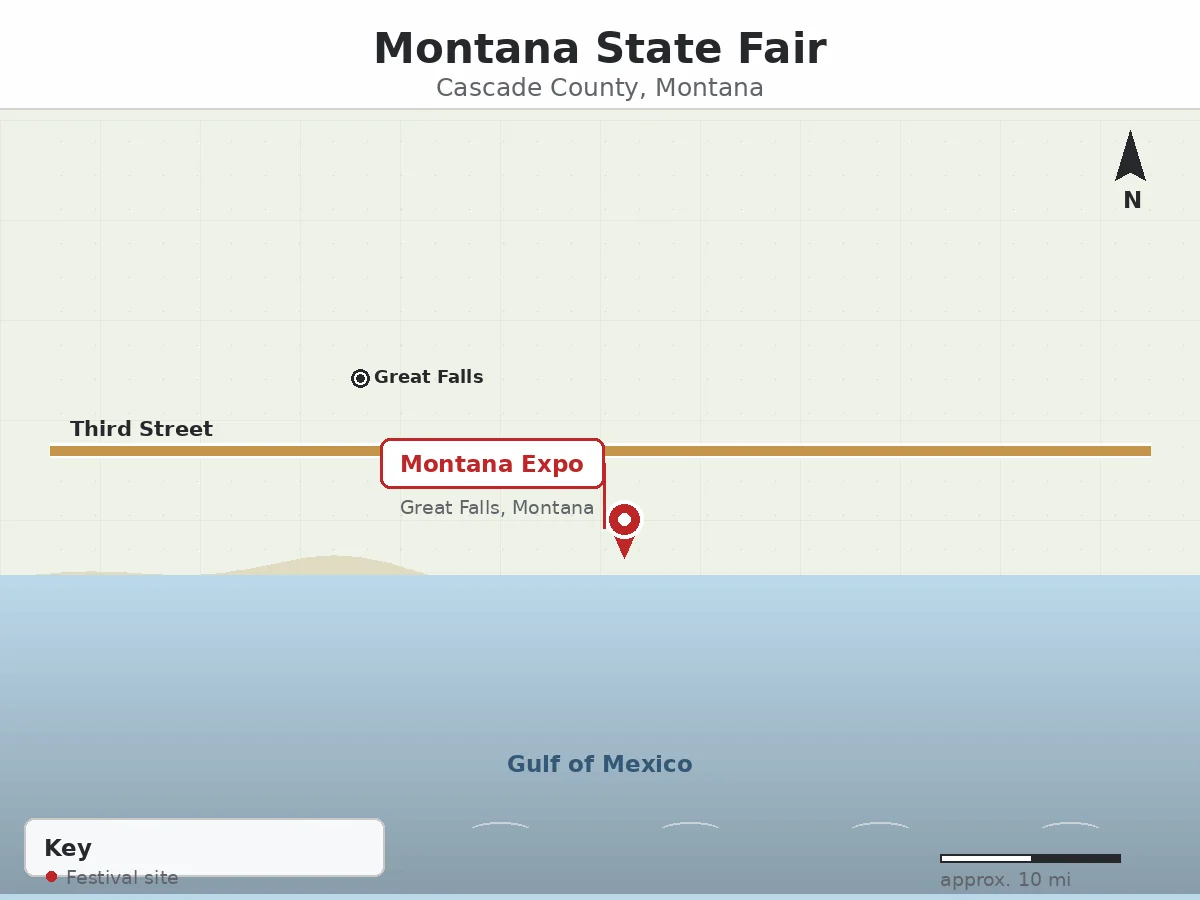
| Grounds | Montana ExpoPark, 400 Third Street Northwest, Great Falls |
| Season | Nine days in late July, ending on the first day of August |
| Documented 2026 edition | July 24 to August 1, 2026 |
| Gate admission, 2026 | Adults $10; seniors $7; children 6 to 17, $7; under 5 free |
| Parking | Free for the 2026 edition |
| Signature events | Big Sky Pro Rodeo, night concerts, the carnival’s Star Tower |
| Exhibits | Competitive departments and 4-H exhibits, entered before opening day |
A Long History With No Printed Birthday
Great Falls has hosted fair gatherings for a very long time, and the Montana State Fair’s roots in the city run deep — but this article gives the fair no founding year, because the fair-side record behind it fixes none. No edition number is printed here either. What the record does support is continuity of place and ownership: a fair in Great Falls, on the county’s ExpoPark grounds, presented by the county, is the settled shape of an institution Montanans have treated as their state fair across generations of summers.
For a useful comparison, see the Carter County Montana Fair Festival for another county festival.
That restraint is deliberate. State fairs attract anniversary claims the way grandstands attract banners, and the wider telling of this fair is no exception. The honest history is the documented one: a fair that grew alongside its host city on the Missouri River, that concentrates a state’s agricultural competition into nine days each summer, and that a county government still runs as a trust rather than a private promotion. Where no founding claim is published, the fair’s present — its grounds, its ladder, its programme — carries the story instead.
What to Expect at ExpoPark
Exhibits and Competition by Day
The fair’s daylight core is competitive exhibition. Departments across the grounds take in the work of a state’s worth of exhibitors, and judging runs through the fair’s days as ribbons are settled class by class. The 4-H side of the programme is woven into the same fabric: for the 2026 edition, the fair’s 4-H exhibits were entered during a July 1 to 17 window that closed before the gates opened, so what visitors see is the finished, judged product of work submitted weeks earlier. That entry window is machinery, not fair days, and the distinction matters to anyone planning around it.
The Carnival and the Star Tower
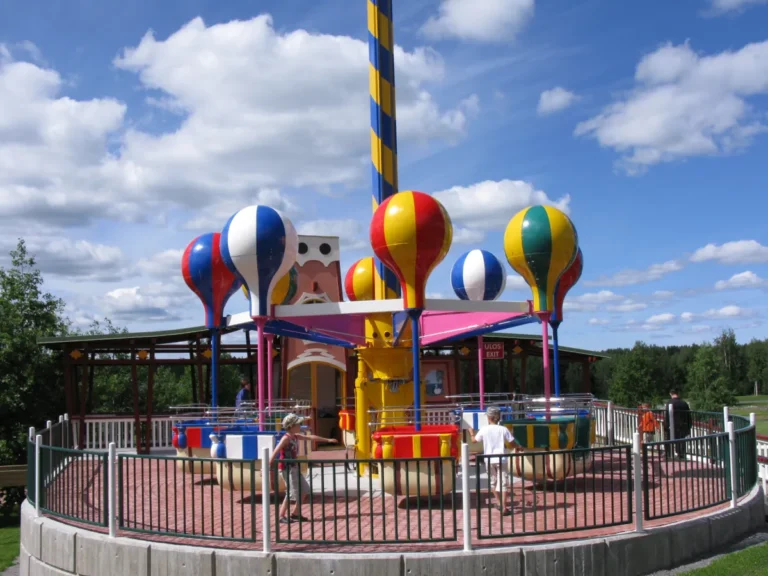
The carnival anchors the fair’s midway ground, and its signature silhouette is the Star Tower, a ride standing ninety feet tall. Around it, the economy of a big fair turns over for nine days: rides, games, and food stands feeding the crowds that drift between the exhibit halls and the grandstand. The carnival is where the fair’s evenings begin, long before the concerts start.
Rodeo Grounds and the Track
The Big Sky Pro Rodeo sits on the fair’s bill as its sanctioned professional rodeo, drawing the fair’s arena crowds into the grandstand programme. Fair-week coverage of the grounds has also carried horse racing on the ExpoPark track, a reminder that these grounds were built for more than one kind of horsepower. Between the rodeo arena and the racing tradition, the fair’s animal programme reaches well beyond the show rings where the judged livestock spend their days.
Concerts and Grounds Acts After Dark
Nights belong to the stage. The fair’s concert series brings national acts to ExpoPark: for the 2026 edition, Third Eye Blind played the fair on Saturday, July 25, 2026, a booking that belongs to that edition alone. Around the headline shows, fair-week coverage has described grounds entertainment scattered through the days and evenings — illusionists, musicians and comedians working the free stages and walkways between the ticketed moments. The pattern is the classic state fair layering: something performing somewhere on the grounds at nearly every hour the gates are open.
Planning Your Visit
The Gate Ladder and the Ten-Pack
For the 2026 edition, the fair published its gate ladder in plain tiers: adults paid $10, seniors paid $7, children from six to seventeen paid $7, and children under five entered free. A ten-pack of tickets sold for $70, available until 6 p.m. on opening day, rewarded groups and repeat visitors alike. Those figures are the 2026 ladder as published; each new edition publishes its own terms, so recheck it before any future trip rather than carrying it forward as a standing price.
Concert Tickets Are Not Gate Tickets
The fair’s concert pricing works differently, and confusing the two is the easiest budgeting mistake a visitor can make. In 2026, concert tickets started at $61.35 and included that night’s gate admission inside the price, with Party Pit tickets starting at $77.52. A concert ticket is the premium way into the fair on its night, not an extra charge stacked on top of the gate — but its price is a show price, never the cost of admission, and it buys entry only for the night of the performance.
A Note for Exhibitors
Exhibitors work under separate machinery, and their numbers should never be mistaken for visitor prices. The fair’s 2022 general information set an exhibitor packet at $20 covering ten admissions, with individual exhibitor tickets at $4 — exhibitor rules from that document, fenced to it, and entirely distinct from the public ladder. Anyone entering exhibits should work from the fair’s current exhibitor information for the edition they are entering, including its entry windows, which close well before the public run begins.
Parking, RVs and Staying Over
Parking was free for the 2026 edition, with entry from the Northwest Bypass, a small mercy that matters across nine days of arrivals. ExpoPark accommodates recreational vehicles for events as a venue, but no fair-week camping rate was published in the 2026 record, so anyone hoping to stay on the grounds should confirm terms directly rather than assume a price. Beyond the grounds, Great Falls carries the hotel stock of a regional city, and late July is its high season, so booking ahead is the sensible default.
One Full Day at the Fair
A strong fair day at ExpoPark layers the grounds in their natural order. Start in the exhibit halls while the morning is cool, reading the judged work of the state’s exhibitors before the crowds thicken. Give the middle of the day to the carnival, when the Star Tower and the midway are fully awake, and break for fair food among the stands. As the afternoon tilts, move toward the arena side of the grounds for the rodeo programme, then let the evening resolve into the night’s concert, with grounds acts filling the gaps on the walk between stages. End where the fair ends each night — under the lights, with nine days’ worth of Montana exhausting itself pleasantly around you.
A State Fair Among County Fairs
Measured against the county fairs that fill this series, the differences are structural. A county fair gathers one county’s work for a long weekend; this fair gathers a whole state’s for nine days, under a county’s ownership, with a professional rodeo and national concert acts layered over the exhibition core. The ownership is the true oddity: Montana’s state fair is a county production, which is why it carries a county’s name in this series at all.
The naming needs care, because Montana hosts two other events that sound official and are not this fair. MontanaFair, held in Billings, is a separate fair in another county. The Big Sky Country State Fair, held in Bozeman, is likewise a different event — a county fair carrying state fair words in its title. Neither event’s dates, prices or acts belong to the Montana State Fair, and nothing from them appears in this article. The state fair is the one in Great Falls, at ExpoPark, presented by Cascade County.
The Fair Checklist
- Confirm the current edition’s exact dates before booking travel; the late-July frame is steady, but each edition’s days are its own.
- Budget the gate from the ladder published for the edition you attend — in 2026, adults paid $10 and under-fives entered free.
- Consider the ten-pack if your group is large or returning; in 2026 it sold for $70 until 6 p.m. on opening day.
- If a concert matters to you, buy the concert ticket, remembering it already carries that night’s gate admission.
- Use the Northwest Bypass entrance for the free parking published for the 2026 edition.
- Enter exhibits early if you are exhibiting; in 2026 the 4-H entry window closed on July 17, before the fair opened.
- Carry sun protection and water for long late-July hours between halls, midway and grandstand.
- Confirm any RV or camping terms with the grounds directly, since no fair-week rate was published for 2026.
Beyond the Fairgrounds
Great Falls earns a slower look than a fair week usually allows. The city takes its name from the falls on the Missouri River that early travellers portaged around, and the river still organises the place, running past downtown within easy reach of the ExpoPark grounds. Riverfront walks, the falls viewpoints and the city’s museums and historic districts fill a rest day comfortably, and the wider Cascade County landscape — prairie in every direction, mountains on the western horizon — rewards anyone who adds a day for the drive. The fair may be the reason for the trip, but it does not have to be the whole trip.
Why This Fair Matters
The Montana State Fair is where the state shows its work to itself. A year of breeding, growing, making and building from every corner of Montana converges on one set of grounds for nine days, judged in public and celebrated in the same place. That it happens under a county’s stewardship, in the county seat, rather than under a distant authority, keeps the institution answerable to the community that hosts it — and keeps Great Falls at the centre of the state’s summer, year after year.
Frequently Asked Questions
Is there a separate Cascade County Fair?
No. No separate county fair appears in the record for Cascade County. The Montana State Fair, presented by Cascade County at Montana ExpoPark in Great Falls, is the county’s fair — a state fair in scale and reach, run by the county that hosts it.
What did admission cost for the 2026 edition?
The published 2026 ladder charged adults $10, seniors $7, and children aged six to seventeen $7, with children under five admitted free. A ten-pack of tickets cost $70 until 6 p.m. on opening day. Later editions publish their own ladders, so those figures belong to 2026.
Does a concert ticket cover getting into the fair?
Yes, for its own night. In 2026, concert tickets started at $61.35 and included that evening’s gate admission in the price, with Party Pit tickets from $77.52. The concert price is a show price that happens to carry the gate inside it — it is not the general admission rate.
Where do visitors park, and can RVs stay on the grounds?
Parking was free for the 2026 edition, entered from the Northwest Bypass. ExpoPark accommodates recreational vehicles for events as a venue, but no fair-week camping rate was published in the 2026 record, so RV visitors should confirm arrangements and terms with the grounds before relying on staying there.
What to Expect From the Next Cascade County Montana Montana State Fair Festival
How often is the Cascade County Montana Montana State Fair Festival held?
The Montana State Fair is held once a year. Each edition occupies nine days across the last week of July and the first day of August, on the Cascade County grounds at Montana ExpoPark in Great Falls.
When is the next Cascade County Montana Montana State Fair Festival?
The next edition falls in the fair’s established late-July window, running into the first day of August, following the pattern of the documented 2026 edition of July 24 to August 1. The fair publishes each edition’s exact dates ahead of its season, and those published days — not any earlier edition’s — are the ones to plan around.
Will the dates change?
They can move by a few days from one edition to the next, since the nine-day run is fitted to the calendar of each particular summer. The season itself is the stable part: late July, ending as August begins, in Great Falls. Checking the current edition’s published dates before travelling is always the safe course.
The Montana State Fair asks a little more of its visitors than most fairs in this series — nine days, a whole state’s exhibits, a rodeo and a concert stage — and it gives back proportionately. Come for the county that runs a state fair, and stay for everything that state brings to its grounds.

One Comment