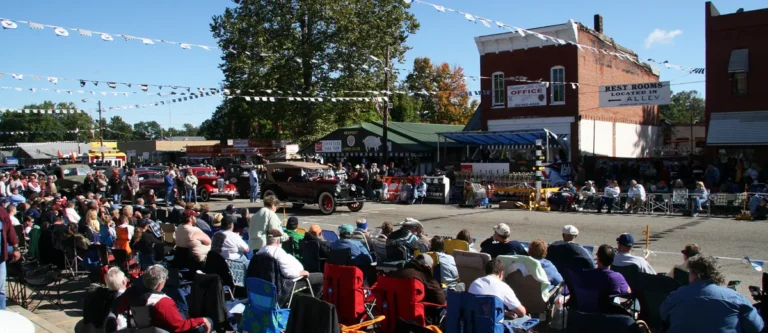
LaGrange County Indiana 4-H Fair Festival
It is a midsummer evening in northern Indiana, and the light over the LaGrange County fairgrounds has gone soft and gold. Near the show ring, a judge walks a line of dairy heifers while a 4-H member in a white shirt tries hard to look calm. At the far end of the grounds, a fryer works overtime. This is fair week, and the whole county has turned out for it.
The LaGrange County 4-H Fair is not a giant spectacle, and that is precisely the point. It is a working county fair in the middle of farm country, organized by local clubs and volunteers, where the grandstand fills for a tractor pull and the teenager showing the champion barrow probably lives three miles down the road. If you are anywhere near the county seat of LaGrange in summer, it is worth building a day around.
The LaGrange County 4-H Fair, In Brief
| Town and area | LaGrange and the surrounding LaGrange County countryside |
| County | LaGrange County, Indiana |
| County seat | LaGrange |
| County population | 40,446 |
| Region | Northern Indiana |
| Typical timing | One week each summer, in most years during July |
| Admission | Generally free at the gate; food, rides, and grandstand events priced separately |
| Setting | County fairgrounds with livestock barns, show rings, exhibit halls, a grandstand, and midway space |
| Signature features | 4-H livestock shows, static project exhibits, a livestock auction, fair food, and evening grandstand entertainment |
| Organizer | Local 4-H clubs, volunteers, and community sponsors |
What a Summer Week on the LaGrange Fairgrounds Looks Like
Ask ten people in LaGrange what the fair is for and you will get ten answers pointing the same direction: this is where the county’s young people show what they have raised, built, baked, and learned. The week belongs to 4-H members first. The barns hold beef and dairy cattle, swine, sheep, goats, poultry, and rabbits, each with its own show, its own judge, and its own cluster of families in lawn chairs.
Project halls fill with photography, woodworking, sewing, gardening, canning, and baked goods, all judged down to the ribbon and the comment card. A livestock auction late in the week turns months of feeding and grooming into real money for the young exhibitors, and it is one of the quietly moving hours of the whole fair.
Around those core events sits everything else a county fair needs — concession trailers, a midway, a grandstand schedule, and bleachers full of neighbors who came out to watch someone they know. Nothing here is staged for tourists. It is built for LaGrange County, which is a large part of its charm.
For another look at how a community turns its own traditions into a gathering, see the Kosciusko County Indiana Village at Winona Art Fair Festival for a useful comparison.
How a County Founded in 1832 Built a Fair Week Tradition
LaGrange County was organized in 1832, with LaGrange as its county seat, and its 386.70 square miles of northern Indiana farmland and small towns have been the fair’s reason for existing ever since. County fairs across the Midwest grew out of agricultural societies whose members wanted to compare notes on crops, livestock, and equipment — and to have a good time doing it.
The 4-H movement took shape in the early decades of the 1900s, and when it reached rural Indiana it changed the character of county fairs everywhere. What had been a showcase for farms became a showcase for farm kids. University extension work carried club programs into counties like this one, and before long the four-leaf clover was on barn doors, entry tags, and bumper stickers from LaGrange to Topeka.
The fair has grown, moved, and been rained on more times than anyone can tally, but it has kept its basic bargain: one week a year when rural and small-town life is put on display, judged fairly, and celebrated out loud. Generations of LaGrange County families have gone from showing a rabbit to watching a grandchild show one.
Fair Week Up Close: Food, Grandstand Nights, and Family Time
Most visitors arrive planning to stay a couple of hours and end up staying until the lights come on. Here is what fills the time.
Fair Food on the LaGrange County Fairgrounds
The food is the food of northern Indiana fairgrounds, and better for it: pork burgers and breaded tenderloins, hand-cut fries, corn dogs, elephant ears, funnel cakes, lemon shake-ups, and soft serve. Church groups and local organizations often run stands of their own, which means the pie and the noodles can be genuinely homemade. The 4-H food stand is a tradition in itself, staffed by volunteers and patronized by anyone who understands the value of a fairground breakfast. Bring cash and an appetite.
Grandstand Nights and Live Music in LaGrange
Evenings bring the grandstand to life. Expect the classic county fair lineup in some form — a tractor or truck pull, a demolition derby, perhaps a rodeo or a motocross night — plus live music that ranges from local country and rock bands to a weekend headliner. Away from the grandstand there is almost always music somewhere: a gospel group on a flatbed trailer, a teenager with a guitar, a radio station broadcasting from the midway. The soundtrack is half the experience.
Family Activities from LaGrange Barn Tours to the Midway
Families can spend a full day here without spending a fortune. Barn tours and show rings are free to watch and genuinely absorbing for small children, especially when a calf is being washed or a rabbit is being judged. Midway rides and games are the main paid attraction, and many fairs offer wristband nights. Add a petting area, a tractor display, a craft or coloring contest, and a stroller-friendly pace, and you have a fair that works for toddlers and teenagers in the same afternoon.
Planning a Fair Week Trip to LaGrange County
Getting There: Roads into LaGrange, Indiana
LaGrange sits in northern Indiana, roughly along the U.S. 20 corridor east of Elkhart and west of the Michigan line, with State Road 9 running north and south through town. Nearly everyone arrives by car, and the county’s back roads are part of the pleasure — this is Amish and Mennonite farm country, so expect buggy traffic on the shoulders, slow down, and pass with care. Travelers coming from a distance usually make their air or rail connections through the Elkhart and South Bend area.
Where to Stay Around LaGrange County
The county has a modest but real inventory of lodging, from in-town motels to bed-and-breakfasts, guest cottages, and farm stays out on the back roads. Shipshewana, a short drive east, is the county’s best-known base, with hotels, inns, and campgrounds that fill quickly on summer weekends. Campers often settle in at area campgrounds or nearby recreation areas. Book early for fair week — this corner of Indiana is a popular summer destination even without a fair going on.
Parking at the LaGrange County Fairgrounds
Fairground parking is typically on-site or in adjacent grass lots, directed by volunteers and usually free or by donation. Arrive before the evening grandstand events if you want a short walk, and expect the closest spaces to disappear by mid-afternoon on the busiest nights. Follow the volunteers’ hand signals rather than hunting for your own spot; the lots are laid out the way they are for a reason.
What Fair Week Costs in LaGrange
Gate admission at most Indiana county 4-H fairs is free, and this one is generally no exception — the fair earns its money on food, rides, grandstand tickets, and the livestock auction. That means a family can wander the barns and exhibit halls all day for nothing. Budget for a parking donation, ride wristbands, midway games, and dinner. Many concession stands still prefer cash, so keep some in your pocket.
Northern Indiana Weather and What to Wear
July in northern Indiana is warm and humid, with afternoon highs that can climb into the upper 80s and the occasional fast-moving thunderstorm. Mornings are the most comfortable hours for barns and exhibits, and shade is scarce on the midway. Bring sunscreen, a hat, refillable water bottles, and a light rain jacket you can fold into a bag. Evenings cool off nicely, so a hoodie is not a bad idea if you plan to stay for the grandstand.
A Sample Fair Weekend in LaGrange, Friday Through Sunday
Friday afternoon. Park, then walk the barns while they are still quiet and watch a few showmanship classes. Eat an early dinner from a concession stand and claim a grandstand seat for the evening’s event. Finish with a slow loop through the midway after dark, when the lights are worth the walk.
Saturday morning. Come back for the livestock shows and the project halls, which are calmest before lunch. Check the day’s schedule for a tractor display, a craft activity, or a cooking demonstration, and eat something you cannot get at home.
Saturday evening. This is the fair at full volume: grandstand event, live music, midway crowds, and the long, contented walk back to the car.
Sunday. Closing day is often the gentlest. Walk the barns one last time, catch the final shows, and stop by the auction or awards presentation. Leave room for one more lemon shake-up before the drive home.
LaGrange’s Fair Beside Neighboring County Fairs
LaGrange County’s fair sits in a crowded summer neighborhood, and each option has its own personality. Shipshewana, a few minutes east, is a shopping and auction town rather than a fairground — its flea market and livestock auction draw crowds from across the region, but the day feels commercial rather than agricultural. Steuben County’s fair in Angola, to the east, runs a similar size and a similar rhythm, with the same barns-and-grandstand DNA.
Elkhart County’s fair in Goshen, to the west, is a much larger operation with a bigger midway and a regional pull. LaGrange’s version stays smaller, more rural, and more rooted in 4-H project work — the kind of fair where you recognize half the people in the bleachers. For visitors, the practical answer is simple: if you are in the LaGrange County area during fair week, go to the one in front of you.
A Fair Week Checklist for LaGrange County Families
Cash for concession stands, parking donations, and midway games. Sunscreen, hats, and water bottles refilled before you leave the car. Closed-toe shoes for the barns, where the footing is not always friendly. A light jacket or hoodie for after sunset.
A printed or screenshotted schedule, since the day’s events shift between barns, halls, and grandstand. A tote bag for exhibit-hall purchases and 4-H fundraising items. Patience for the parking lot at the end of a grandstand night, and a plan to meet your group at one recognizable spot if you split up on the midway.
Beyond the Fairgrounds: Shipshewana, Pigeon River, and LaGrange County’s Back Roads
Fair week is a good excuse to see the rest of the county. Shipshewana is the marquee stop, with its flea market, auction barn, bulk food stores, and quilt shops, and the surrounding Amish countryside rewards a slow drive in any direction. Pigeon River Fish and Wildlife Area, in the northeastern part of the county, offers fishing, paddling, and quiet trails for anyone who needs a break from the midway.
In LaGrange itself, the county seat, the courthouse square anchors a compact downtown worth an hour of wandering. Out on the back roads you will find produce stands, bakeries, antique shops, and hardware stores that still sell to farmers by name. Much of the best of LaGrange County is not on a schedule at all.
What Fair Week Means to a County of 40,446
In a county of 40,446 people spread across 386.70 square miles, fair week functions as a reunion, a graduation, and a town meeting all at once. It is where farm families and in-town families share the same bleachers, where volunteers work twelve-hour days for the satisfaction of a smooth-running barn, and where a blue ribbon can mean more to a nine-year-old than any trophy.
It is also an economic engine in miniature. Auction proceeds help pay for college and next year’s project. Concession stands fund churches, clubs, and scholarships. And for a week each summer, the county’s young people are the main event — which may be the most valuable thing the fair produces.
Where the LaGrange County Fairgrounds Sit
The LaGrange County 4-H Fair is held at the county fairgrounds in and around LaGrange, the county seat of LaGrange County in northern Indiana.
First-Timer Questions About the LaGrange County 4-H Fair
Is the LaGrange County 4-H Fair free to attend?
Gate admission at Indiana county 4-H fairs is typically free, and that is generally true here as well. You pay for what you consume — food, rides, midway games, and grandstand events. That structure makes the fair an unusually affordable outing for families, since the barns, show rings, and exhibit halls cost nothing to walk through.
Can families spend a full day at the LaGrange fair?
Easily. Livestock shows run through the morning and afternoon, the project halls take an hour or more to browse, and the midway and grandstand fill the evening. Families with young children often come early, go home for a nap, and return after dinner. Bring water, take breaks in the shade, and pace yourself.
What happens at the LaGrange County fair if it rains?
Summer storms in northern Indiana tend to move through quickly. Livestock shows and indoor exhibits usually carry on, and the barns offer decent shelter while you wait out a shower. Grandstand events may be delayed or rescheduled depending on conditions, so check with fair volunteers if the sky looks threatening. A poncho beats an umbrella on a crowded midway.
Do you need a 4-H connection to enjoy fair week in LaGrange?
Not at all. Plenty of visitors have no family member showing an animal or entering a project. Watching a showmanship class, touring the barns, eating your way down the concession row, and taking in a grandstand event is a complete fair experience on its own. If anything, the fair is friendlier to newcomers than its reputation suggests.
The Next Chapter for the LaGrange County 4-H Fair
County fairs everywhere are working out how to stay relevant to a generation raised on screens, and LaGrange County’s fair is part of that conversation. The answer here has been steady rather than dramatic: keep the livestock and project programs strong, keep volunteers involved, and keep the week affordable enough that a family can come three nights in a row without thinking twice.
Expect the fair to keep evolving in small ways — more evening entertainment, better shade and seating, and continued attention to the auction and scholarship side of 4-H. What is unlikely to change is the core: a summer week in LaGrange when the barns are full, the grandstand is loud, and the county shows up for its own.
Last updated: October 2026
If you find yourself in northern Indiana on a warm July evening with nowhere particular to be, follow the smell of the fryers and the sound of the loudspeaker. Fair week in LaGrange County is the kind of tradition that does not need a ticket to let you in — only a willingness to sit in the bleachers, cheer for a kid you have never met, and stay a little longer than you planned.