Fulton County Indiana 4-H Fair Festival
Summer in Fulton County has a rhythm anyone raised here can hum from memory. The corn gets tall, the evenings stretch, and for one week the whole county tilts toward the fairgrounds near Rochester. The Fulton County Indiana 4-H Fair isn’t just an event; it’s a reunion with a livestock barn attached. College kids drive home. Grandparents claim the same folding chairs they’ve claimed for years. A kid who spent the spring halter-breaking a calf finally walks it into the ring while half the bleachers wave.
That is the appeal, and it is a deliberately modest one. The fair never pretends to be a state fair. What it offers is a week of 4-H projects, animal shows, grandstand evenings, and food trailers, plus the pleasure of making one lap and running into everyone you know. Fulton County covers 371.26 square miles of north-central Indiana with Rochester as its county seat, and fair week pulls from every corner of it, from farm families who have worked the same ground for generations to town families who come for the food and stay until the lights go down.
Fulton County’s 4-H Fair by the Numbers
A quick orientation for anyone planning a first visit to the fairgrounds serving the Rochester area.
| Town / area | Fulton County area, anchored by Rochester |
| County | Fulton County, Indiana |
| County seat | Rochester |
| County population | 20,480 |
| Region | North-central Indiana |
| Typical timing | A week in summer, most often July |
| Admission | Typically free to enter the fairgrounds |
| Setting | Fairgrounds serving the Rochester area, ringed by farmland |
| Features | 4-H livestock shows, project exhibits, grandstand events, food stands |
| Organizer | Fulton County 4-H, supported by volunteers and local sponsors |
What the Fulton County 4-H Fair Really Is
Strip away the funnel cakes and the fair is a youth program with a midway attached. The Fulton County 4-H Fair is built around exhibitors — young people from across the county who spend months on a project and then bring it to the grounds to be judged, questioned, and ranked against their neighbors. For many of them, it is the first time an adult who isn’t a relative takes their work seriously.
The projects split into two broad halves. Livestock fills the barns — beef and dairy cattle, swine, sheep, goats, poultry, rabbits — while static exhibits fill the project buildings with woodworking, photography, baking, sewing, gardening, and whatever else a member chose to tackle that year. Ribbons matter more than they sound. So do the conversations at the pens, where older exhibitors coach younger ones without being asked.
For another look at how a community turns its own traditions into a gathering, see the Fremont County Iowa Fremont County Fair Festival for a useful comparison.
Behind all of it sits a volunteer machine: the county’s 4-H program, project superintendents, parents, alumni, and the local businesses that sponsor classes and bid at the livestock sale. Admission to the grounds is typically free, which is part of why the fair still works as a genuine county-wide gathering rather than a ticketed attraction. You can wander in for an hour, watch a showmanship class, eat something fried, and leave having talked to six people you hadn’t seen since last summer.
From an 1836 County to a Fairground Tradition
Fulton County was founded in 1836, and Rochester has served as its county seat through the long agricultural century that followed. In communities organized that early, a county fair was never a novelty — it was infrastructure. Farm families needed somewhere to compare seed, stock, and methods, and a week of exhibition did that work better than any pamphlet could.
Across Indiana, those nineteenth-century agricultural society shows gradually gave way to something new. When the 4-H movement took hold in the early twentieth century, county fairs reorganized around young exhibitors, and the livestock barn became a classroom. Fulton County’s fair followed that arc, shifting from a general agricultural exhibition toward the youth-centered week it is today.
What has not changed is the shape of the week. Barns, a show ring, a project building, a grandstand, and a row of food trailers have been the basic furniture of the fair for generations, and the county keeps rearranging them without ever really replacing them.
What a Week at the Rochester-Area Fairgrounds Feels Like
Fair week has a predictable arc: quiet mornings, busy afternoons, loud evenings. Here is what fills the hours between the gates opening and the barn lights clicking off.
Fair Food That Keeps the Lines Moving
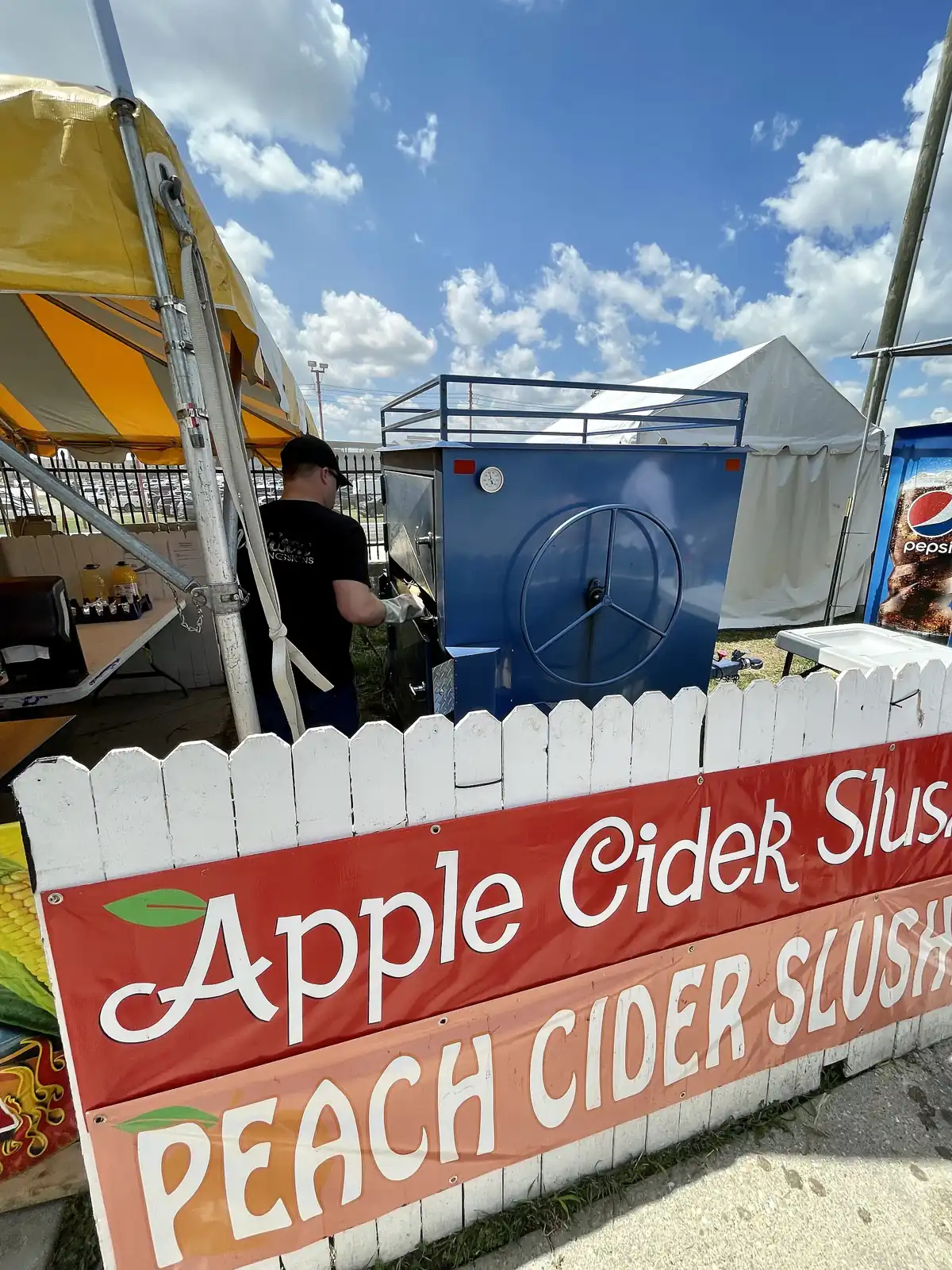
The food row is the fair’s social center. Expect the Indiana standards — tenderloin sandwiches, corn dogs, elephant ears, funnel cakes, lemon shake-ups — plus whatever a local church or civic group is running out of a trailer this year. Portions are generous, prices are fairground-normal, and seating is whatever picnic table is free. Come hungry, carry small bills for the stands that prefer cash, and don’t skip the pie if a 4-H baking family is behind the counter.
Grandstand Nights and Homegrown Entertainment
Evenings belong to the grandstand and the show ring. Depending on the year, that can mean a truck or tractor pull, a demolition derby, a talent showcase, live local bands, or a pageant crowning a fair queen. The lineup rotates, but the atmosphere doesn’t: bleachers full, kids running the grass in front, someone selling glow sticks at the rail. Arrive early on the big nights, because the best seats go in the first half hour.
Family Activities That Don’t Require a Wristband
Not everything costs money. Families spend whole afternoons walking the barns, petting whatever animal is willing, watching the rabbit and poultry shows, and reading project tags to see which neighbor kid built the birdhouse. There are usually kids’ games, a play area, and hands-on activities tied to 4-H. For toddlers, the small-animal barn is often the highlight of the entire week.
Planning a Fair Week Trip to Fulton County
Getting to the Fairgrounds Near Rochester
Fulton County sits in north-central Indiana, and Rochester is the hub. Most visitors arrive by car on the state and U.S. highways that feed into the county, then follow local roads the rest of the way. Because the grounds sit close to town, the simplest plan is to park once and walk everything. Coming from outside the county, allow extra time on the opening evening, when the entrance queue is longest.
Where to Stay Around Rochester
Overnight options in and around the county seat are limited, which is typical for a county of roughly 20,480 people. A handful of motels and inns serve the area, and short-term rentals turn up in the surrounding townships. Plenty of families simply day-trip from neighboring counties. If you want a multi-night stay during fair week, book well ahead — this is the busiest stretch of the summer.
Parking at the Fairgrounds
Parking is generally on or adjacent to the grounds, with volunteers directing traffic. Expect a short walk on grass or gravel from the outer lots. Arrive before the evening grandstand events to avoid the tightest squeeze, and take note of where you parked — fairground rows look identical after dark.
Admission, Wristbands, and Everyday Costs
Admission to the fairgrounds is typically free, which keeps the fair accessible to everyone in the county. Costs show up once you’re inside: food, midway rides or games where present, and grandstand events that may charge a modest entry. Bring small bills for stands that don’t take cards, and check local listings for which nights carry special pricing.
Summer Weather and How to Dress for It
Fair week lands in the hottest stretch of the Indiana summer, so plan for heat and humidity. Light clothing, a hat, sunscreen, and a refillable water bottle are the essentials. Barns are warm and dusty, which makes closed-toe shoes smarter than sandals. Evenings cool off after sunset, and a passing thunderstorm is always possible, so a light rain jacket earns its space in the bag.
A Sample Fair Weekend, Opening Night to Closing Morning
Opening Evening: Walk the Grounds First
Start with a lap before anything gets crowded. Pick up a schedule near the entrance, check the show times posted at the barns, and figure out where the grandstand, project building, and food row sit relative to each other. Eat early — lines double after the first grandstand event lets out. Finish the night in the barns, when exhibitors are still grooming animals and happy to answer questions.
The Full Day: Projects in the Morning, Grandstand at Night
Mornings are best for livestock shows and project viewing, when the light is good and the buildings are still cool. Afternoon is for the midway, the small-animal barn, and a second pass at the food row. Then claim grandstand seats before the evening event, and stay for the walk back through the grounds under the lights, which is when the fair feels most like itself.
Closing Morning: The Sale and the Last Look
The final morning usually brings the livestock sale and the last of the project displays. Even if you aren’t bidding, the auction is worth watching — it’s where local businesses, farm families, and 4-H kids all end up in the same room. Wander the barns one more time before the trailers start pulling out, and say hello to the people you only see here.
How Fulton’s Fair Sits Among Neighboring County Fairs
Fulton County is surrounded by counties that run their own 4-H fairs in the same summer season — Marshall, Miami, Kosciusko, and Cass among them. Families who show livestock often spend several weeks crisscrossing those fairgrounds, and comparing notes is a summer tradition in itself. Fulton’s fair tends to feel smaller and more neighborly than the largest of those events, which is exactly the trade many local families prefer: shorter lines, easier parking, and a good chance the person judging your child’s project knows your family name. Visitors touring the region in July can often catch two or three county fairs in a single trip, each with its own food traditions and its own way of running a show ring.
The Fulton County Fairgoer’s Packing and Prep List
A short list that covers most of what fair week throws at you.
| Cash in small bills | Food and game stands move faster with exact change. |
| Refillable water bottle | Heat and dust are the two constants of an Indiana July. |
| Closed-toe shoes | Barn aisles, gravel lots, and pens reward real footwear. |
| Sunscreen and a hat | Most of the fairgrounds sits under open sky. |
| Light rain jacket | Afternoon storms pass through quickly but thoroughly. |
| Saved or printed schedule | Show times shift, and the day’s lineup keeps you oriented. |
| Tote or small cooler | For project purchases, ribbons, and leftovers. |
| Patience for parking | The busiest hours fall right before grandstand events. |
Beyond the Fairgrounds: Rochester and the Rest of Fulton County
Fair week is a good excuse to see more of the county than the grounds. Rochester, the county seat, is a small town with a walkable core — a sensible place to grab breakfast before the gates open or dinner after the barns close. Beyond town, the county opens into 371.26 square miles of farmland, county roads, and small communities where a slow drive is its own attraction. Add a detour: a few rural miles, a stop at a local diner or farm stand, and you get a sense of the landscape the fair is celebrating. Many families pair a fair visit with a picnic or an afternoon at a local park, turning one evening at the fairgrounds into a full day out.
Why Fair Week Still Holds Fulton County Together
In a county of roughly 20,480 people, the fair is one of the few things that genuinely belongs to everyone. It isn’t sponsored by a single industry or aimed at a single audience. Farm kids and town kids compete in the same categories. Local businesses buy animals at the sale and then serve them at their own tables. Volunteers who have worked the same gate for years hand the job to someone younger, and the fair keeps going. That continuity matters in a place where families measure time by harvests and school years. For one week each summer, Fulton County gets to look at itself — its work, its kids, its cooking, its animals — and like what it sees.
Finding the Fairgrounds from Downtown Rochester
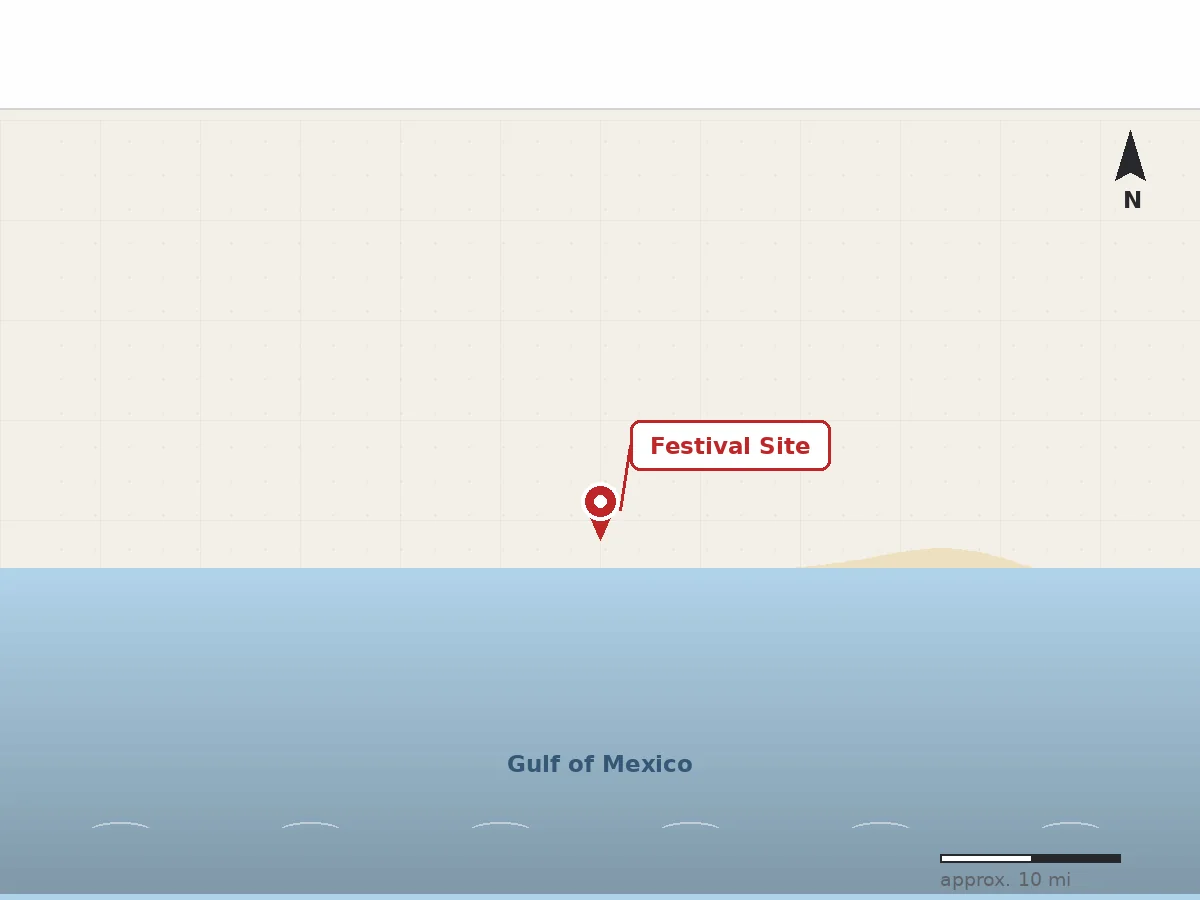
The Fulton County 4-H Fair takes place at the county fairgrounds serving Rochester, the Fulton County seat, in north-central Indiana.
What First-Time Visitors Ask About the Fulton County 4-H Fair
Is there an admission fee?
Admission to the fairgrounds is typically free, which is one reason the fair draws such a broad cross-section of the county. Individual attractions inside — food, rides where available, and certain grandstand events — carry their own charges. Budget for food and a few activities rather than for a gate ticket.
When does the fair usually take place?
The fair is a summer event, most often held during a week in July. Exact dates shift from year to year, so the reliable move is to check with the Fulton County 4-H program or the county extension office as the season approaches, and to watch for notices posted around Rochester and the rest of the county.
Do you have to live on a farm to take part in 4-H?
No. 4-H is open to young people across the county regardless of where they live, and the project list is far broader than livestock. Photography, baking, woodworking, gardening, sewing, and dozens of other categories give town and country members alike something to enter. Plenty of exhibitors have never owned a farm animal.
Is the fairgrounds easy to navigate with a stroller or wheelchair?
Most of the grounds are flat and open, which helps. Barn aisles, gravel paths, and grassy parking areas can be uneven or soft after rain, so a stroller with larger wheels and a chair that handles rough ground make the day easier. Arriving earlier usually means firmer footing and thinner crowds.
What the Next Fair Seasons Could Look Like in Fulton County
County fairs everywhere are adapting, and Fulton County’s version will keep leaning on what already works: youth exhibitors, volunteer labor, free admission, and a schedule built around barns and grandstand rather than spectacle. Expect continued attention to the project side of the fair, where new categories follow whatever young members are actually interested in, and continued reliance on local sponsors and buyers to keep the livestock sale meaningful. The fair will change the way it always has — gradually, and mostly in response to the families it serves.
Last updated: October 2026
None of that changes the essential offer. A week in summer, a fairgrounds near Rochester, and a county of roughly 20,480 people showing up to see what its kids have been working on since spring. If you’ve never been, come on a weekday evening, walk the barns first, and let the food row and the grandstand pull you along from there. If you have been, you already know which gate to use.